Table of Contents
Sindhunath is a powerful and evocative Sanskrit name that carries the majesty of the ocean within its syllables. Primarily used in Hindu communities, this name combines two ancient elements to create a meaning that resonates with depth and authority. As a traditional boy’s name, it connects the bearer to India’s rich linguistic and mythological heritage. Parents choosing this name often seek to imbue their child with qualities of strength, protection, and vast potential.
Meaning of Sindhunath
Sindhunath derives from classical Sanskrit, one of the world’s oldest documented languages. The first component ‘Sindhu’ (सिन्धु) has multiple layers of meaning—originally referring to the Indus River, it expanded to mean any large river, and ultimately came to signify oceans and seas. The second component ‘Nath’ (नाथ) means ‘lord, master, or protector’ and appears in numerous Hindu names and titles. When combined, Sindhunath literally translates to ‘Lord of the Ocean’ or ‘Master of the Sea.’ This name appears in various Hindu texts and traditions, often associated with deities connected to water bodies, though it’s not exclusively reserved for divine figures. The name’s etymology reflects the ancient Indian reverence for water as both life-giving and powerful.
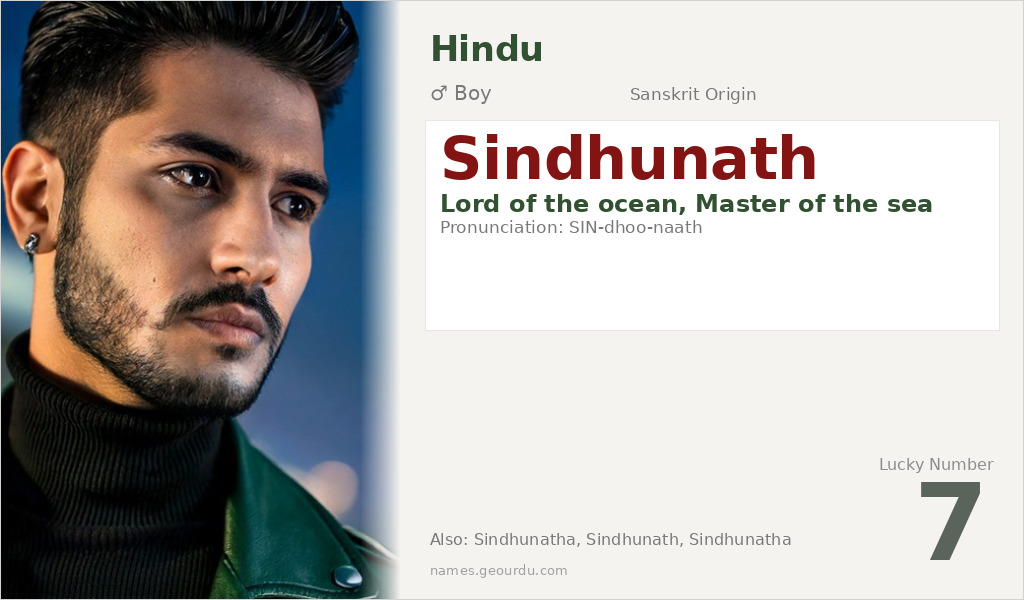
| 📛 Name | Sindhunath |
| 💎 Meaning | Lord of the ocean, Master of the sea |
| 👤 Gender | Boy |
| 🕌 Religion | Hindu |
| 🌍 Origin | Sanskrit |
| 🗣 Pronunciation | SIN-dhoo-naath |
| ✍️ Urdu | سندھو ناتھ |
| ✍️ Arabic | سيندوناث |
| 🔢 Numerology | 7 |
| ✨ Spellings | Sindhunatha, Sindhunath, Sindhunatha |
Origin & Cultural Significance
Sindhunath originates from the Sanskrit language, which has been the liturgical language of Hinduism for millennia. As a compound name, it follows traditional Sanskrit naming patterns where meaningful elements are combined to create names with specific connotations. While primarily used in Hindu communities across India, the name has regional variations in pronunciation and spelling. It belongs to a category of Sanskrit names that reference natural elements with divine suffixes, similar to names like Girinath (Lord of Mountains) or Vananath (Lord of Forests). The name’s usage spans centuries, appearing in historical texts, regional folklore, and contemporary naming practices, particularly among families with connections to coastal regions or those who value names with natural and protective connotations.
Personality Traits
The name Sindhunath suggests personality traits associated with depth, stability, and protective instincts. Like the ocean it references, individuals with this name are often perceived as having calm exteriors masking profound emotional and intellectual depths. They may exhibit natural leadership qualities, with an ability to navigate complex situations with grace. The ‘nath’ (lord/protector) element implies a nurturing, responsible character who others naturally look to for guidance and support.
Similar Names
If you like Sindhunath, consider: Samudranath, Varunanath, Jaladhish, Sagar, Neeraj, Niranjan, Pavan, Vayu, Agneya, Bhaskar
Famous People Named Sindhunath
- Sindhunath — Historical figure mentioned in some regional Indian texts as a scholar
- Sindhunath — Contemporary individuals with this name in India, though not widely known internationally
Frequently Asked Questions About Sindhunath
What does Sindhunath mean?
Sindhunath means 'Lord of the Ocean' or 'Master of the Sea.' It's a compound Sanskrit name where 'Sindhu' means ocean/sea and 'Nath' means lord/master.
Is Sindhunath a boy or girl name?
Sindhunath is exclusively a boy's name in Hindu naming traditions. The '-nath' suffix is typically masculine in Sanskrit-derived names.
What is the origin of Sindhunath?
Sindhunath originates from Sanskrit, the ancient liturgical language of Hinduism. It combines 'Sindhu' (ocean) and 'Nath' (lord) to create a name with both natural and divine connotations.