Table of Contents
Sita is one of the most revered names in Hindu tradition, carrying profound cultural and religious significance. Derived from Sanskrit, this ancient name means ‘furrow’ or ‘the track of a ploughshare’. Most famously associated with the goddess Sita from the Ramayana epic, this name embodies virtues of devotion, purity, and resilience that have inspired generations across South Asia and beyond.
Meaning of Sita
The name Sita originates from the Sanskrit word ‘sītā’, which literally translates to ‘furrow’ or ‘the track of a ploughshare’. This agricultural reference comes from the Sanskrit root ‘sī’, meaning ‘to bind’ or ‘to furrow’. In Hindu mythology, Sita is said to have emerged from a furrow in the earth when King Janaka was ploughing a field, which directly connects to the name’s meaning. The name has been used for over two millennia and appears in numerous ancient Sanskrit texts, most prominently in the Ramayana where Sita is the central female protagonist and wife of Lord Rama.
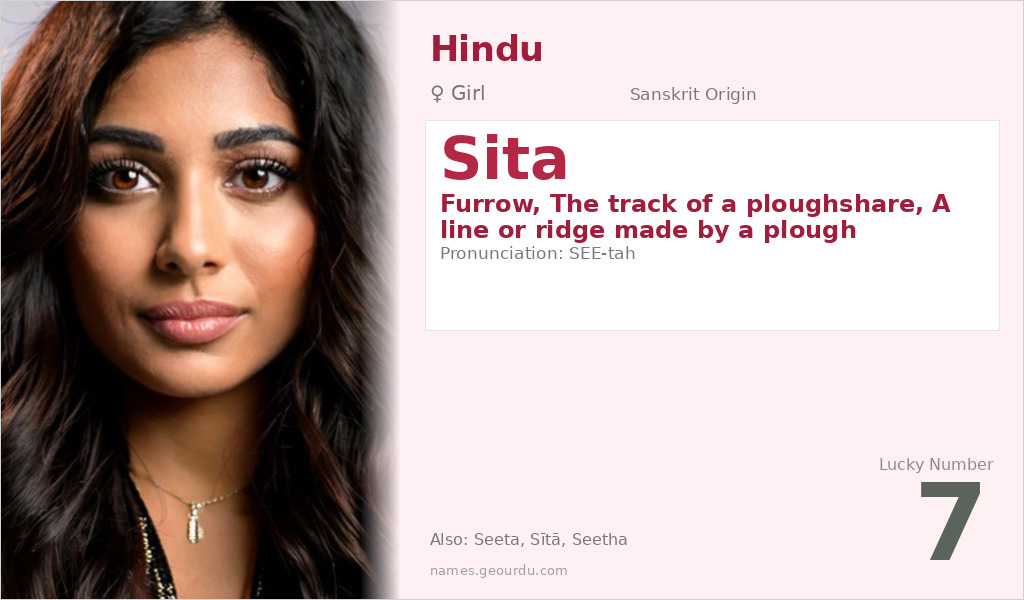
| 📛 Name | Sita |
| 💎 Meaning | Furrow, The track of a ploughshare, A line or ridge made by a plough |
| 👤 Gender | Girl |
| 🕌 Religion | Hindu |
| 🌍 Origin | Sanskrit |
| 🗣 Pronunciation | SEE-tah |
| ✍️ Urdu | سیتا |
| ✍️ Arabic | سيتا |
| 🔢 Numerology | 7 |
| ✨ Spellings | Seeta, Sītā, Seetha |
Origin & Cultural Significance
Sita has its origins in ancient Sanskrit literature and Hindu religious tradition. The name first appears in the Ramayana, one of the two major Sanskrit epics of ancient India, composed between the 7th and 4th centuries BCE. As the wife of Lord Rama and daughter of King Janaka, Sita represents the ideal of womanhood, wifely devotion, and strength in Hindu culture. The name spread throughout South Asia with the dissemination of Hindu religious texts and remains particularly popular in India, Nepal, and among Hindu communities worldwide. While the name has cultural recognition in many regions due to the Ramayana’s influence, it maintains its strongest association with Hindu religious tradition.
Personality Traits
Those named Sita are often perceived as embodying the virtues associated with the goddess Sita from Hindu tradition. They tend to be deeply principled individuals with strong moral compasses, known for their loyalty and devotion in relationships. Despite facing challenges, they typically demonstrate remarkable resilience and inner strength, maintaining grace and dignity through difficult circumstances while remaining compassionate toward others.
Similar Names
If you like Sita, consider: Sitaara, Sitara, Sitamma, Sitadevi, Sitakanta
Famous People Named Sita
- Sita (Hindu goddess) — Central figure in the Ramayana, wife of Lord Rama, embodiment of virtue and devotion
- Sita White — British socialite and television personality
Frequently Asked Questions About Sita
What does Sita mean?
Sita means 'furrow' or 'the track of a ploughshare' in Sanskrit, referring to the agricultural implement that creates ridges in soil.
Is Sita a boy or girl name?
Sita is exclusively a girl's name, most famously associated with the Hindu goddess Sita from the Ramayana epic.
What is the origin of Sita?
Sita originates from Sanskrit and Hindu religious tradition, first appearing in the ancient Indian epic Ramayana composed between the 7th and 4th centuries BCE.