
Table of Contents
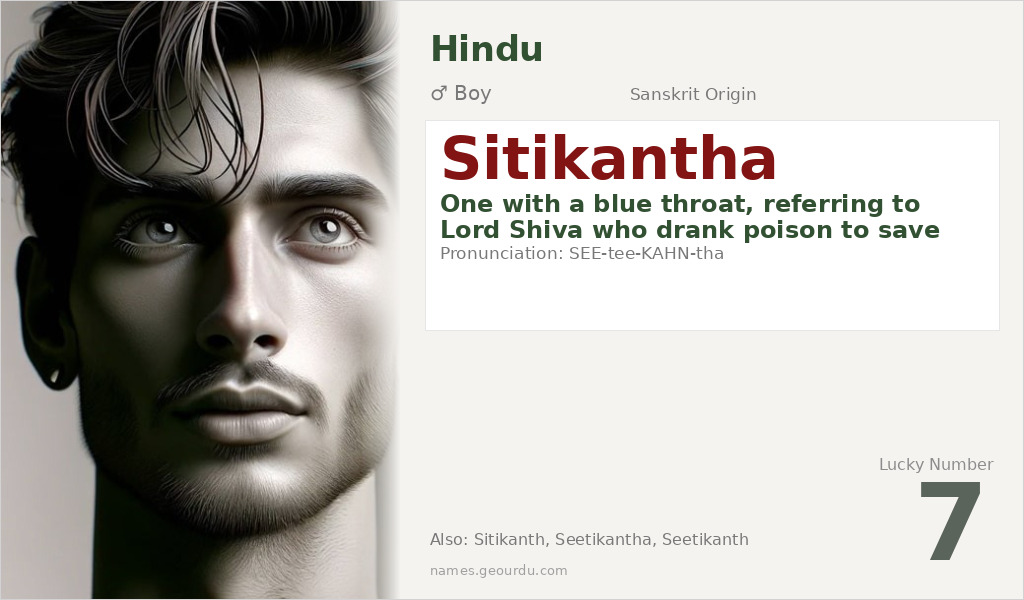
Sitikantha is a profound Sanskrit name steeped in Hindu mythology, carrying the powerful imagery of divine sacrifice. This name refers specifically to Lord Shiva’s iconic blue throat, earned when he drank poison to save the universe. As a baby name, Sitikantha embodies protection, resilience, and spiritual strength. Parents choosing this name often seek to honor Shiva’s selfless act and bestow these qualities upon their child.
Meaning of Sitikantha
Sitikantha is a compound Sanskrit name combining ‘sita’ (meaning white or pale) and ‘kantha’ (meaning throat). The name literally translates to ‘one with a pale or blue throat,’ directly referencing the Hindu myth where Lord Shiva consumed the deadly poison halahala during the Samudra Manthan (churning of the ocean). This act turned his throat blue, earning him the epithets Sitikantha and Neelkantha. In Vedic and Puranic literature, this name appears frequently as one of Shiva’s thousand names, symbolizing his role as protector of the universe. The ‘sita’ component specifically refers to the discoloration caused by the poison, creating the distinctive blue hue that became central to Shiva’s iconography.
| 📛 Name | Sitikantha |
| 💎 Meaning | One with a blue throat, referring to Lord Shiva who drank poison to save the universe |
| 👤 Gender | Boy |
| 🕌 Religion | Hindu |
| 🌍 Origin | Sanskrit |
| 🗣 Pronunciation | SEE-tee-KAHN-tha |
| ✍️ Urdu | ستیکنتھا |
| ✍️ Arabic | سيتيكانثا |
| 🔢 Numerology | 7 |
| ✨ Spellings | Sitikanth, Seetikantha, Seetikanth, Sitikanta |
Origin & Cultural Significance
Sitikantha originates from ancient Sanskrit texts of Hinduism, particularly the Mahabharata and various Puranas composed between 400 BCE and 400 CE. The name emerges from the foundational myth of Samudra Manthan, where gods and demons churned the cosmic ocean to obtain amrita (nectar of immortality). When the deadly poison halahala emerged, Shiva consumed it to prevent universal destruction, holding it in his throat. This mythological event established Sitikantha as both a descriptive epithet and a proper name within Hindu tradition. The name is primarily used in India and among Hindu communities worldwide, particularly in regions with strong Shaivite traditions. It represents one of the most recognizable attributes of Shiva in Hindu iconography and devotion.
Personality Traits
Those named Sitikantha often carry an aura of calm strength and protective energy. Like Shiva who transformed poison into a mark of divinity, Sitikanthas may demonstrate remarkable resilience in facing life’s challenges. They tend to be spiritually inclined, with a deep sense of responsibility toward others. Their personality often blends quiet wisdom with transformative power, making them natural leaders in times of crisis.
Similar Names
If you like Sitikantha, consider: Neelkanth, Shiva, Mahadev, Bholenath, Rudra
Famous People Named Sitikantha
- Sitikantha Pattnaik — Indian economist and Chief Economic Advisor to Government of Odisha
- Sitikantha Mishra — Indian classical vocalist and composer
Frequently Asked Questions About Sitikantha
What does Sitikantha mean?
Sitikantha means 'one with a blue throat' in Sanskrit, specifically referring to Lord Shiva who drank poison during the churning of the ocean to save the universe.
Is Sitikantha a boy or girl name?
Sitikantha is exclusively a boy's name in Hindu tradition, as it refers to the male deity Lord Shiva and his mythological attributes.
What is the origin of Sitikantha?
Sitikantha originates from Sanskrit and Hindu mythology, dating back to ancient texts like the Mahabharata and Puranas that describe Shiva consuming poison during the Samudra Manthan.





