
Table of Contents
Snigdhavarna is a distinctive Sanskrit name with rich linguistic roots and cultural significance in Hindu tradition. Meaning ‘one with a smooth or gentle complexion’, this name combines two beautiful Sanskrit elements that speak to both physical appearance and inner qualities. While not extremely common today, it represents the classical naming traditions that draw from India’s ancient literary heritage. Discover the etymology, cultural context, and modern relevance of this meaningful name.
Meaning of Snigdhavarna
Snigdhavarna derives from classical Sanskrit, combining ‘snigdha’ (स्निग्ध) and ‘varṇa’ (वर्ण). ‘Snigdha’ carries multiple nuanced meanings including smooth, soft, gentle, affectionate, and oily—originating from the root verb ‘snih’ meaning ‘to be attached or affectionate’. ‘Varṇa’ refers to color, complexion, appearance, or distinguishing quality. Together, they create a compound name that literally means ‘one possessing a smooth/gentle complexion’ but extends metaphorically to suggest someone with an agreeable, pleasant nature. This type of descriptive compound naming is characteristic of Sanskrit tradition, where names often poetically describe qualities or appearances. The name appears in classical texts as both a proper name and descriptive epithet.
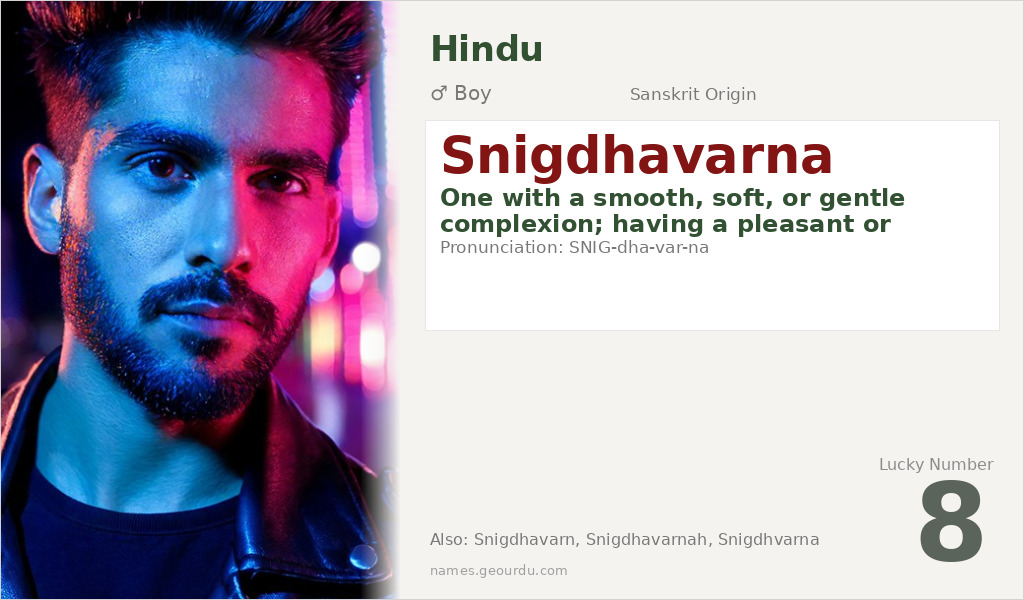
| 📛 Name | Snigdhavarna |
| 💎 Meaning | One with a smooth, soft, or gentle complexion; having a pleasant or agreeable appearance |
| 👤 Gender | Boy |
| 🕌 Religion | Hindu |
| 🌍 Origin | Sanskrit |
| 🗣 Pronunciation | SNIG-dha-var-na |
| ✍️ Urdu | سنِگدھ ورن |
| ✍️ Arabic | سنِيغدهافارنا |
| 🔢 Numerology | 8 |
| ✨ Spellings | Snigdhavarn, Snigdhavarnah, Snigdhvarna |
Origin & Cultural Significance
Snigdhavarna originates from Sanskrit, the ancient liturgical language of Hinduism that has influenced naming traditions across South Asia for millennia. As a compound Sanskrit name, it follows the classical pattern where meaningful elements combine to create descriptive names. While not among the most common contemporary Hindu names, it represents the sophisticated linguistic tradition that draws from India’s rich literary heritage including the Vedas, Puranas, and classical poetry. The name reflects Hindu cultural values that appreciate both physical beauty and inner qualities, though its usage today is relatively rare compared to more popular Sanskrit names. It maintains cultural authenticity while offering distinctive phonetic appeal.
Personality Traits
Those named Snigdhavarna are often associated with gentle, harmonious personalities that reflect the name’s etymological roots. The ‘snigdha’ element suggests affectionate, caring qualities and emotional warmth, while ‘varṇa’ implies an appreciation for beauty and aesthetic harmony. Such individuals may naturally seek balance in relationships and environments, valuing peace and pleasant interactions. While personality traits cannot be definitively assigned to names, the linguistic meaning suggests someone who combines inner gentleness with outward grace.
Similar Names
If you like Snigdhavarna, consider: Snigdha, Varnan, Snigdhansh, Snehansh, Varnika
Famous People Named Snigdhavarna
- No widely known contemporary public figures with this name found in records
- The name appears in classical Sanskrit texts and Hindu mythological references as descriptive epithets
Frequently Asked Questions About Snigdhavarna
What does Snigdhavarna mean?
Snigdhavarna means 'one with a smooth, soft, or gentle complexion' from Sanskrit, combining 'snigdha' (smooth/gentle) and 'varṇa' (complexion/appearance).
Is Snigdhavarna a boy or girl name?
Snigdhavarna is traditionally a masculine name in Hindu naming conventions, though Sanskrit compound names can sometimes be adapted across genders in modern usage.
What is the origin of Snigdhavarna?
Snigdhavarna originates from Sanskrit, the classical language of ancient India, and is used primarily in Hindu cultural contexts with roots in traditional descriptive naming practices.





