
Table of Contents
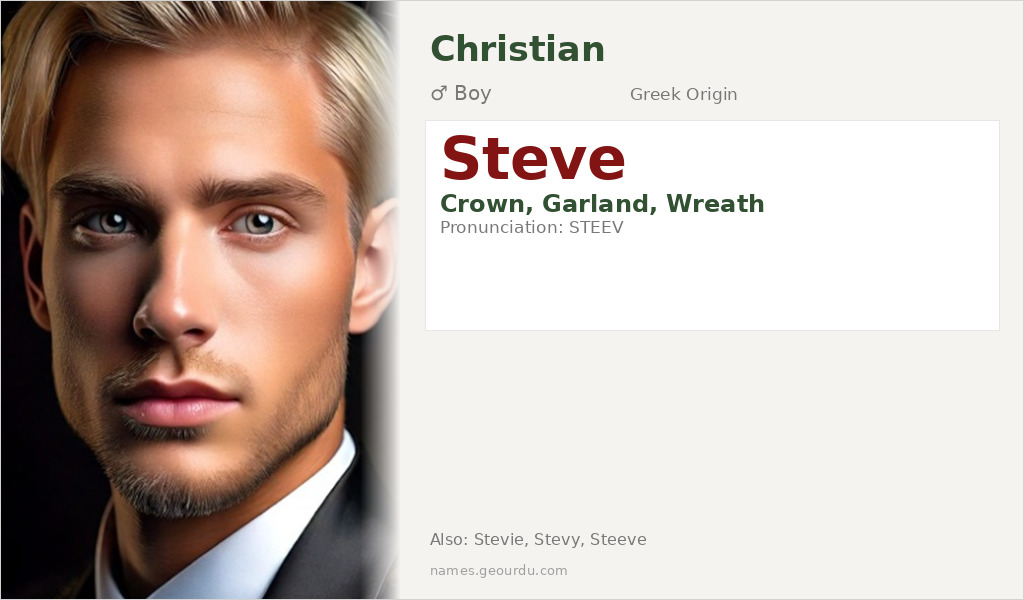
Steve is a timeless masculine name with rich historical roots and enduring popularity. Derived from the Greek word for ‘crown,’ this name carries connotations of victory, honor, and leadership. From ancient athletic champions to modern innovators, the name Steve has been borne by influential figures across centuries. Its straightforward pronunciation and friendly diminutive form make it both classic and approachable.
Meaning of Steve
The name Steve originates from the Greek name Στέφανος (Stephanos), which literally translates to ‘crown,’ ‘garland,’ or ‘wreath.’ In ancient Greece, these wreaths were awarded to victors in athletic games like the Olympics, as well as to military heroes and poets. The name entered Christian tradition through Saint Stephen, the first martyr of Christianity mentioned in the New Testament Book of Acts. As Christianity spread throughout Europe, the name was adopted in various forms: Stephanus in Latin, Étienne in French, Stefan in German, and eventually Stephen/Steve in English. The diminutive ‘Steve’ emerged as a casual, friendly form of Stephen, particularly popular in English-speaking countries during the 20th century.
| 📛 Name | Steve |
| 💎 Meaning | Crown, Garland, Wreath |
| 👤 Gender | Boy |
| 🕌 Religion | Christian |
| 🌍 Origin | Greek |
| 🗣 Pronunciation | STEEV |
| ✍️ Urdu | سٹیو |
| ✍️ Arabic | ستيف |
| 🔢 Numerology | |
| ✨ Spellings | Stevie, Stevy, Steeve |
Origin & Cultural Significance
Steve has its ultimate origins in ancient Greek culture, where the concept of the ‘stephanos’ (crown) held significant symbolic value. The name gained prominence in early Christianity through Saint Stephen, whose Greek name reflected his heavenly ‘crown’ of martyrdom. During the Middle Ages, the name spread across Europe in various forms through religious texts and saint veneration. In English-speaking countries, Stephen became common after the Norman Conquest, with the shortened form Steve gaining widespread popularity in the United States during the mid-20th century. While primarily associated with Christian tradition due to its biblical connection, the name is used by people of various religious backgrounds today.
Personality Traits
People named Steve are often associated with leadership qualities and practical intelligence. The name’s meaning of ‘crown’ suggests someone who naturally assumes positions of authority or strives for excellence in their endeavors. Steves are typically perceived as reliable, hardworking individuals who approach challenges with determination and common sense. Their straightforward nature often makes them effective communicators and trusted friends or colleagues.
Similar Names
If you like Steve, consider: Stephen, Steven, Stefan, Stephane, Esteban
Famous People Named Steve
- Steve Jobs — American entrepreneur and co-founder of Apple Inc.
- Steve Carell — American actor and comedian known for The Office
Frequently Asked Questions About Steve
What does Steve mean?
Steve means 'crown,' 'garland,' or 'wreath.' It originates from the Greek name Stephanos (Στέφανος), which referred to the crown awarded to victors in ancient Greek competitions.
Is Steve a boy or girl name?
Steve is exclusively a masculine name. It is the diminutive form of Stephen/Steven, which have always been male names throughout their history in European languages.
What is the origin of Steve?
Steve originates from Greek, specifically from the word 'stephanos' meaning crown. It entered European languages through early Christian tradition via Saint Stephen and evolved into its modern English form.





