
Table of Contents
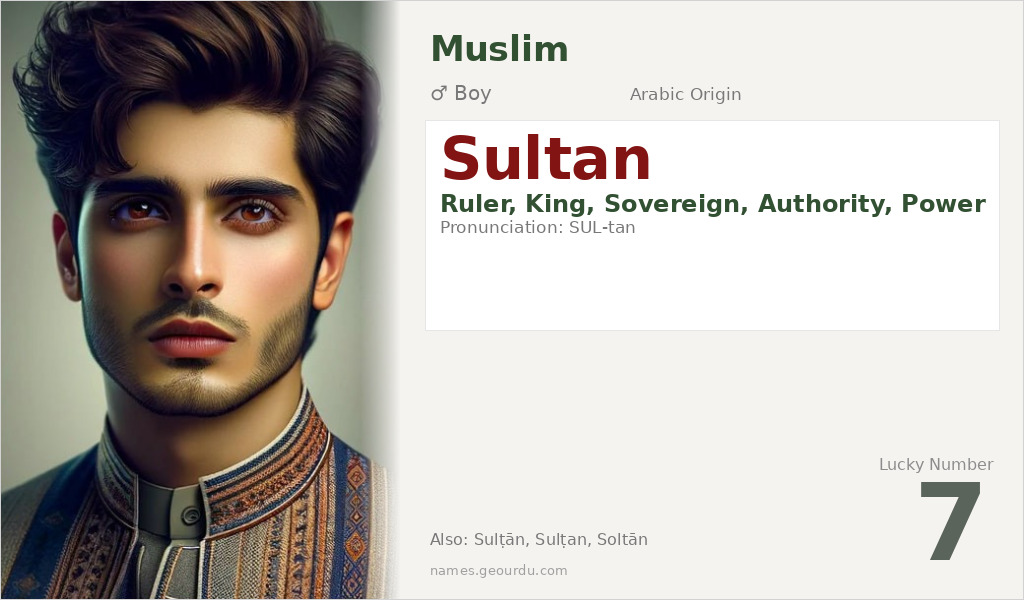
Sultan is a powerful and historic name with deep roots in Islamic culture and leadership. Derived from Arabic, it signifies ‘Ruler’, ‘King’, or ‘Sovereign’, embodying authority and strength. This name has been borne by numerous historical figures and continues to be a popular choice for boys in Muslim communities worldwide. Its rich linguistic heritage makes it a timeless symbol of governance and respect.
Meaning of Sultan
The name Sultan originates from the Arabic word ‘سلطان’ (sulṭān), which stems from the triliteral root ‘س-ل-ط’ (s-l-ṭ). This root conveys meanings related to authority, power, and rule, forming the basis for terms like ‘سلطة’ (sulṭah, meaning ‘authority’ or ‘government’). Historically, ‘Sultan’ was used as a title for Muslim monarchs, particularly in empires such as the Ottoman, Seljuk, and Mughal dynasties. In modern usage, it retains this regal connotation, symbolizing leadership and sovereignty. The name is phonetically consistent across languages like Persian, Urdu, and Turkish, where it is also spelled similarly and carries the same core meaning.
| 📛 Name | Sultan |
| 💎 Meaning | Ruler, King, Sovereign, Authority, Power |
| 👤 Gender | Boy |
| 🕌 Religion | Muslim |
| 🌍 Origin | Arabic |
| 🗣 Pronunciation | SUL-tan |
| ✍️ Urdu | سلطان |
| ✍️ Arabic | سلطان |
| 🔢 Numerology | 7 |
| ✨ Spellings | Sulṭān, Sulṭan, Soltān, Soltane |
Origin & Cultural Significance
Sultan has its origins in classical Arabic, where it first emerged as a term for a ruler or sovereign. It gained prominence in Islamic history, especially from the 10th century onward, when it became a formal title for caliphs and emperors in regions like the Middle East, Central Asia, and South Asia. The name spread through cultural and linguistic diffusion, becoming integral to naming traditions in Muslim-majority countries such as Turkey, Pakistan, Iran, and Arab nations. It reflects the historical importance of leadership and governance in Islamic societies, often chosen to honor these values. Today, Sultan remains a common given name, symbolizing heritage and strength across diverse Muslim communities.
Personality Traits
People named Sultan are often associated with leadership qualities, such as confidence, decisiveness, and a natural ability to take charge. They may be seen as authoritative and protective, with a strong sense of duty and responsibility. This name inspires a perception of respect and capability, aligning with its meaning of ‘ruler’ or ‘king’. In social settings, individuals with this name might exhibit charisma and a commanding presence.
Similar Names
If you like Sultan, consider: Malik, Shah, Amir, Khalid, Hakim
Famous People Named Sultan
- Sultan Salahuddin Ayyubi — 12th-century Muslim ruler and military leader known for recapturing Jerusalem
- Sultan Suleiman the Magnificent — 16th-century Ottoman emperor who expanded the empire and patronized arts
Frequently Asked Questions About Sultan
What does Sultan mean?
Sultan means 'Ruler', 'King', 'Sovereign', 'Authority', or 'Power'. It is derived from the Arabic word 'سلطان' (sulṭān), which comes from the root 'س-ل-ط' (s-l-ṭ) related to governance and control.
Is Sultan a boy or girl name?
Sultan is traditionally a boy's name, used primarily for males in Muslim cultures. It is rarely used for girls, as it carries masculine connotations of leadership and rule.
What is the origin of Sultan?
Sultan originates from Arabic, where it has been used since medieval times as a title for Muslim rulers. It spread to other languages like Persian, Turkish, and Urdu through Islamic empires and cultural exchange.





