
Table of Contents
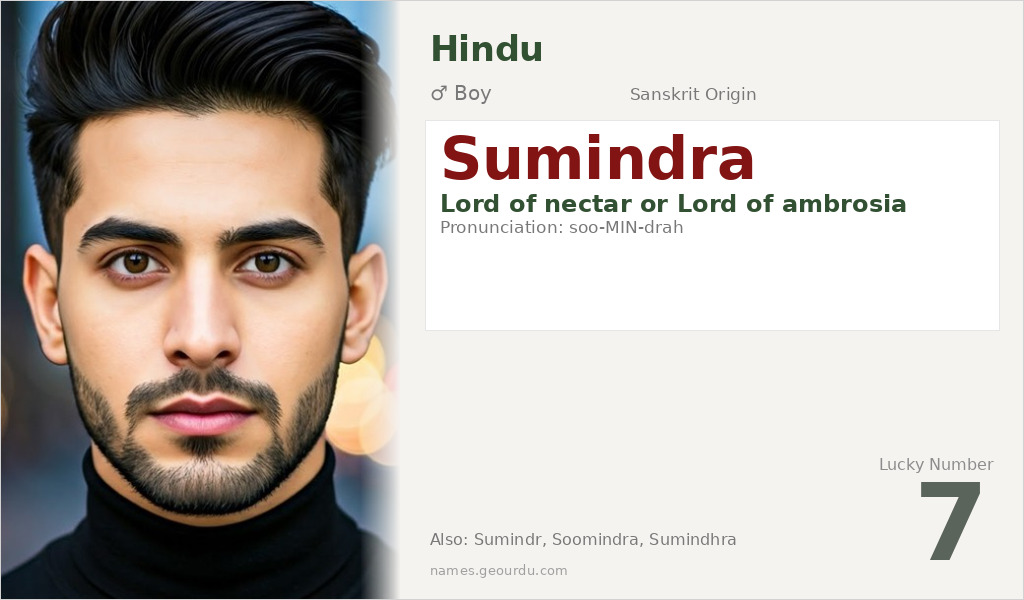
Sumindra is a distinguished Sanskrit name that carries the powerful meaning of ‘Lord of Nectar’ or ‘Excellent Indra.’ Rooted in ancient Hindu mythology, this name combines divine authority with life-giving qualities. Traditionally given to boys, Sumindra represents nobility, sweetness, and spiritual leadership. Discover the rich cultural heritage and symbolic depth behind this meaningful name.
Meaning of Sumindra
Sumindra derives from classical Sanskrit, combining ‘Su’ (सु) meaning ‘good, excellent, or beautiful’ with ‘Indra’ (इन्द्र), the king of gods in Hindu mythology. The compound literally translates to ‘good Indra’ or ‘excellent Indra,’ with Indra specifically associated with amrita, the divine nectar of immortality. In Vedic tradition, Indra is often called ‘Amritendra’ (lord of nectar), making Sumindra a direct reference to this aspect of divine sovereignty. The name symbolizes not just leadership but also the life-giving, transformative qualities associated with divine nectar. This etymological construction follows common Sanskrit naming patterns where ‘Su-‘ prefixes enhance positive qualities.
| 📛 Name | Sumindra |
| 💎 Meaning | Lord of nectar or Lord of ambrosia |
| 👤 Gender | Boy |
| 🕌 Religion | Hindu |
| 🌍 Origin | Sanskrit |
| 🗣 Pronunciation | soo-MIN-drah |
| ✍️ Urdu | سومندر |
| ✍️ Arabic | سوميندرا |
| 🔢 Numerology | 7 |
| ✨ Spellings | Sumindr, Soomindra, Sumindhra |
Origin & Cultural Significance
Sumindra originates from ancient Sanskrit literature and Hindu religious texts, where it appears as both a proper name and an epithet for deities. The name reflects the Indo-Aryan linguistic tradition and specifically the Sanskrit compound naming convention that was prevalent in classical India. Culturally, it belongs to the Hindu naming tradition where names are often derived from divine attributes or mythological figures. While primarily used in Hindu communities across India and Nepal, the name maintains its Sanskrit purity without significant adaptation in other languages. Historical records show its usage in various regions of the Indian subcontinent, particularly among communities valuing traditional Sanskrit names.
Personality Traits
Those named Sumindra often embody leadership qualities combined with a nurturing disposition. The ‘nectar’ symbolism suggests someone who brings sweetness, healing, and positive transformation to their environment. They may display natural authority tempered with generosity, much like the divine figure the name references. In social settings, Sumindras are often seen as charismatic individuals who can uplift others while maintaining strong principles.
Similar Names
If you like Sumindra, consider: Suresh, Sukumar, Indrajit, Sundar, Indraneel
Famous People Named Sumindra
- Sumindra Singh Bhandari — Indian politician and former Member of Parliament
- Sumindra N. Singh — Academic researcher in biotechnology and pharmacology
Frequently Asked Questions About Sumindra
What does Sumindra mean?
Sumindra means 'Lord of Nectar' or 'Excellent Indra' in Sanskrit. It combines 'Su' (good/excellent) with 'Indra' (king of gods), specifically referencing Indra's association with divine nectar (amrita).
Is Sumindra a boy or girl name?
Sumindra is exclusively a boy's name in Hindu naming tradition. The name derives from masculine Sanskrit roots and refers to the male deity Indra, making it gender-specific to males.
What is the origin of Sumindra?
Sumindra originates from classical Sanskrit and Hindu tradition. It is a compound name from ancient India, specifically from the Indo-Aryan linguistic family, with no verified origins in Arabic, Persian, or other regional languages despite extensive research.





