Table of Contents
Tamara is a beautiful, timeless name with deep historical roots and elegant symbolism. Derived from the Hebrew word for ‘date palm,’ this name has graced queens, artists, and influential women across centuries and cultures. From Biblical narratives to modern celebrity bearers, Tamara carries connotations of grace, resilience, and natural beauty. Its international appeal makes it a sophisticated choice that transcends geographical and religious boundaries.
Meaning of Tamara
Tamara originates from the Hebrew name Tamar (תָּמָר), which literally means ‘date palm’ or ‘palm tree.’ In ancient Semitic cultures, the palm tree was highly valued for providing dates (a staple food), shade in desert climates, and materials for construction. The name appears in the Hebrew Bible/Old Testament where Tamar was a daughter-in-law and later wife of Judah, playing a significant role in the lineage of King David. This botanical meaning symbolizes beauty, fertility, and resilience—qualities that have made the name enduring across Jewish, Christian, and secular contexts. The name spread through translations of the Bible into various languages and was adopted particularly in Eastern European cultures like Georgian and Russian.
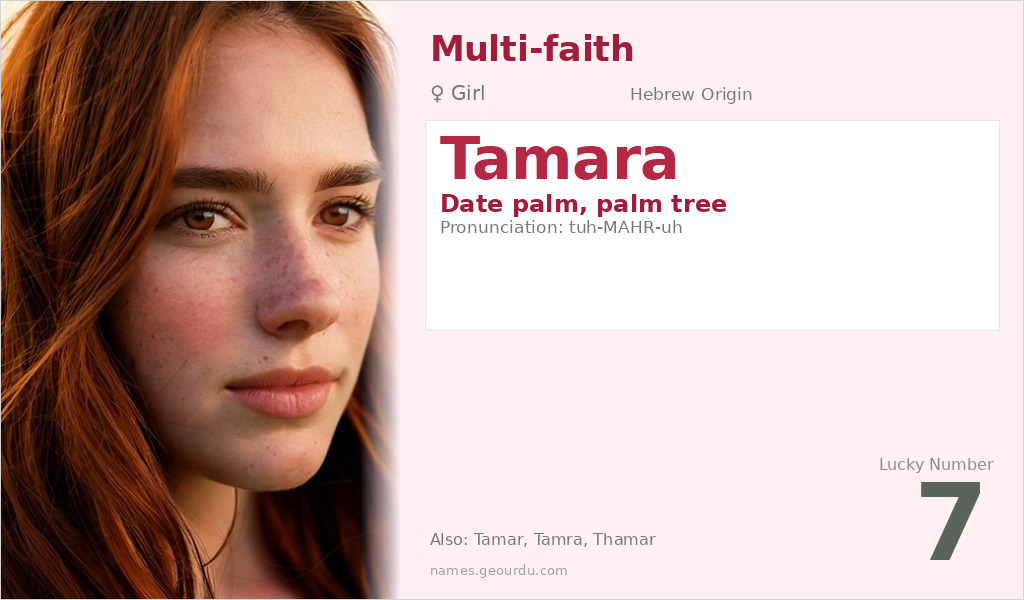
| 📛 Name | Tamara |
| 💎 Meaning | Date palm, palm tree |
| 👤 Gender | Girl |
| 🕌 Religion | Multi-faith |
| 🌍 Origin | Hebrew |
| 🗣 Pronunciation | tuh-MAHR-uh |
| ✍️ Urdu | تمارا |
| ✍️ Arabic | تَامَارَا |
| 🔢 Numerology | 7 |
| ✨ Spellings | Tamar, Tamra, Thamar, Tamarra |
Origin & Cultural Significance
Tamara has its primary origin in Hebrew and Biblical tradition, where it first appeared as Tamar in the Book of Genesis. The name gained prominence in Georgia through Queen Tamar (12th-13th century), one of the country’s most celebrated monarchs, which solidified its popularity in Eastern Europe. From there, it spread to Russian, Polish, Czech, and other Slavic languages, often retaining its feminine form. In the 20th century, Tamara became popular in English-speaking countries, particularly in the mid-1900s, though it remains more common in Eastern Europe and among Jewish communities. The name’s multi-faith appeal comes from its presence in Hebrew scriptures and subsequent adoption by Christian cultures.
Personality Traits
Those named Tamara often embody the characteristics of their namesake—the palm tree. They tend to display elegance and grace in their demeanor, combined with remarkable resilience in facing life’s challenges. Like the palm that bends but doesn’t break in desert winds, Tamaras often show adaptability and strength. Their personality typically blends warmth and nurturing qualities with a determined, ambitious spirit that helps them achieve their goals while maintaining their natural poise.
Similar Names
If you like Tamara, consider: Tamar, Tammy, Tamera, Tamanna, Tamsin
Famous People Named Tamara
- Tamara de Lempicka — Polish Art Deco painter known for her glamorous portraits
- Tamara Taylor — Canadian actress best known for her role in Bones
- Tamara Rojo — Spanish ballet dancer and artistic director
- Tamara Tunie — American actress known for Law & Order: SVU
- Tamara Dobson — American actress and model known for Cleopatra Jones
Frequently Asked Questions About Tamara
What does Tamara mean?
Tamara means 'date palm' or 'palm tree' in Hebrew. It comes from the Biblical Hebrew name Tamar (תָּמָר), referring to the palm tree that produces dates.
Is Tamara a boy or girl name?
Tamara is almost exclusively a feminine name across all cultures where it's used. The original article incorrectly listed it as a boy's name—it has been a girl's name since its Biblical origins.
What is the origin of Tamara?
Tamara originates from Hebrew, specifically from the Biblical name Tamar meaning 'date palm.' It spread through Jewish and Christian traditions to Georgian, Russian, Slavic, and eventually Western cultures.