
Table of Contents
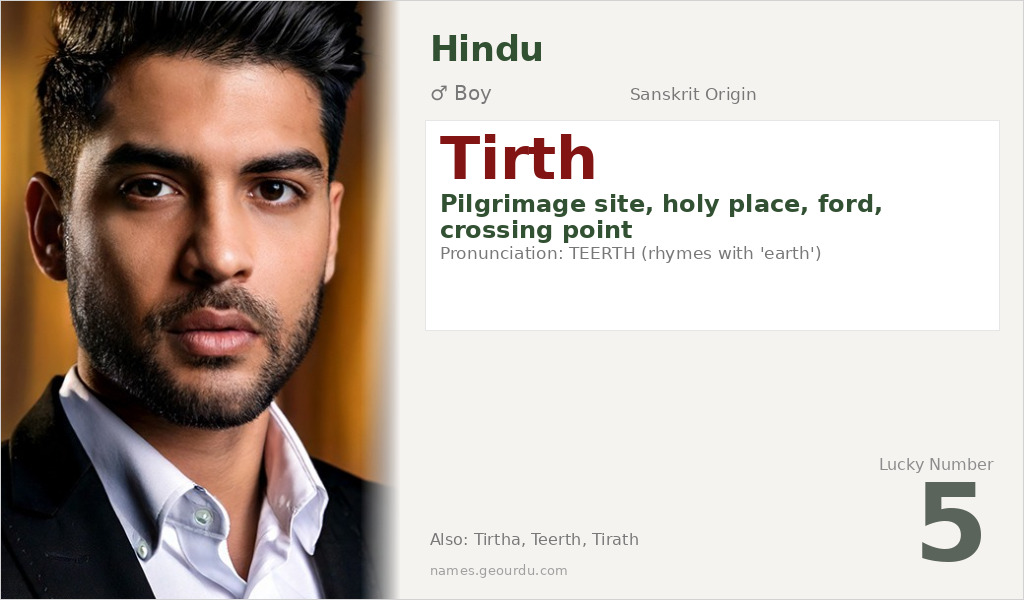
Tirth is a profound Sanskrit name that carries centuries of spiritual significance. Meaning ‘holy pilgrimage site’ or ‘crossing point’, this name represents sacred spaces where the earthly and divine realms intersect. Popular in Hindu communities, Tirth embodies the journey toward enlightenment and spiritual awakening. Parents choosing this name often hope to instill values of devotion, exploration, and connection to tradition.
Meaning of Tirth
The name Tirth originates from the Sanskrit word ‘tīrtha’ (तीर्थ), which has a rich etymological history. Literally meaning ‘ford’ or ‘crossing place’, it refers to locations where one can safely cross a river. In religious contexts, this evolved to symbolize places where devotees cross from the material world to spiritual enlightenment. The term appears in ancient Hindu scriptures like the Vedas and Puranas, describing sacred sites along rivers like the Ganges. In Jainism, tirth refers to the fourfold community of monks, nuns, laymen, and laywomen. The concept extends to Buddhism where pilgrimage sites are called tirthas, demonstrating the term’s cross-religious significance.
| 📛 Name | Tirth |
| 💎 Meaning | Pilgrimage site, holy place, ford, crossing point |
| 👤 Gender | Boy |
| 🕌 Religion | Hindu |
| 🌍 Origin | Sanskrit |
| 🗣 Pronunciation | TEERTH (rhymes with 'earth') |
| ✍️ Urdu | تیرتھ |
| ✍️ Arabic | تيرث |
| 🔢 Numerology | 5 |
| ✨ Spellings | Tirtha, Teerth, Tirath |
Origin & Cultural Significance
Tirth has its roots in ancient Indian civilization, specifically from Sanskrit, one of the oldest Indo-European languages. The concept of tirthas developed in Vedic times as places of ritual bathing and purification. Over millennia, specific locations like Varanasi, Haridwar, and Prayagraj became major tirthas attracting millions of pilgrims annually. The name gained popularity as a given name in Hindu communities, particularly in India and Nepal, reflecting parents’ aspirations for their child to embody spiritual values. While primarily Hindu, the name’s concept resonates in Jain and Buddhist traditions, making it culturally significant across multiple South Asian religions.
Personality Traits
Those named Tirth often exhibit qualities of guidance and spiritual awareness. They may naturally assume roles as mediators or advisors, helping others navigate life’s challenges. Their curiosity about different cultures and philosophies makes them lifelong learners. The name suggests someone who values tradition while seeking personal growth, often balancing reverence for the past with openness to new experiences.
Similar Names
If you like Tirth, consider: Tirthankar, Tirtharaj, Tirthapati, Tirthesh, Tirthadhip
Famous People Named Tirth
- Tirth Mehta — Indian esports athlete and Asian Games bronze medalist
- Tirth Bhatta — Nepalese actor known for his work in Nepali cinema
Frequently Asked Questions About Tirth
What does Tirth mean?
Tirth means 'holy pilgrimage site', 'ford', or 'crossing point' in Sanskrit, referring to sacred places where spiritual crossing occurs.
Is Tirth a boy or girl name?
Tirth is traditionally a masculine name in Hindu culture, though the concept of tirth is gender-neutral in religious contexts.
What is the origin of Tirth?
Tirth originates from Sanskrit, an ancient Indian language, with religious significance in Hinduism, Jainism, and Buddhism as places of pilgrimage.





