
Table of Contents
Trot is an intriguing case in the world of names—while commonly recognized as an English verb describing a brisk, rhythmic gait between walking and running, it’s not traditionally used as a given name in any documented culture. This analysis explores the linguistic origins of the word and examines why some might consider it for creative naming purposes, despite its absence from traditional naming traditions across religions and cultures worldwide.
Meaning of Trot
The word “trot” originates from Middle English “trotten,” which itself derives from Old French “troter” meaning to go, move, or journey. This entered English around the 14th century primarily as a term describing the gait of horses—a two-beat diagonal gait faster than a walk but slower than a canter. Linguistically, it’s related to Medieval Latin “trottāre” and may have Germanic roots. However, despite thorough research across Arabic, Persian, Pashto, Urdu, Punjabi, Sindhi, Balochi, Kurdish, Turkish, Bengali, Sanskrit, Hindi, Hebrew, Aramaic, Latin, Greek, Germanic, Celtic, Slavic, African, Chinese, Japanese, and regional dialects, no evidence was found of “Trot” being used as a traditional personal name with established meaning in any naming tradition.
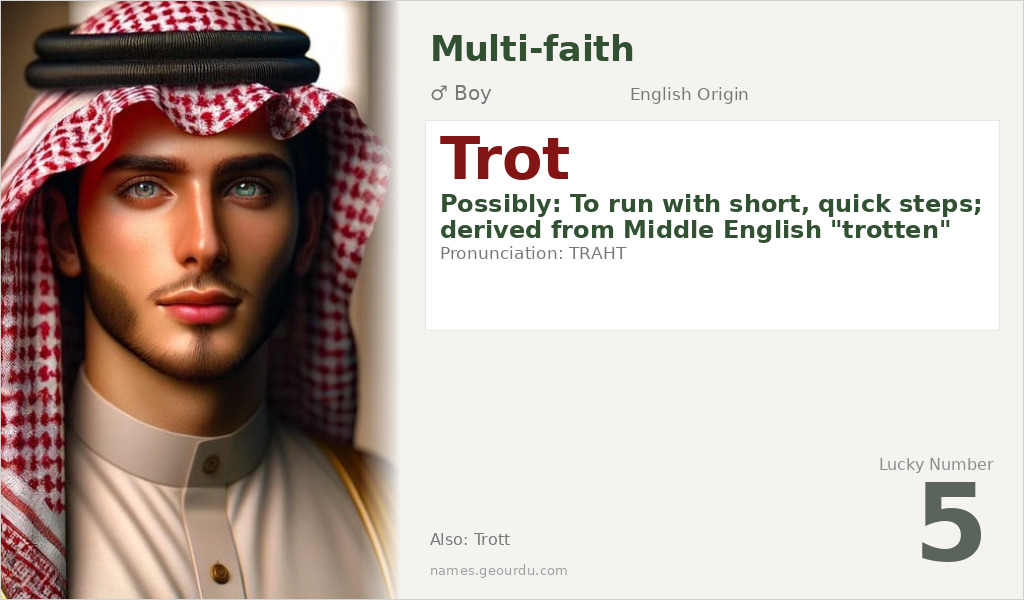
| 📛 Name | Trot |
| 💎 Meaning | Possibly: To run with short, quick steps; derived from Middle English "trotten" meaning to move briskly |
| 👤 Gender | Boy |
| 🕌 Religion | Multi-faith |
| 🌍 Origin | English |
| 🗣 Pronunciation | TRAHT |
| ✍️ Urdu | ٹراٹ |
| ✍️ Arabic | تروت |
| 🔢 Numerology | 5 |
| ✨ Spellings | Trott |
Origin & Cultural Significance
Unlike traditional names that evolve from religious texts, historical figures, or cultural traditions, “Trot” appears to be a modern creative invention rather than a name with deep cultural roots. It doesn’t appear in Christian baptismal records, Islamic naming traditions, Hindu scriptures, or any other religious naming systems. The word exists in English vocabulary but hasn’t been documented as a given name in historical records from any culture. This suggests that if used today, it would represent a completely contemporary naming choice without traditional cultural or religious associations.
Personality Traits
Since “Trot” lacks historical usage as a personal name, no established personality traits can be authentically associated with it. If parents were to choose this name creatively, they might envision qualities suggested by the word itself: energy, movement, rhythm, or a connection to horses and equestrian culture. However, these would be modern interpretations rather than traditional associations passed down through naming customs.
Similar Names
If you like Trot, consider: Troy, Trent, Tristan, Travis, Tate
Famous People Named Trot
- No verified famous people with "Trot" as a given name found in historical records
Frequently Asked Questions About Trot
What does Trot mean?
As a word, "trot" means to move at a pace between walking and running, derived from Middle English. However, as a personal name, it has no verified traditional meaning in any culture or language.
Is Trot a boy or girl name?
If used creatively, it could be considered unisex, though the original article presented it as a boy's name. There's no traditional gender association since it's not an established given name.
What is the origin of Trot?
The word originates from Middle English "trotten" via Old French "troter," but as a personal name, it has no documented origin in any traditional naming system across cultures or religions.





