
Table of Contents
Tulsi is a deeply meaningful name rooted in Hindu tradition and Sanskrit language. Unlike ordinary names, Tulsi refers specifically to the sacred holy basil plant, revered for both spiritual and medicinal purposes across South Asia. This name carries centuries of cultural significance, symbolizing purity, healing, and divine connection. Whether chosen for a boy or girl, Tulsi represents a link to ancient traditions and natural wisdom.
Meaning of Tulsi
The name Tulsi derives directly from Sanskrit ‘तुलसी’ (tulasī), which specifically denotes the holy basil plant (Ocimum tenuiflorum). Etymologically, it combines ‘tula’ meaning ‘balance’ or ‘scale’ with a negative prefix, literally translating to ‘the incomparable one.’ This reflects the plant’s unique status in Hindu tradition as beyond comparison to other herbs. In religious texts like the Puranas, Tulsi is personified as a goddess and consort of Vishnu, embodying devotion and purity. The name’s meaning extends beyond mere comparison to encompass sacredness, healing properties, and spiritual significance that has been maintained for millennia.
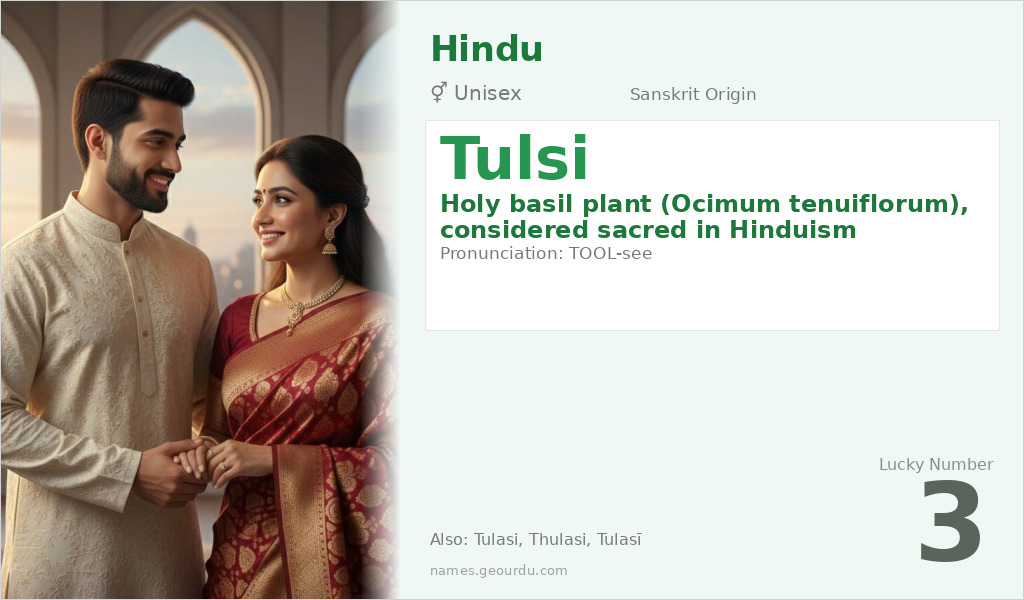
| 📛 Name | Tulsi |
| 💎 Meaning | Holy basil plant (Ocimum tenuiflorum), considered sacred in Hinduism |
| 👤 Gender | Unisex |
| 🕌 Religion | Hindu |
| 🌍 Origin | Sanskrit |
| 🗣 Pronunciation | TOOL-see |
| ✍️ Urdu | تلسی |
| ✍️ Arabic | تولسي |
| 🔢 Numerology | 3 |
| ✨ Spellings | Tulasi, Thulasi, Tulasī |
Origin & Cultural Significance
Tulsi originates from ancient Sanskrit language and Hindu religious tradition, where the holy basil plant holds paramount importance. Culturally, Tulsi has been cultivated in Hindu households and temple courtyards for over 3,000 years, mentioned in early Ayurvedic texts and Hindu scriptures. The name gained popularity as a given name reflecting devotion to Vishnu/Lakshmi and appreciation for the plant’s medicinal qualities. While primarily used in Hindu communities across India, Nepal, and the diaspora, the name has also been adopted by some Buddhists and Jains who revere the plant. Its usage as a personal name became more common in the 20th century, particularly among families emphasizing traditional values and natural healing.
Personality Traits
Those named Tulsi often embody qualities associated with the sacred plant: purity, healing, and spiritual grounding. They tend to be nurturing individuals who bring calm and balance to challenging situations, much like the basil plant’s use in traditional medicine. With a strong connection to tradition and nature, Tulsis frequently demonstrate devotion to their beliefs and compassion toward others, reflecting the plant’s role in religious rituals and herbal remedies.
Similar Names
If you like Tulsi, consider: Basil, Neem, Ashwagandha, Brahmi, Shankhapushpi
Famous People Named Tulsi
- Tulsi Gabbard — American politician and former U.S. Representative from Hawaii
- Tulsi — Indian playback singer known for Bollywood songs
Frequently Asked Questions About Tulsi
What does Tulsi mean?
Tulsi means 'holy basil plant' in Sanskrit, specifically referring to Ocimum tenuiflorum, a sacred plant in Hinduism that symbolizes purity and devotion.
Is Tulsi a boy or girl name?
Tulsi is a unisex name used for both boys and girls in Hindu communities, though it may be slightly more common for girls in some regions.
What is the origin of Tulsi?
Tulsi originates from Sanskrit language and Hindu religious tradition, where the holy basil plant has been revered for millennia in religious rituals, Ayurvedic medicine, and household worship.