Table of Contents
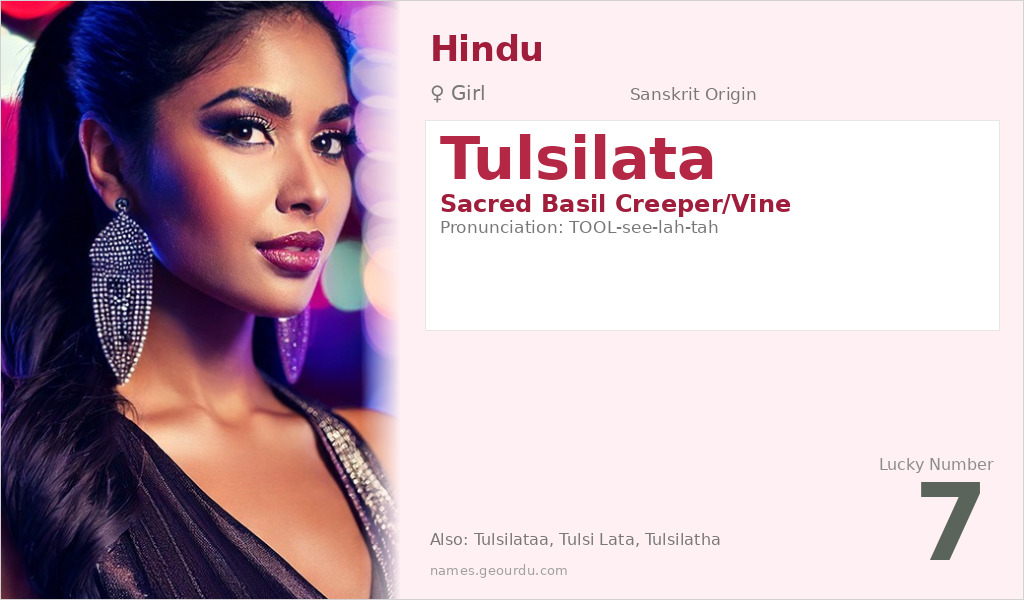
Tulsilata is a beautiful and meaningful Sanskrit name for girls that combines two significant elements: ‘Tulsi’, the sacred basil plant, and ‘Lata’, meaning creeper or vine. This name evokes the image of the revered Tulsi plant growing abundantly, symbolizing purity, devotion, and spiritual connection. Popular in Hindu communities, Tulsilata carries deep cultural and religious significance. Parents choosing this name often seek to instill traditional values and a connection to nature in their daughter.
Meaning of Tulsilata
Tulsilata is a compound Sanskrit name with precise botanical and spiritual meaning. The first component ‘Tulsi’ (तुलसी) refers to Ocimum tenuiflorum, the holy basil plant considered one of the most sacred in Hinduism, associated with Vishnu, Lakshmi, and purification rituals. The second component ‘Lata’ (लता) means ‘creeper, vine, or climbing plant’, describing the plant’s growth habit. Together, they create the literal meaning ‘Sacred Basil Creeper’ or ‘Tulsi Vine’. This name reflects the importance of Tulsi in Hindu worship, where it’s believed to purify the environment and bring spiritual protection. The combination suggests not just the plant itself, but its abundant, spreading growth—a metaphor for spiritual growth and divine presence.
| 📛 Name | Tulsilata |
| 💎 Meaning | Sacred Basil Creeper/Vine |
| 👤 Gender | Girl |
| 🕌 Religion | Hindu |
| 🌍 Origin | Sanskrit |
| 🗣 Pronunciation | TOOL-see-lah-tah |
| ✍️ Urdu | تلسی لتا |
| ✍️ Arabic | تولسي لاتا |
| 🔢 Numerology | 7 |
| ✨ Spellings | Tulsilataa, Tulsi Lata, Tulsilatha |
Origin & Cultural Significance
Tulsilata originates from Sanskrit, the ancient liturgical language of Hinduism, and is primarily used within Hindu communities across India and the diaspora. The name draws from India’s rich tradition of botanical names with spiritual significance, where plants like Tulsi are revered as manifestations of the divine. Historically, names combining ‘Tulsi’ with other elements have been popular, reflecting the plant’s central role in daily worship and Ayurvedic medicine. While most common in India, particularly in regions with strong Sanskrit naming traditions, Tulsilata represents a specific category of Hindu names that connect individuals directly to sacred natural elements. The name maintains its religious and cultural authenticity while being adaptable to modern contexts.
Personality Traits
Those named Tulsilata are often associated with qualities of purity, devotion, and natural grace. Like the sacred plant itself, they may exhibit calming, healing influences in their relationships and environments. Their personality typically combines traditional values with gentle strength, reflecting the resilience of the Tulsi plant that thrives in various conditions. Many believe the name imbues a spiritual sensitivity and connection to nature’s rhythms.
Similar Names
If you like Tulsilata, consider: Tulsi, Lata, Tulika, Tulasi, Latika
Famous People Named Tulsilata
- Tulsilata Devi — Indian classical dancer and choreographer from Manipur
- Tulsilata Mohapatra — Odia writer and poet
Frequently Asked Questions About Tulsilata
What does Tulsilata mean?
Tulsilata means 'Sacred Basil Creeper' or 'Tulsi Vine' in Sanskrit, combining 'Tulsi' (holy basil) and 'Lata' (creeper/vine).
Is Tulsilata a boy or girl name?
Tulsilata is exclusively a girl's name in Hindu naming tradition, following the feminine grammatical structure of Sanskrit compound names.
What is the origin of Tulsilata?
Tulsilata originates from Sanskrit, the classical language of Hinduism, and is deeply rooted in Hindu religious and cultural traditions, particularly in India.