
Table of Contents
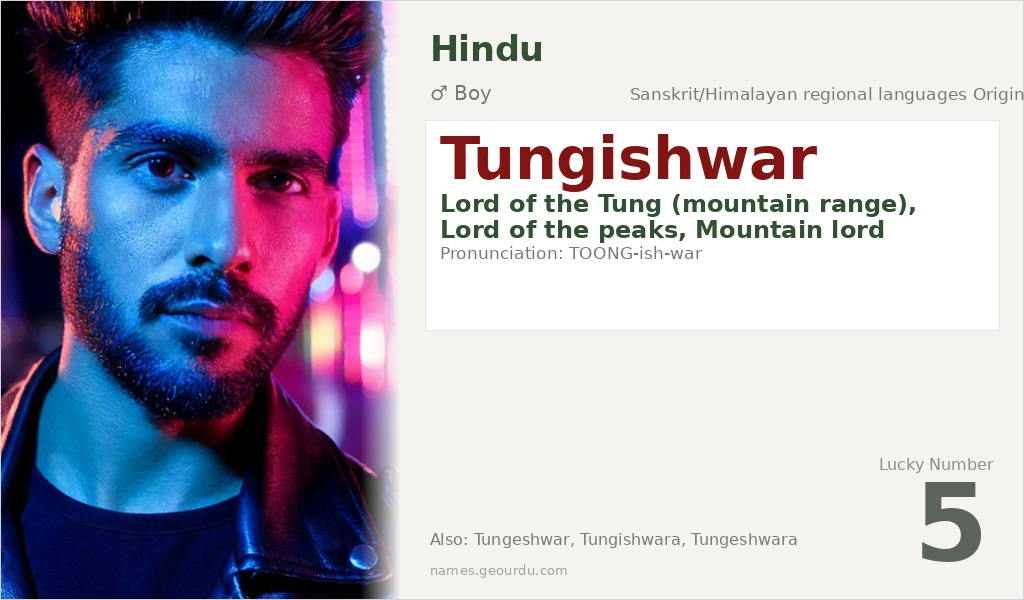
Tungishwar is a distinctive Hindu boy name with deep roots in Sanskrit and Himalayan traditions. Meaning ‘Lord of the Tung’ or ‘Mountain Lord’, this name carries the majestic imagery of mountain peaks and divine rulership. Primarily found in Hindu communities with connections to mountain worship, particularly in regions where Shiva is venerated as the lord of mountains. The name combines the Sanskrit elements ‘Tung’ (peak/mountain) and ‘Ishwar’ (lord) to create a powerful spiritual identity.
Meaning of Tungishwar
Tungishwar derives from two Sanskrit components that together create a meaningful compound name. The first part, ‘Tung’, comes from the Sanskrit word ‘तुङ्ग’ (tuṅga), which means ‘high, tall, lofty, peak, or mountain’. This element appears in various Himalayan geographical names and religious sites. The second component, ‘-ishwar’, originates from Sanskrit ‘ईश्वर’ (īśvara), meaning ‘lord, master, ruler, or god’, commonly used in Hindu names to denote divinity or mastery. When combined, Tungishwar literally translates to ‘Lord of the Tung’ or ‘Mountain Lord’, specifically referencing Shiva’s association with mountain peaks in Hindu mythology. This name is particularly significant in regions where mountain worship is integrated with Shaivism.
| 📛 Name | Tungishwar |
| 💎 Meaning | Lord of the Tung (mountain range), Lord of the peaks, Mountain lord |
| 👤 Gender | Boy |
| 🕌 Religion | Hindu |
| 🌍 Origin | Sanskrit/Himalayan regional languages |
| 🗣 Pronunciation | TOONG-ish-war |
| ✍️ Urdu | تنگیشور |
| ✍️ Arabic | تونغيشوار |
| 🔢 Numerology | 5 |
| ✨ Spellings | Tungeshwar, Tungishwara, Tungeshwara |
Origin & Cultural Significance
Tungishwar originates from Sanskrit language roots with specific connections to Himalayan Hindu traditions. The name appears to have developed in regions where the Tung mountain range or peaks are significant, possibly in Uttarakhand or other Himalayan areas where Shiva temples are located at high altitudes. In Hindu mythology, mountains are considered sacred abodes of gods, particularly Shiva who is often depicted meditating in the Himalayas. The name reflects this cultural context where geographical features are deified and incorporated into personal names. While not among the most common Hindu names, Tungishwar represents a specific regional naming tradition that honors both the natural landscape and divine rulership.
Personality Traits
Those named Tungishwar are often perceived as having mountain-like qualities—steadfast, strong, and spiritually elevated. They may exhibit natural leadership abilities and a calm, grounded demeanor even in challenging situations. The name suggests a person connected to tradition, nature, and spiritual pursuits, with an inherent resilience that helps them overcome obstacles. There’s often an expectation of wisdom and stability associated with this name, reflecting its mountainous origins.
Similar Names
If you like Tungishwar, consider: Tungnath, Girishwar, Parvateshwar, Himadrishwar, Shailesh
Famous People Named Tungishwar
- No widely known public figures with this exact name found in records
Frequently Asked Questions About Tungishwar
What does Tungishwar mean?
Tungishwar means 'Lord of the Tung' or 'Mountain Lord', derived from Sanskrit 'Tung' (peak/mountain) and 'Ishwar' (lord). It specifically refers to Shiva as the deity associated with mountain peaks.
Is Tungishwar a boy or girl name?
Tungishwar is exclusively a boy name in Hindu naming traditions. The '-ishwar' suffix is masculine in Sanskrit grammar and Hindu naming conventions.
What is the origin of Tungishwar?
Tungishwar originates from Sanskrit language with specific connections to Himalayan Hindu traditions. It combines Sanskrit words for 'mountain/peak' and 'lord', reflecting regional naming practices in mountain-worshipping communities.





