
Table of Contents
Ulysses is a name steeped in ancient mythology and literary tradition, evoking images of epic journeys and heroic cunning. Derived from the Greek hero Odysseus, this name carries centuries of cultural significance across Western civilization. While popularized through Roman adaptations, its roots remain firmly planted in Greek etymology and Homeric legend. Today, Ulysses continues to inspire parents seeking a name with classical gravitas and adventurous spirit.
Meaning of Ulysses
The name Ulysses originates from the Greek Odysseus (Ὀδυσσεύς), which comes from the verb ‘odyssomai’ (ὀδύσσομαι) meaning ‘to hate’ or ‘to be wrathful against.’ This etymology reflects the character’s capacity for righteous anger and vengeance in Homer’s epics. The Latin form Ulysses emerged when Roman writers adapted Greek mythology, with Virgil’s ‘Aeneid’ featuring Ulysses as a significant character. Linguistically, the name represents a direct Latinization of the Greek original, maintaining its core meaning while adapting to Roman phonetics. Throughout history, the name has symbolized not just anger, but the strategic application of emotion in pursuit of justice and homecoming.
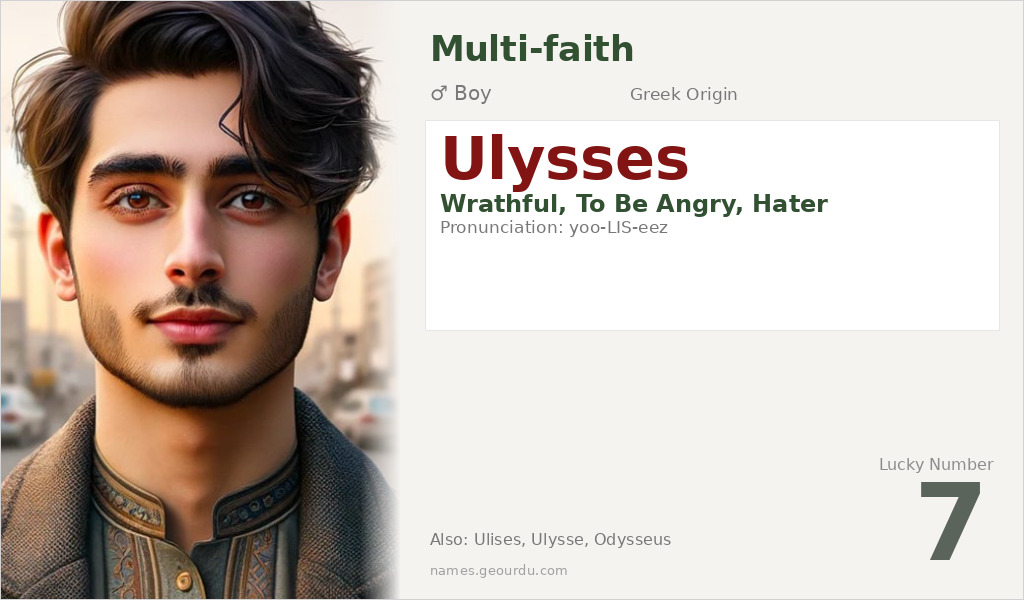
| 📛 Name | Ulysses |
| 💎 Meaning | Wrathful, To Be Angry, Hater |
| 👤 Gender | Boy |
| 🕌 Religion | Multi-faith |
| 🌍 Origin | Greek |
| 🗣 Pronunciation | yoo-LIS-eez |
| ✍️ Urdu | الیسز |
| ✍️ Arabic | يوليسيس |
| 🔢 Numerology | 7 |
| ✨ Spellings | Ulises, Ulysse, Odysseus, Ulisse |
Origin & Cultural Significance
Ulysses has its origins in ancient Greek mythology, specifically from Homer’s ‘Odyssey’ where Odysseus is the protagonist. The name entered Latin literature through Roman adaptations of Greek stories, particularly in works by Virgil and Ovid. During the Renaissance, renewed interest in classical literature revived the name’s popularity across Europe. In the modern era, Ulysses gained prominence in English-speaking countries through literary references and historical figures like Ulysses S. Grant. The name represents a bridge between Greek and Roman cultural traditions, maintaining its mythological associations while adapting to various Western naming conventions.
Personality Traits
Those named Ulysses often embody the traits of their mythological namesake: intelligence, resilience, and strategic thinking. They tend to be problem-solvers who approach challenges with creativity and determination. The name suggests a person who can navigate difficult situations with grace and cunning, much like Odysseus navigating his decade-long journey home. While potentially intense in their convictions, they typically channel their passions into productive pursuits and meaningful goals.
Similar Names
If you like Ulysses, consider: Odysseus, Achilles, Hector, Ajax, Theseus
Famous People Named Ulysses
- Ulysses S. Grant — 18th President of the United States and Union Army general during the American Civil War
- James Joyce — Irish novelist whose masterpiece 'Ulysses' revolutionized modern literature
Frequently Asked Questions About Ulysses
What does Ulysses mean?
Ulysses means 'Wrathful,' 'To Be Angry,' or 'Hater' in its original Greek form. It derives from the Greek verb 'odyssomai' referring to righteous anger or hatred.
Is Ulysses a boy or girl name?
Ulysses is exclusively a boy name, originating from the male hero Odysseus in Greek mythology. There are no traditional feminine forms, though some creative variations exist.
What is the origin of Ulysses?
Ulysses originates from ancient Greek mythology, specifically from the name Odysseus. It was Latinized by Roman writers and entered Western naming traditions through classical literature adaptations.





