Table of Contents
Umama is a beautiful Arabic name with deep historical roots in Islamic tradition. Most famously borne by the granddaughter of Prophet Muhammad (PBUH), this name carries centuries of cultural significance. While functioning primarily as a proper name rather than having a descriptive meaning, Umama remains a cherished choice in Muslim communities worldwide. Its elegant sound and noble heritage make it a meaningful option for parents seeking a name with authentic Islamic lineage.
Meaning of Umama
Umama is an Arabic proper name that doesn’t have a specific descriptive meaning in the lexical sense. Instead, it functions as a historical name that gained significance through its association with early Islamic figures. The most notable bearer was Umama bint Abi al-As, the granddaughter of Prophet Muhammad (PBUH) through his daughter Zainab. Some linguistic analysis suggests the name might relate to the Arabic root ‘umm’ meaning ‘mother,’ possibly implying ‘little mother’ or ‘nurturing one,’ but this remains speculative. What’s certain is that the name appears in authentic Islamic historical records and has been used consistently in Arabic-speaking regions for over fourteen centuries as a respected feminine name.
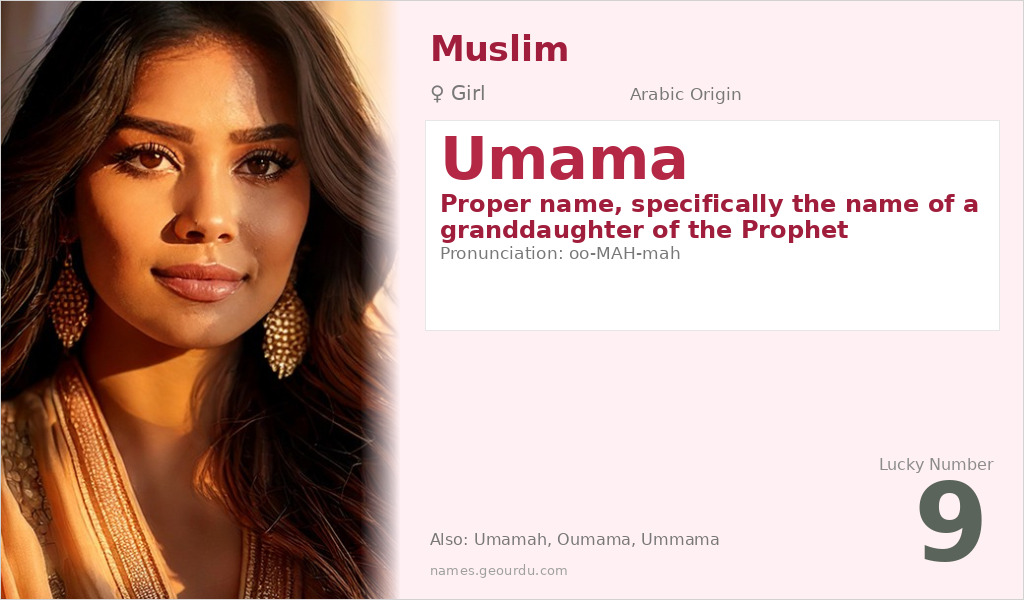
| 📛 Name | Umama |
| 💎 Meaning | Proper name, specifically the name of a granddaughter of the Prophet Muhammad (PBUH) |
| 👤 Gender | Girl |
| 🕌 Religion | Muslim |
| 🌍 Origin | Arabic |
| 🗣 Pronunciation | oo-MAH-mah |
| ✍️ Urdu | امامہ |
| ✍️ Arabic | أمامة |
| 🔢 Numerology | 9 |
| ✨ Spellings | Umamah, Oumama, Ummama |
Origin & Cultural Significance
Umama originates from classical Arabic and has been documented in early Islamic historical texts from the 7th century CE. The name gained prominence through Umama bint Abi al-As, who was not only the Prophet’s granddaughter but also married Ali ibn Abi Talib after Fatima’s death, further connecting her to the Prophet’s household. This historical significance made the name popular in various Muslim cultures, particularly in Arab regions, South Asia, and Southeast Asia. While primarily used in Muslim communities, the name’s appeal extends beyond religious boundaries due to its melodic sound and historical weight. Its usage reflects the Islamic tradition of naming children after respected figures from early Islamic history.
Personality Traits
Those named Umama often embody qualities associated with their namesake’s historical significance—grace, dignity, and strong family values. The name’s connection to the Prophet’s family lineage tends to inspire a sense of responsibility and spiritual awareness in its bearers. Many Umamas are described as compassionate individuals who value tradition while maintaining contemporary relevance in their communities.
Similar Names
If you like Umama, consider: Amina, Fatima, Zainab, Khadija, Ruqayyah
Famous People Named Umama
- Umama bint Abi al-As — Granddaughter of Prophet Muhammad (PBUH), daughter of Zainab bint Muhammad and Abu al-As ibn al-Rabi
- Umama al-Bahiliyya — Early Islamic poet and companion of Prophet Muhammad (PBUH)
Frequently Asked Questions About Umama
What does Umama mean?
Umama is an Arabic proper name without a specific descriptive meaning. It functions as a historical name, most famously belonging to the granddaughter of Prophet Muhammad (PBUH). Some sources suggest it might relate to 'motherhood' concepts, but its primary significance is as a proper name.
Is Umama a boy or girl name?
Umama is exclusively a girl's name in Arabic and Islamic naming traditions. It has been used for females since early Islamic history and continues to be a feminine name in all cultures where it appears.
What is the origin of Umama?
Umama originates from classical Arabic and has been documented in Islamic historical records since the 7th century. It gained prominence as the name of Prophet Muhammad's granddaughter and has been used in Muslim communities worldwide for centuries.