
Table of Contents
Umamaheshwar is a profound Sanskrit name that beautifully encapsulates one of Hinduism’s most sacred divine relationships. This compound name brings together two powerful deities—Uma (Parvati) and Maheshwar (Shiva)—representing the inseparable union of the divine masculine and feminine. As a traditional Hindu boy’s name, it carries deep spiritual significance and cultural heritage. Parents choosing this name often seek to imbue their child with the balanced qualities of both strength and compassion.
Meaning of Umamaheshwar
Umamaheshwar derives from classical Sanskrit, combining ‘Uma’ and ‘Maheshwar’ into a single theological concept. ‘Uma’ refers to the goddess Parvati, Shiva’s consort, whose name signifies light, tranquility, and maternal energy in Hindu tradition. ‘Maheshwar’ literally translates to ‘Great Lord’ or ‘Supreme God’, one of Shiva’s primary epithets emphasizing his role as the ultimate reality. The compound thus means ‘Shiva who is with Uma’ or ‘the Great Lord united with Uma’, highlighting the complementary nature of these deities in Hindu philosophy. This name appears in various Hindu scriptures and devotional literature celebrating the divine couple. Unlike some interpretations, it does not indicate a filial relationship but rather represents Shiva in his aspect as the perfect partner to Parvati.
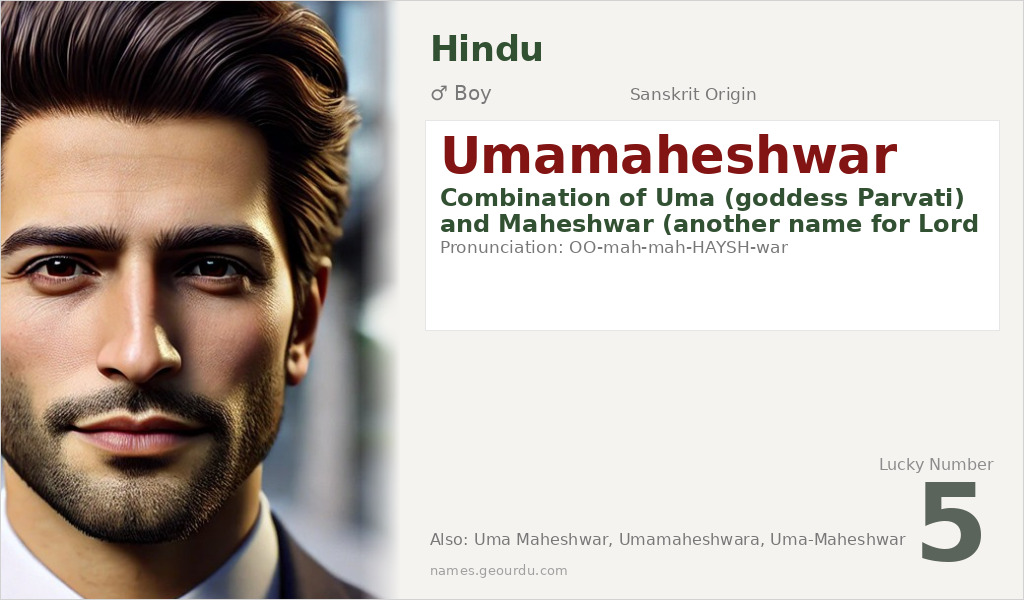
| 📛 Name | Umamaheshwar |
| 💎 Meaning | Combination of Uma (goddess Parvati) and Maheshwar (another name for Lord Shiva), meaning 'Shiva who is united with Uma' or 'Shiva as the husband of Uma' |
| 👤 Gender | Boy |
| 🕌 Religion | Hindu |
| 🌍 Origin | Sanskrit |
| 🗣 Pronunciation | OO-mah-mah-HAYSH-war |
| ✍️ Urdu | اومامہیشور |
| ✍️ Arabic | أوماماهيشوار |
| 🔢 Numerology | 5 |
| ✨ Spellings | Uma Maheshwar, Umamaheshwara, Uma-Maheshwar |
Origin & Cultural Significance
The name Umamaheshwar originates from ancient Sanskrit texts and Hindu religious traditions dating back millennia. It emerges from the rich theological landscape of Shaivism, where Shiva and Parvati’s union symbolizes the integration of consciousness and energy. This name appears in Puranic literature and temple inscriptions across India, particularly in regions with strong Shiva-Parvati worship traditions. Culturally, it reflects the Hindu concept of ‘Ardhanarishvara’—the androgynous form of Shiva and Parvati as one being—though Umamaheshwar specifically emphasizes their relationship as distinct yet inseparable entities. The name has been used historically by devout Hindu families, especially those with connections to priestly lineages or Shiva worship traditions.
Personality Traits
Those named Umamaheshwar are often believed to embody the balanced qualities of both Shiva and Parvati—Shiva’s ascetic discipline combined with Parvati’s nurturing compassion. They may demonstrate strong spiritual inclinations while maintaining deep connections to family and community. The numerology association with number 5 suggests adaptability, curiosity, and progressive thinking. Such individuals might naturally assume leadership roles while valuing harmony in relationships, mirroring the divine balance their name represents.
Similar Names
If you like Umamaheshwar, consider: Mahesh, Maheshwar, Shiva, Parameshwar, Uma Shankar
Famous People Named Umamaheshwar
- Umamaheshwar Rao — Indian politician from Andhra Pradesh
- Umamaheshwar Singh — Notable figure in Indian classical music tradition
Frequently Asked Questions About Umamaheshwar
What does Umamaheshwar mean?
Umamaheshwar means 'Shiva united with Uma' or 'Shiva as the husband of Uma'. It's a Sanskrit compound name combining Uma (goddess Parvati) and Maheshwar (Lord Shiva).
Is Umamaheshwar a boy or girl name?
Umamaheshwar is traditionally a boy's name in Hindu culture, though it references both masculine (Shiva) and feminine (Uma) divine principles. It's almost exclusively used for males in naming practice.
What is the origin of Umamaheshwar?
Umamaheshwar originates from Sanskrit and Hindu religious tradition. It comes from ancient Indian texts where 'Uma' refers to goddess Parvati and 'Maheshwar' is an epithet for Lord Shiva, combining to represent their divine union.





