Table of Contents
Umm is a beautiful Arabic name that carries profound cultural and linguistic significance. Meaning ‘mother,’ this name connects directly to the nurturing essence of family and community in Islamic traditions. While less common as a standalone given name than in compound forms, Umm represents a timeless tribute to maternal strength. This guide explores the authentic origins, historical context, and proper usage of this meaningful name.
Meaning of Umm
Umm (أم) is the Arabic word for ‘mother,’ derived from the triliteral root أ-م-م (ʾ-m-m). This root conveys concepts of source, origin, and foundation, making ‘Umm’ linguistically connected to ideas of beginnings and essential care. In Arabic morphology, it functions both as a common noun and as a prefix in the kunya naming system, where adults are respectfully called ‘Umm [child’s name]’ meaning ‘mother of [child].’ As a given name, it symbolizes maternal qualities and is particularly valued in Muslim cultures that honor family roles. The name appears in early Islamic history through prominent female figures, cementing its religious and cultural importance.
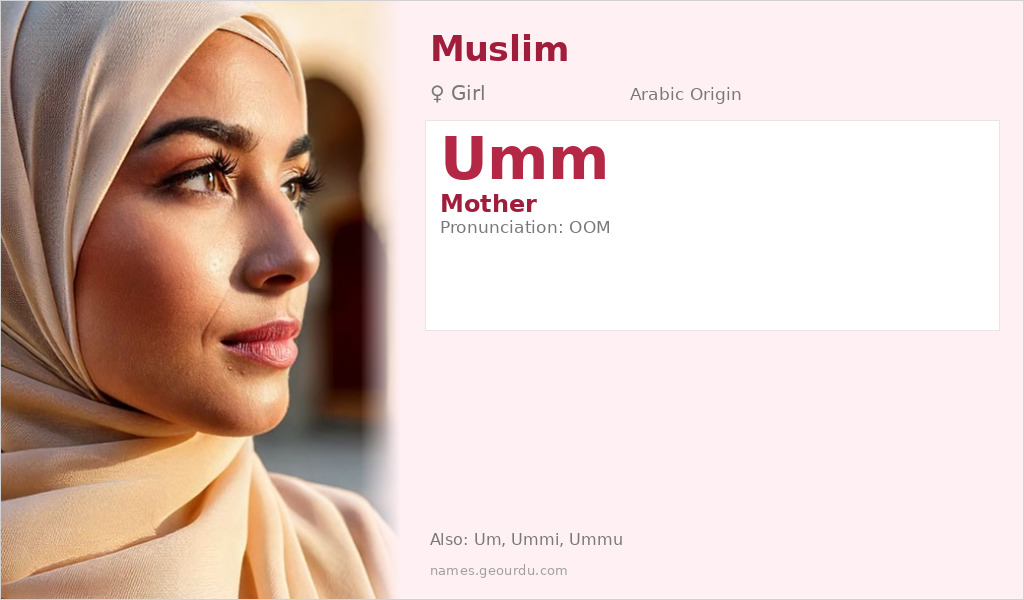
| 📛 Name | Umm |
| 💎 Meaning | Mother |
| 👤 Gender | Girl |
| 🕌 Religion | Muslim |
| 🌍 Origin | Arabic |
| 🗣 Pronunciation | OOM |
| ✍️ Urdu | ام |
| ✍️ Arabic | أم |
| 🔢 Numerology | |
| ✨ Spellings | Um, Ummi, Ummu |
Origin & Cultural Significance
Umm originates from Classical Arabic and has been used for centuries across the Arab world and Muslim communities. Its usage as a given name is documented in early Islamic history, particularly among companions of Prophet Muhammad and their families. The name spread through Islamic expansion to regions including Persia, South Asia, and Africa, where it maintained its Arabic form while integrating into local naming practices. In contemporary times, it remains more common in compound names but persists as a standalone choice in some families, especially those emphasizing traditional Arabic linguistics. The name’s religious association comes primarily from its appearance in Islamic texts and historical records rather than specific doctrinal requirements.
Personality Traits
Names often carry cultural expectations, and Umm is traditionally associated with maternal, nurturing characteristics. Those named Umm might be perceived as having strong caregiving instincts, emotional intelligence, and a foundational role in relationships. In many Muslim societies, the name evokes respect for motherhood and family leadership. While personality traits vary individually, the name’s meaning creates associations with protection, wisdom passed through generations, and emotional strength.
Similar Names
If you like Umm, consider: Umm Kulthum, Umm Salama, Umm Habiba, Umm Ayman, Umm Hani
Famous People Named Umm
- Umm Kulthum bint Muhammad — Daughter of Prophet Muhammad and Khadija, known for her piety and early Muslim community role
- Umm Salama — One of the wives of Prophet Muhammad, known for her wisdom and narrations of Hadith
Frequently Asked Questions About Umm
What does Umm mean?
Umm means 'mother' in Arabic. It comes from the root أ-م-م (ʾ-m-m) relating to motherhood and origin.
Is Umm a boy or girl name?
Umm is exclusively a girl's name in Arabic and Islamic naming traditions, reflecting its meaning of 'mother.'
What is the origin of Umm?
Umm originates from Classical Arabic and has been used in Muslim cultures for centuries, particularly in the kunya naming system and as a standalone given name.