
Table of Contents
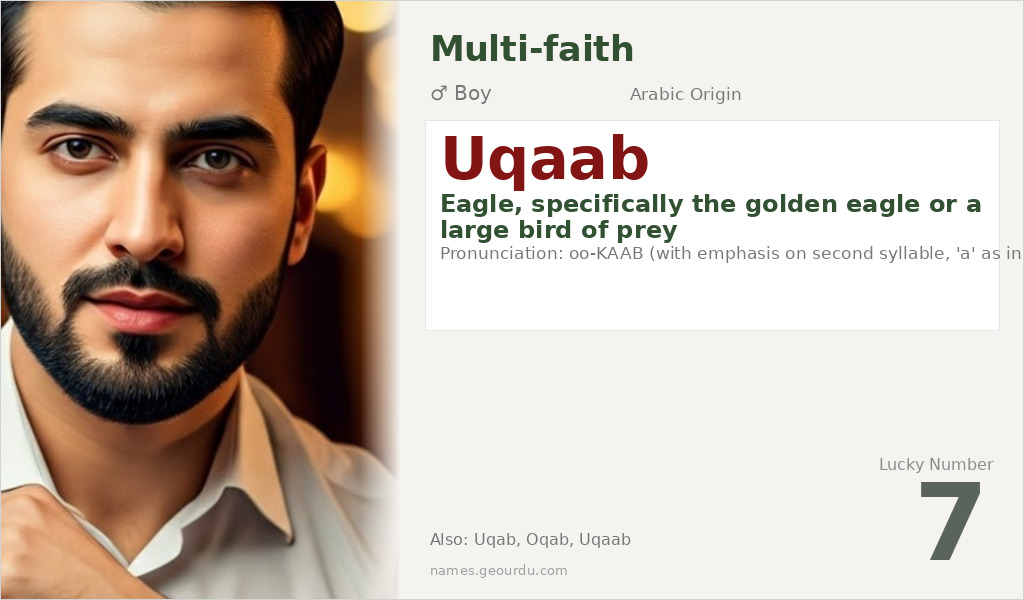
Uqaab is a powerful Arabic name that literally means ‘eagle,’ specifically referring to the majestic golden eagle. Used primarily for boys, this name evokes images of strength, vision, and nobility across Arabic-speaking cultures. While popular in Muslim communities, Uqaab transcends religious boundaries as a meaningful name in Arabic linguistics and tradition. Discover the rich etymology and cultural significance of this avian-inspired name.
Meaning of Uqaab
Uqaab (عقاب) is the definitive Arabic word for eagle, particularly the golden eagle (Aquila chrysaetos). The term originates from Classical Arabic and is derived from the triliteral root ع-ق-ب (ayn-qaf-ba), which carries meanings related to following, succession, and heels – possibly referencing how eagles follow their prey or the succession of their powerful flight. In Arabic ornithological classification, ‘uqaab’ specifically distinguishes true eagles from other birds of prey like falcons (saqr) or hawks (baz). The name’s meaning is unambiguous in Arabic linguistic sources, with medieval Arabic dictionaries like Lisān al-ʿArab clearly defining it as the term for large eagles. This makes Uqaab one of the most direct and powerful animal-inspired names in Arabic nomenclature.
| 📛 Name | Uqaab |
| 💎 Meaning | Eagle, specifically the golden eagle or a large bird of prey |
| 👤 Gender | Boy |
| 🕌 Religion | Multi-faith |
| 🌍 Origin | Arabic |
| 🗣 Pronunciation | oo-KAAB (with emphasis on second syllable, 'a' as in 'father') |
| ✍️ Urdu | عقاب |
| ✍️ Arabic | عقاب |
| 🔢 Numerology | 7 |
| ✨ Spellings | Uqab, Oqab, Uqaab, Aqab |
Origin & Cultural Significance
Uqaab originates from Classical Arabic and has been used across the Arabic-speaking world for centuries. While commonly used in Muslim communities, the name is not exclusively Islamic but rather part of the broader Arabic linguistic and cultural tradition. The eagle holds significant symbolic value in pre-Islamic and Islamic Arabic culture, representing strength, freedom, and keen vision. In historical contexts, the name appears in early Islamic history with figures like Uqab ibn Nafi, and eagle imagery frequently occurs in Arabic poetry and literature as metaphors for nobility and power. The name remains in use today across the Middle East and North Africa, particularly in regions where eagle symbolism resonates with local cultural values of strength and protection.
Personality Traits
Those named Uqaab are often associated with eagle-like qualities: keen observation, strategic thinking, and protective instincts. They tend to be natural leaders who approach challenges with determination and foresight. Like the eagle that soars above ordinary concerns, people with this name often exhibit independence, ambition, and a preference for high standards in both personal and professional pursuits. Their strong-willed nature is typically balanced by loyalty to those they consider part of their ‘nest’ or inner circle.
Similar Names
If you like Uqaab, consider: Saqr (falcon), Baz (hawk), Nasr (vulture/eagle in some contexts), Shahin (peregrine falcon), Jarad (locust – another strong creature name)
Famous People Named Uqaab
- Uqab ibn Nafi – early Islamic military commander
- Uqab (character) – appears in various Arabic literary works as a symbol of strength
Frequently Asked Questions About Uqaab
What does Uqaab mean?
Uqaab means 'eagle' in Arabic, specifically referring to the golden eagle or large birds of prey. It comes from the Classical Arabic word عقاب with well-documented etymology.
Is Uqaab a boy or girl name?
Uqaab is primarily a masculine name in Arabic naming traditions, though names based on animals can sometimes be used creatively across genders in modern contexts.
What is the origin of Uqaab?
Uqaab originates from Classical Arabic language and culture. While popular in Muslim communities, it's part of broader Arabic linguistic tradition rather than being exclusively tied to any single religion.





