
Table of Contents
Vaaridhar is a beautiful Sanskrit name that carries the poetic imagery of monsoon clouds and life-giving rains. Steeped in Hindu tradition, this name evokes the natural forces that sustain life and symbolizes abundance and nourishment. For parents seeking a name with deep cultural roots and natural symbolism, Vaaridhar offers both melodic sound and profound meaning. This name connects the bearer to ancient Indian cosmology where clouds and rain hold divine significance.
Meaning of Vaaridhar
Vaaridhar is a compound Sanskrit name with precise etymological roots. The first component ‘Vaari’ (वारि) derives from the Sanskrit root ‘vṛ’ meaning ‘to cover’ or ‘to surround’, evolving to specifically mean ‘water’ or ‘rain’. The second component ‘Dhar’ (धर) comes from the root ‘dhṛ’ meaning ‘to hold’, ‘to bear’, or ‘to support’. When combined, Vaaridhar literally translates to ‘one who holds water/rain’ or ‘cloud bearer’. In Hindu mythology, clouds are often personified as divine entities that carry and distribute life-sustaining waters. The name appears in classical texts like the Vedas and Puranas, where cloud-related imagery symbolizes fertility, abundance, and divine grace. This makes Vaaridhar more than just a descriptive term—it’s a name imbued with cultural and spiritual significance.
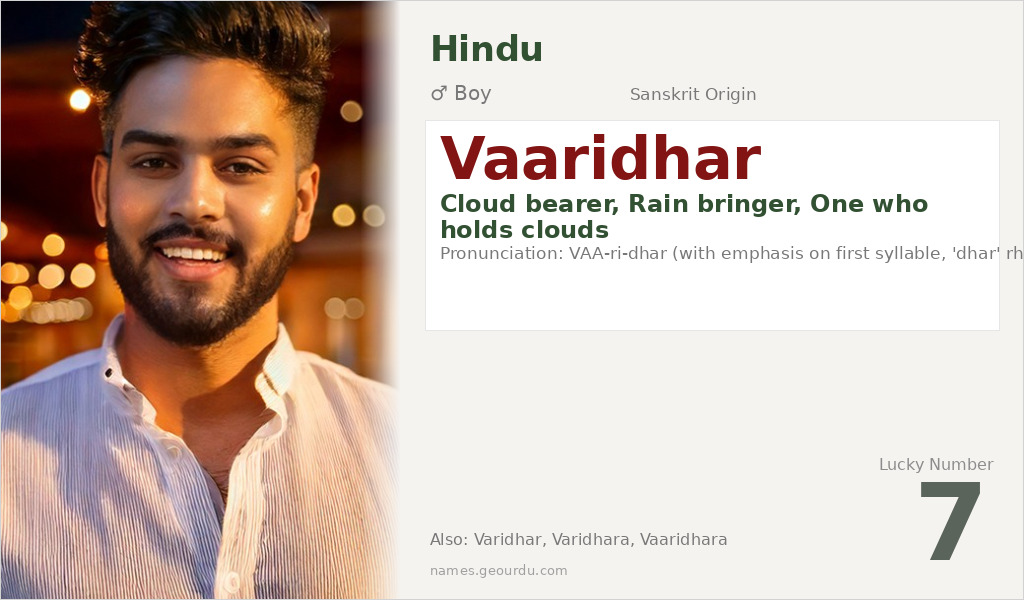
| 📛 Name | Vaaridhar |
| 💎 Meaning | Cloud bearer, Rain bringer, One who holds clouds |
| 👤 Gender | Boy |
| 🕌 Religion | Hindu |
| 🌍 Origin | Sanskrit |
| 🗣 Pronunciation | VAA-ri-dhar (with emphasis on first syllable, 'dhar' rhymes with 'car') |
| ✍️ Urdu | واریدھر |
| ✍️ Arabic | فاريدهار |
| 🔢 Numerology | 7 |
| ✨ Spellings | Varidhar, Varidhara, Vaaridhara, Vāridhar |
Origin & Cultural Significance
Vaaridhar originates from classical Sanskrit, the ancient liturgical language of Hinduism that has influenced numerous South Asian languages. The name reflects the deep connection between Hindu cosmology and natural elements, where meteorological phenomena like clouds and rain are often deified or given sacred attributes. In Vedic literature, deities like Indra (king of gods) and Parjanya (rain god) are closely associated with cloud-bearing and rain-making functions. The name Vaaridhar continues this tradition of naming children after natural forces that sustain life. While primarily used in Hindu communities, the name’s Sanskrit roots give it pan-Indian appeal across various regions and linguistic groups. Its usage has been documented in historical texts and continues in modern times, particularly among families valuing traditional Sanskrit names with natural symbolism.
Personality Traits
Those named Vaaridhar are often associated with qualities of nourishment, renewal, and emotional depth. Like the rains they symbolize, they may bring refreshment and growth to situations and relationships. Their personality might reflect the cyclical nature of clouds—periods of introspection followed by expressive generosity. The water element connection suggests adaptability, intuition, and a calming presence that can soothe turbulent situations. These individuals often possess creative thinking that flows naturally between different ideas and perspectives.
Similar Names
If you like Vaaridhar, consider: Varun, Megh, Varsha, Indra, Parjanya
Famous People Named Vaaridhar
- No widely known contemporary public figures with this name found in records
- Historical/mythological references to cloud-bearing deities in Hindu texts
Frequently Asked Questions About Vaaridhar
What does Vaaridhar mean?
Vaaridhar means 'cloud bearer' or 'rain bringer' in Sanskrit. It's a compound name combining 'Vaari' (water/rain) and 'Dhar' (holder/bearer).
Is Vaaridhar a boy or girl name?
Vaaridhar is traditionally a masculine name in Hindu naming conventions. Sanskrit grammatical structure and historical usage confirm it as a boy's name.
What is the origin of Vaaridhar?
Vaaridhar originates from Sanskrit, the ancient language of Hindu scriptures. It reflects Hindu cosmological concepts where natural elements like clouds and rain hold spiritual significance.





