Table of Contents
Vaasavadatta is a name that echoes through the corridors of ancient Sanskrit literature, carrying with it the weight of classical Indian tradition and mythology. This elegant name, often associated with princesses and divine gifts, offers a beautiful connection to Hindu cultural heritage. With its melodic syllables and rich historical background, Vaasavadatta represents more than just a name—it’s a piece of living literary history that continues to inspire parents seeking meaningful, traditional names.
Meaning of Vaasavadatta
Vaasavadatta derives from classical Sanskrit, combining two meaningful elements: ‘Vāsava’ and ‘datta.’ Vāsava refers to the Hindu god Indra, the king of the gods, and by extension can mean ‘of Indra’ or ‘belonging to Indra.’ The suffix ‘datta’ means ‘given’ or ‘bestowed,’ creating the complete meaning of ‘given by Vāsava’ or ‘gift of Indra.’ In Hindu tradition, Vāsavī is also an epithet for Indrāṇī (Indra’s consort) and sometimes for Lakshmi, the goddess of prosperity, adding layers of divine feminine energy to the name’s significance. This compound structure is characteristic of many classical Sanskrit names that denote blessings or gifts from deities.
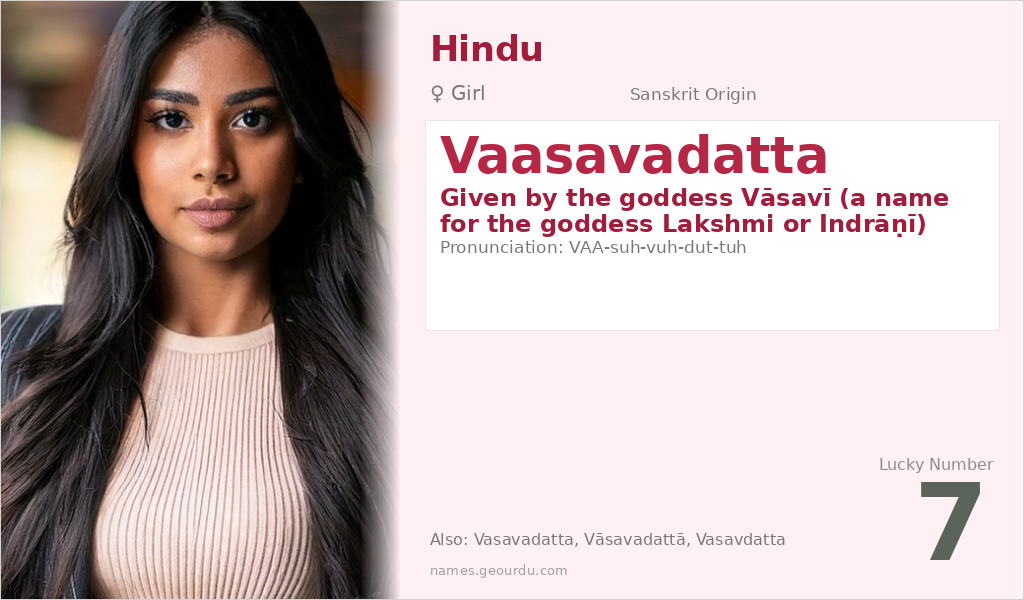
| 📛 Name | Vaasavadatta |
| 💎 Meaning | Given by the goddess Vāsavī (a name for the goddess Lakshmi or Indrāṇī) |
| 👤 Gender | Girl |
| 🕌 Religion | Hindu |
| 🌍 Origin | Sanskrit |
| 🗣 Pronunciation | VAA-suh-vuh-dut-tuh |
| ✍️ Urdu | واسودتا |
| ✍️ Arabic | فاسافاداتا |
| 🔢 Numerology | 7 |
| ✨ Spellings | Vasavadatta, Vāsavadattā, Vasavdatta, Vaasavdatta |
Origin & Cultural Significance
The name Vaasavadatta originates from ancient Sanskrit literature and Hindu tradition. It appears prominently in classical Sanskrit works, most notably as the name of a princess in Subandhu’s prose romance ‘Vāsavadattā’ (6th-7th century CE) and in Bhāsa’s Sanskrit drama ‘Svapnavāsavadattam.’ These literary works established the name within the canon of classical Indian literature. The name reflects the Sanskrit naming convention of creating compound names with theophoric elements (names containing divine references), particularly common among royalty and nobility in ancient India. While not widely used in contemporary times, it remains a significant name in literary and historical contexts.
Personality Traits
Those named Vaasavadatta are often associated with qualities of grace, intelligence, and cultural sophistication. Drawing from the name’s literary heritage, they may exhibit a natural affinity for arts, literature, and spiritual pursuits. The name’s connection to divine gifts suggests individuals who are seen as blessed or fortunate, often carrying themselves with a dignified presence that commands respect while maintaining approachability.
Similar Names
If you like Vaasavadatta, consider: Vasanti, Vasudha, Indumati, Devadatta, Lakshmidhara
Famous People Named Vaasavadatta
- Vāsavadattā — Legendary princess and central character in the ancient Sanskrit romance 'Vāsavadattā' by Subandhu (6th-7th century CE)
- Vāsavadattā — Protagonist in the classical Sanskrit drama 'Svapnavāsavadattam' (The Dream of Vāsavadattā) by Bhāsa
Frequently Asked Questions About Vaasavadatta
What does Vaasavadatta mean?
Vaasavadatta means 'given by the goddess Vāsavī' or 'gift of Indra' in Sanskrit. It combines 'Vāsava' (referring to the god Indra) and 'datta' (meaning 'given').
Is Vaasavadatta a boy or girl name?
Vaasavadatta is historically and traditionally a female name. In classical Sanskrit literature, it is exclusively used for female characters, most notably the princess in Subandhu's 'Vāsavadattā.'
What is the origin of Vaasavadatta?
Vaasavadatta originates from classical Sanskrit and Hindu tradition. It appears in ancient Sanskrit literary works from the 6th-7th century CE and follows the Sanskrit convention of creating compound names with divine references.