Table of Contents
Vaasuki is a name steeped in Hindu mythology and Sanskrit tradition, carrying the weight of ancient stories and spiritual significance. Unlike ordinary names, Vaasuki refers specifically to the legendary king of nagas (serpents) who played a pivotal role in one of Hinduism’s most important cosmological events. This name connects its bearer to tales of cosmic balance, divine intervention, and serpentine wisdom that have been passed down through millennia. Choosing Vaasuki means embracing a name with deep mythological roots and cultural resonance.
Meaning of Vaasuki
The name Vaasuki derives from Sanskrit, specifically from the word वासुकि (Vāsuki), which comes from the root ‘vas’ meaning ‘to dwell’ or ‘to reside.’ In Hindu mythology, Vaasuki is not merely a serpent but the king of all nagas, a race of semi-divine serpent beings. He is most famous for his role in the Samudra Manthan (churning of the ocean of milk), where he served as the rope wrapped around Mount Mandara to help gods and demons obtain the nectar of immortality. The name’s literal meaning relates to dwelling or residence, but its mythological significance as the serpent king who assisted in this cosmic event is what gives it profound cultural weight. Vaasuki appears in numerous Hindu scriptures including the Mahabharata and various Puranas, where he is depicted as a powerful, wise, and sometimes fearsome ruler of the naga realm.
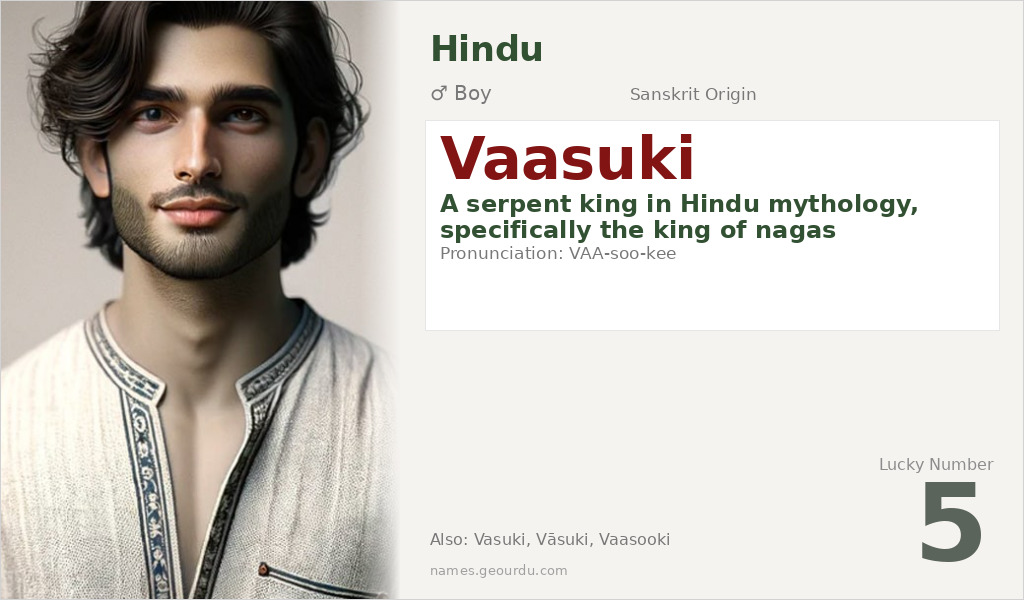
| 📛 Name | Vaasuki |
| 💎 Meaning | A serpent king in Hindu mythology, specifically the king of nagas (serpents) who served as the rope during the churning of the ocean (Samudra Manthan) |
| 👤 Gender | Boy |
| 🕌 Religion | Hindu |
| 🌍 Origin | Sanskrit |
| 🗣 Pronunciation | VAA-soo-kee |
| ✍️ Urdu | واسوکی |
| ✍️ Arabic | فاسوكي |
| 🔢 Numerology | 5 |
| ✨ Spellings | Vasuki, Vāsuki, Vaasooki |
Origin & Cultural Significance
Vaasuki originates from ancient Sanskrit texts and Hindu mythology, with its earliest appearances in Vedic and post-Vedic literature. As a mythological figure, Vaasuki is considered one of the primary nagas (serpent deities) in Hinduism, often mentioned alongside his brother Shesha (the cosmic serpent upon whom Vishnu rests). The name is deeply embedded in Indian cultural and religious traditions, particularly within Shaivism where snakes are associated with Shiva. Unlike many names that have spread across languages and regions, Vaasuki remains predominantly within Hindu naming traditions, though it appears in some Southeast Asian cultures influenced by Hindu mythology. The name’s usage reflects the enduring importance of mythological figures in Hindu naming practices, where names of deities, heroes, and cosmic beings are chosen to impart their qualities to the child.
Personality Traits
Those named Vaasuki are often associated with qualities drawn from the mythological serpent king: wisdom, protection, and spiritual depth. They may exhibit natural leadership abilities combined with a calm, observant nature that allows them to navigate complex situations. The connection to serpent symbolism suggests both transformative potential and hidden strength, with an ability to shed old ways and embrace renewal. These individuals might display a protective instinct toward loved ones and a deep respect for tradition and mythology.
Similar Names
If you like Vaasuki, consider: Shesha, Ananta, Takshaka, Karkotaka, Nagaraja
Famous People Named Vaasuki
- Vaasuki (mythological figure) — King of nagas in Hindu mythology who assisted gods and demons in churning the ocean of milk
- Vasuki Sunkavalli — Indian model and actress who won Miss Supranational 2024
Frequently Asked Questions About Vaasuki
What does Vaasuki mean?
Vaasuki means 'serpent king' in Sanskrit, specifically referring to the king of nagas in Hindu mythology who served as the rope during the churning of the cosmic ocean.
Is Vaasuki a boy or girl name?
Vaasuki is exclusively a boy's name in Hindu tradition, named after the male mythological figure who is the king of nagas.
What is the origin of Vaasuki?
Vaasuki originates from Sanskrit and Hindu mythology, appearing in ancient texts like the Mahabharata and Puranas as the name of the serpent king who assisted in the Samudra Manthan.