Table of Contents
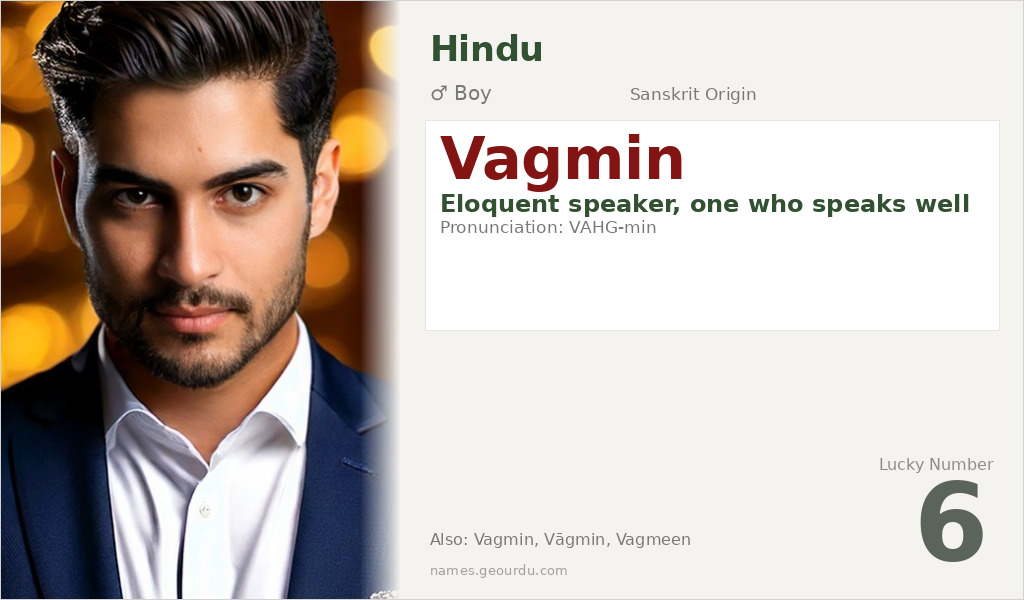
Vagmin is a distinctive Sanskrit name with deep roots in India’s linguistic and philosophical traditions. Meaning ‘eloquent speaker’ or ‘one who speaks well’, this name carries the legacy of ancient wisdom and articulate expression. Primarily used in Hindu communities, Vagmin represents the value placed on thoughtful communication and knowledge. Its classical origins make it both traditional and meaningful for modern parents seeking names with intellectual depth.
Meaning of Vagmin
Vagmin originates from the Sanskrit word ‘vāgmin’ (वाग्मिन्), which combines ‘vāc’ (वाच्) meaning ‘speech’, ‘voice’, or ‘word’ with the suffix ‘-min’ indicating possession or quality. In Sanskrit grammar and literature, this term specifically describes someone who is eloquent, articulate, or skilled in speech. The name appears in classical texts like the Upanishads and works of Sanskrit poets, often referring to wise sages, learned scholars, and persuasive orators. This linguistic heritage connects Vagmin to broader concepts of ‘vāk’ (divine speech) in Hindu philosophy, where speech is considered a sacred faculty. The name thus embodies both practical eloquence and spiritual significance in the power of words.
| 📛 Name | Vagmin |
| 💎 Meaning | Eloquent speaker, one who speaks well |
| 👤 Gender | Boy |
| 🕌 Religion | Hindu |
| 🌍 Origin | Sanskrit |
| 🗣 Pronunciation | VAHG-min |
| ✍️ Urdu | واگمن |
| ✍️ Arabic | فاغمين |
| 🔢 Numerology | 6 |
| ✨ Spellings | Vagmin, Vāgmin, Vagmeen, Vagmine |
Origin & Cultural Significance
Vagmin has its origins in classical Sanskrit, the ancient liturgical language of Hinduism, Buddhism, and Jainism. As a Sanskrit-derived name, it is primarily used within Hindu communities across India and the diaspora, particularly among those with appreciation for traditional Sanskrit names. The name reflects the high value placed on eloquence and wisdom in Indian philosophical traditions, where skilled speech was considered both an art and a spiritual discipline. While not extremely common, it appears in historical records of Sanskrit scholars and continues to be chosen by parents seeking names with intellectual and cultural resonance. Its usage spans various Indian regions, though it’s particularly noted in communities with strong Sanskrit educational traditions.
Personality Traits
Those named Vagmin often exhibit characteristics aligned with their name’s meaning—they tend to be articulate, thoughtful, and effective communicators. With a natural inclination toward learning and expression, they often excel in fields requiring verbal or written skills. Their personality typically combines intellectual curiosity with respect for tradition, making them both knowledgeable and persuasive. These traits reflect the Sanskrit ideal of the ‘vāgmin’—someone whose speech is not just fluent, but meaningful and wise.
Similar Names
If you like Vagmin, consider: Vachaspati, Vagish, Vachan, Vani, Vachas
Famous People Named Vagmin
- Vagmin Shastri — 19th century Sanskrit scholar and grammarian from Gujarat
- Vagmin Patel — Contemporary Indian poet and linguist specializing in Sanskrit literature
Frequently Asked Questions About Vagmin
What does Vagmin mean?
Vagmin means 'eloquent speaker' or 'one who speaks well'. It comes from Sanskrit 'vāgmin' (वाग्मिन्), combining 'vāc' (speech) with '-min' (possessing).
Is Vagmin a boy or girl name?
Vagmin is traditionally a masculine name in Hindu naming conventions, derived from masculine Sanskrit grammatical forms. There are no documented feminine variants in historical usage.
What is the origin of Vagmin?
Vagmin originates from Sanskrit, the classical language of ancient India. It is specifically derived from the Sanskrit word 'vāgmin' meaning 'eloquent', with roots in Hindu philosophical and linguistic traditions.