Table of Contents
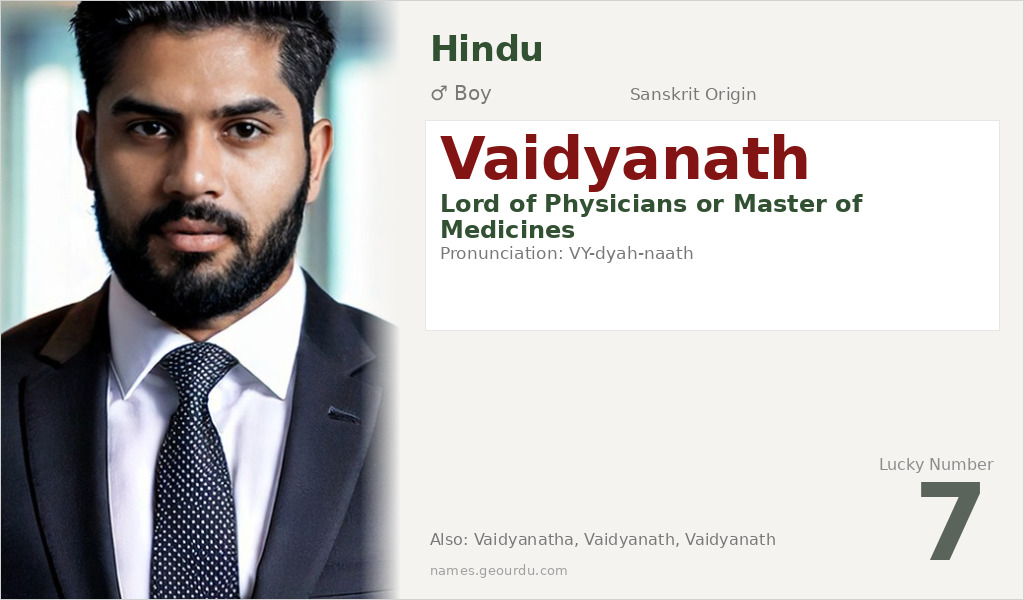
Vaidyanath is a profound Sanskrit name that carries centuries of cultural and spiritual significance in Hindu tradition. Meaning ‘Lord of Physicians’ or ‘Master of Medicines’, this name embodies healing wisdom and divine protection. Often associated with Lord Shiva in his role as the ultimate healer, Vaidyanath represents both medical knowledge and spiritual authority. Parents choosing this name often hope to instill qualities of compassion, intelligence, and service in their child.
Meaning of Vaidyanath
Vaidyanath derives from classical Sanskrit, combining ‘Vaidya’ (वैद्य), meaning physician or medical expert, with ‘Nath’ (नाथ), meaning lord, master, or protector. The complete meaning translates to ‘Lord of Physicians’ or ‘Master of Medicines’, reflecting both earthly healing arts and divine healing power. In Hindu scriptures, this is one of the many names of Lord Shiva, particularly in contexts where he is worshipped as the divine physician who cures both physical and spiritual ailments. The term ‘Vaidya’ itself comes from the Sanskrit root ‘vid’ meaning ‘to know’, emphasizing that a true physician is one who possesses deep knowledge. This name has been particularly significant in Ayurvedic traditions, where medical practitioners were often called ‘Vaidya’ and the highest among them could be honored as ‘Vaidyanath’.
| 📛 Name | Vaidyanath |
| 💎 Meaning | Lord of Physicians or Master of Medicines |
| 👤 Gender | Boy |
| 🕌 Religion | Hindu |
| 🌍 Origin | Sanskrit |
| 🗣 Pronunciation | VY-dyah-naath |
| ✍️ Urdu | ویدیا ناتھ |
| ✍️ Arabic | فيدياناث |
| 🔢 Numerology | 7 |
| ✨ Spellings | Vaidyanatha, Vaidyanath, Vaidyanath, Vaidyanath |
Origin & Cultural Significance
Vaidyanath originates from ancient Sanskrit language and Hindu religious tradition, with documented usage dating back to classical Hindu texts and temple inscriptions. The name is particularly associated with Shaivism (worship of Shiva), where Shiva is revered as Vaidyanath, the divine healer who cured the gods and offered remedies for suffering. Several important temples in India are dedicated to Vaidyanath, most notably the Vaidyanath Temple in Deoghar, Jharkhand, which is one of the twelve Jyotirlingas. The name has been used historically by Brahmin communities, especially those practicing Ayurvedic medicine, and continues to be popular in India among Hindu families valuing traditional, meaningful names. While primarily a Hindu name, its Sanskrit roots mean it’s understood across various Indian languages and communities.
Personality Traits
Those named Vaidyanath are often seen as natural healers and problem-solvers, with an analytical mind and compassionate heart. They tend to approach life with wisdom and patience, seeking to understand root causes rather than just surface symptoms. Their connection to the name’s meaning often manifests in careers or interests related to medicine, science, counseling, or spiritual guidance. While serious and responsible, they also possess a calming presence that makes others feel cared for and understood.
Similar Names
If you like Vaidyanath, consider: Vaidya, Dhanvantari, Shiva, Nath, Vaidyanathan, Vaidik, Vaidheesh, Vaidheya, Vaidyapati, Vaidyaraj
Famous People Named Vaidyanath
- Vaidyanatha Iyer — Indian freedom fighter and politician from Tamil Nadu
- Vaidyanath Mishra — Indian poet and writer, also known as Nagarjun
Frequently Asked Questions About Vaidyanath
What does Vaidyanath mean?
Vaidyanath means 'Lord of Physicians' or 'Master of Medicines' in Sanskrit, combining 'Vaidya' (physician) and 'Nath' (lord/master).
Is Vaidyanath a boy or girl name?
Vaidyanath is traditionally a masculine name in Hindu culture, though names ending in 'nath' are almost exclusively male in Sanskrit naming conventions.
What is the origin of Vaidyanath?
Vaidyanath originates from Sanskrit language and Hindu religious tradition, where it is an epithet of Lord Shiva as the divine healer, with historical usage in India for centuries.