
Table of Contents
Vajendra is a distinctive and powerful name with deep roots in Hindu tradition and Sanskrit language. Often chosen for boys, it evokes imagery of divine strength and authority, drawing directly from ancient mythology. This name not only carries a rich etymological background but also resonates with cultural significance in Hindu communities. Exploring Vajendra reveals a connection to one of the most revered deities in Hinduism, making it a meaningful choice for parents seeking a name with historical and spiritual weight.
Meaning of Vajendra
Vajendra derives from Sanskrit, an ancient Indo-Aryan language, and is a compound of two words: ‘Vajra’ and ‘Indra’. ‘Vajra’ means ‘thunderbolt’ or ‘diamond’, symbolizing indestructibility and power, often associated with the weapon of Lord Indra. ‘Indra’ translates to ‘lord’ or ‘king’, referring to the chief deity in early Hindu texts. Thus, Vajendra literally means ‘Lord of the thunderbolt’, serving as an epithet for Lord Indra, who wields the vajra. This name embodies concepts of sovereignty, strength, and divine protection, reflecting its mythological origins in texts like the Rigveda.
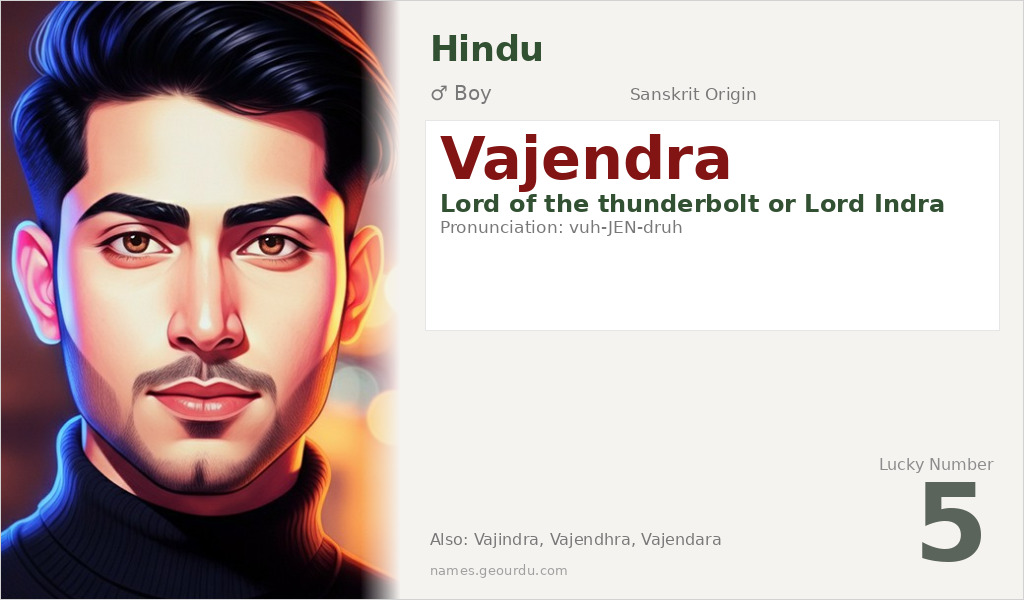
| 📛 Name | Vajendra |
| 💎 Meaning | Lord of the thunderbolt or Lord Indra |
| 👤 Gender | Boy |
| 🕌 Religion | Hindu |
| 🌍 Origin | Sanskrit |
| 🗣 Pronunciation | vuh-JEN-druh |
| ✍️ Urdu | وجیندر |
| ✍️ Arabic | فاجيندرا |
| 🔢 Numerology | 5 |
| ✨ Spellings | Vajindra, Vajendhra, Vajendara |
Origin & Cultural Significance
Originating from Sanskrit, Vajendra has been used in Hindu cultures for centuries, particularly in India and Nepal. It is deeply embedded in Hindu mythology, where Lord Indra is celebrated as the king of gods and the god of rain and thunderstorms. The name’s usage extends to various Hindu communities, often chosen to invoke the qualities of leadership and resilience associated with Indra. While primarily a Hindu name, its Sanskrit roots make it recognizable in other cultures influenced by Indian traditions, such as Buddhism, where vajra symbolism is also prevalent. Historically, names like Vajendra have been preserved through religious texts and oral traditions, maintaining their relevance in modern naming practices.
Personality Traits
Those named Vajendra are often seen as natural leaders with a strong sense of authority and determination. Inspired by the name’s meaning, they may exhibit qualities of protection and strength, much like the thunderbolt-wielding deity it references. Their personality can be dynamic and influential, with a tendency to take charge in challenging situations. This name suggests a person who is resilient and commanding, capable of inspiring others through their actions and presence.
Similar Names
If you like Vajendra, consider: Indra, Vajra, Vajrapani, Vajrasattva, Indrajit
Famous People Named Vajendra
- Vajendra Singh — Indian cricketer who played for Rajasthan in domestic cricket
- Vajendra Kumara — Sri Lankan academic and author in Buddhist studies
Frequently Asked Questions About Vajendra
What does Vajendra mean?
Vajendra means 'Lord of the thunderbolt' or 'Lord Indra' in Sanskrit, derived from the words 'Vajra' (thunderbolt) and 'Indra' (lord).
Is Vajendra a boy or girl name?
Vajendra is traditionally a boy's name in Hindu culture, reflecting its association with the male deity Lord Indra and masculine qualities of strength and authority.
What is the origin of Vajendra?
Vajendra originates from Sanskrit, an ancient Indian language, and is deeply rooted in Hindu mythology, specifically linked to Lord Indra, the king of gods in early Hindu texts.





