
Table of Contents
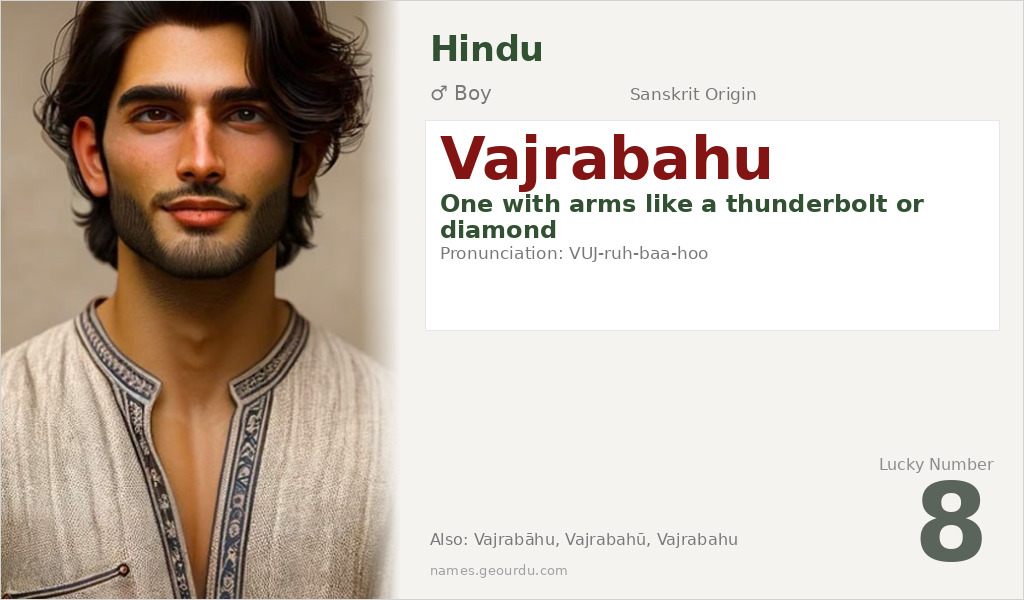
Vajrabahu is a powerful Sanskrit name that carries the weight of ancient Indian mythology and warrior tradition. Meaning ‘one with arms like a thunderbolt or diamond’, this name symbolizes extraordinary strength and indestructibility. Primarily used in Hindu communities, it evokes images of divine warriors and legendary kings from India’s rich historical tapestry. Today, it remains a distinctive choice for parents seeking a name with deep cultural roots and heroic connotations.
Meaning of Vajrabahu
Vajrabahu derives from classical Sanskrit, combining ‘vajra’ (वज्र) and ‘bāhu’ (बाहु). ‘Vajra’ has multiple layered meanings: primarily the thunderbolt weapon of Indra (king of gods in Hindu mythology), but also diamond, adamant, or any supremely hard substance. This term appears throughout Vedic and post-Vedic literature as a symbol of ultimate power and invincibility. ‘Bāhu’ means arm, shoulder, or physical strength, representing both literal and metaphorical power. Together, they create a compound that describes someone with arms possessing the qualities of a vajra—unbreakable, formidable, and divinely powerful. The name appears in ancient texts like the Mahabharata and historical chronicles, always associated with martial prowess or royal authority.
| 📛 Name | Vajrabahu |
| 💎 Meaning | One with arms like a thunderbolt or diamond |
| 👤 Gender | Boy |
| 🕌 Religion | Hindu |
| 🌍 Origin | Sanskrit |
| 🗣 Pronunciation | VUJ-ruh-baa-hoo |
| ✍️ Urdu | وجراباہو |
| ✍️ Arabic | فاجراباهو |
| 🔢 Numerology | 8 |
| ✨ Spellings | Vajrabāhu, Vajrabahū, Vajrabahu |
Origin & Cultural Significance
Vajrabahu originates from ancient India’s Sanskrit linguistic and cultural tradition, dating back to at least the first millennium BCE. As a compound name, it reflects the sophisticated naming conventions of classical Sanskrit where attributes and qualities are combined to create meaningful identifiers. The name appears in both mythological contexts (describing warriors or divine beings) and historical records (such as Sri Lankan kings of Anuradhapura). Its usage spans Hindu communities across South Asia, particularly in India, Nepal, and Sri Lanka, where Sanskrit-derived names maintain cultural and religious significance. The name’s martial connotations connect it to the kshatriya (warrior) tradition in Hindu society, though it’s used more broadly today as a symbol of strength and protection.
Personality Traits
Those named Vajrabahu are often associated with qualities of resilience, protection, and formidable strength—both physical and moral. The thunderbolt symbolism suggests they may approach life with decisive energy and the ability to overcome obstacles through sheer determination. In social contexts, they might naturally assume protective roles, defending others with the same unwavering force that their name implies. While individual personalities vary, the name carries expectations of courage and reliability that can influence both self-perception and social interactions.
Similar Names
If you like Vajrabahu, consider: Vajradhara, Vajrapani, Bhadrabahu, Virbahu, Dhanurbahu
Famous People Named Vajrabahu
- Vajrabahu I — 1st century BCE King of Anuradhapura, Sri Lanka, mentioned in ancient chronicles
- Vajrabahu — Mythological figure and warrior in Hindu texts, sometimes associated with divine beings
Frequently Asked Questions About Vajrabahu
What does Vajrabahu mean?
Vajrabahu means 'one with arms like a thunderbolt or diamond' in Sanskrit, combining 'vajra' (thunderbolt/diamond) and 'bāhu' (arm/strength).
Is Vajrabahu a boy or girl name?
Vajrabahu is exclusively a masculine name in Hindu naming tradition, derived from warrior and royal contexts where such compound names were typically given to males.
What is the origin of Vajrabahu?
Vajrabahu originates from classical Sanskrit, the ancient liturgical language of Hinduism, with documented usage in Indian mythology and historical records from South Asia.





