
Table of Contents
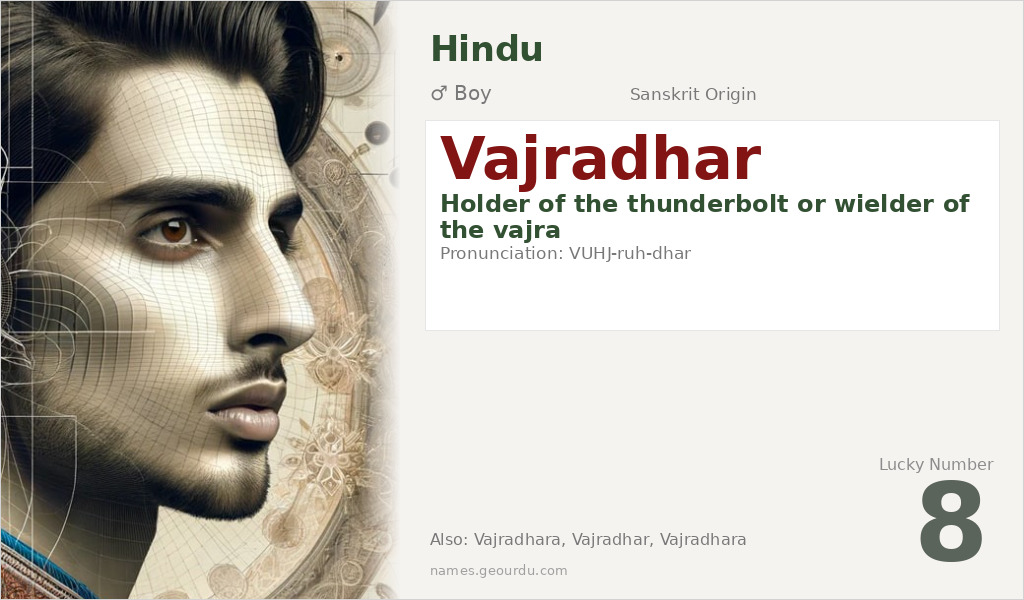
Vajradhar is a powerful Sanskrit name with deep roots in Hindu and Buddhist traditions. Meaning ‘holder of the thunderbolt’ or ‘wielder of the vajra,’ this name carries connotations of strength, spiritual power, and indestructibility. Used primarily for boys, Vajradhar connects its bearer to ancient mythological and philosophical concepts that have endured for millennia. The name’s rich symbolism makes it a meaningful choice for parents seeking a name with spiritual depth and historical resonance.
Meaning of Vajradhar
Vajradhar is a compound Sanskrit name with precise etymological meaning. The first component ‘vajra’ refers to the thunderbolt, a divine weapon that symbolizes both destructive power and spiritual enlightenment. In Hindu mythology, the vajra is most famously associated with Indra, the king of gods, but appears in various traditions including Buddhism where it represents the indestructible nature of reality. The second component ‘dhar’ comes from the Sanskrit root ‘dhṛ’ meaning ‘to hold, bear, or support.’ Thus, Vajradhar literally translates to ‘one who holds the vajra’ or ‘wielder of the thunderbolt.’ This name appears in ancient texts like the Vedas and Puranas, where it describes deities and spiritual masters who possess this powerful symbol.
| 📛 Name | Vajradhar |
| 💎 Meaning | Holder of the thunderbolt or wielder of the vajra |
| 👤 Gender | Boy |
| 🕌 Religion | Hindu |
| 🌍 Origin | Sanskrit |
| 🗣 Pronunciation | VUHJ-ruh-dhar |
| ✍️ Urdu | وجردھر |
| ✍️ Arabic | فاجرادهار |
| 🔢 Numerology | 8 |
| ✨ Spellings | Vajradhara, Vajradhar, Vajradhara |
Origin & Cultural Significance
Vajradhar originates from classical Sanskrit, the ancient liturgical language of Hinduism, Buddhism, and Jainism. The name emerges from India’s rich mythological tradition where the vajra (thunderbolt) appears as a significant symbol across multiple religious systems. In Hinduism, various deities including Indra, Shiva, and Kartikeya are described as vajradhar or associated with the vajra weapon. In Vajrayana Buddhism, Vajradhara is considered the primordial Buddha from whom all tantric teachings emanate. The name reflects the cultural and religious synthesis that characterized ancient Indian civilization, where symbolic weapons represented both martial power and spiritual realization. Its usage continues primarily within Hindu communities but also appears in Buddhist contexts.
Personality Traits
The name Vajradhar suggests a personality marked by strength, determination, and spiritual depth. Like the vajra it references, individuals with this name may exhibit resilience in facing life’s challenges and an ability to cut through obstacles with clarity. The thunderbolt symbolism implies both transformative power and protective qualities, suggesting someone who might take on leadership roles or serve as a guardian for others. There’s also an intellectual dimension to the name, as the vajra in Buddhist philosophy represents the indestructible nature of wisdom and reality.
Similar Names
If you like Vajradhar, consider: Vajra, Indra, Varuna, Agni, Kartikeya
Famous People Named Vajradhar
- Vajradhara — In Vajrayana Buddhism, Vajradhara is considered the primordial Buddha and the embodiment of the dharmakaya
- Various Hindu deities — Many Hindu gods including Indra are described as vajradhar (holders of the thunderbolt) in scriptures
Frequently Asked Questions About Vajradhar
What does Vajradhar mean?
Vajradhar means 'holder of the thunderbolt' or 'wielder of the vajra' in Sanskrit. It is a compound name combining 'vajra' (thunderbolt/diamond) and 'dhar' (holder/bearer).
Is Vajradhar a boy or girl name?
Vajradhar is traditionally a masculine name used primarily for boys in Hindu naming traditions. There are no common feminine variants of this name.
What is the origin of Vajradhar?
Vajradhar originates from Sanskrit, the ancient language of India. It comes from Hindu and Buddhist religious traditions where the vajra (thunderbolt) is an important spiritual and mythological symbol.





