
Table of Contents
Vajraksha is a distinctive Sanskrit name with profound spiritual and symbolic meaning. Derived from ancient Indian linguistic roots, this name carries the powerful imagery of diamond-like vision and indestructible perception. While not among the most common Hindu names today, Vajraksha represents a meaningful choice for parents seeking a name with deep cultural resonance and strong visual symbolism. The name’s compound structure reveals layers of meaning that connect to both physical attributes and spiritual qualities.
Meaning of Vajraksha
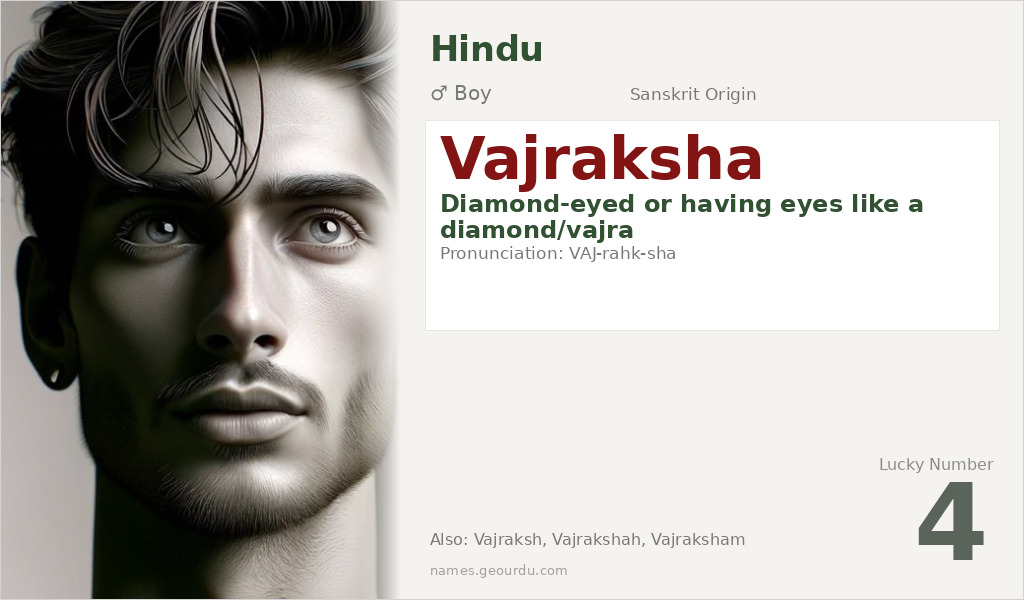
Vajraksha is a compound Sanskrit name with precise etymological meaning. The first component ‘vajra’ has multiple connotations in Sanskrit literature—it can mean diamond, thunderbolt, or the mythical weapon of Indra, all symbolizing hardness, strength, and indestructibility. The second component ‘aksha’ directly translates to ‘eye’ or ‘organ of sight’. When combined, Vajraksha literally means ‘diamond-eyed’ or ‘having eyes like a vajra’. This suggests someone with exceptionally sharp, clear, or penetrating vision, either literally or metaphorically. In Hindu philosophical context, such vision could represent spiritual insight, wisdom, or the ability to perceive truth beyond surface appearances. The name follows classical Sanskrit compounding rules where two meaningful elements create a new, descriptive whole.
| 📛 Name | Vajraksha |
| 💎 Meaning | Diamond-eyed or having eyes like a diamond/vajra |
| 👤 Gender | Boy |
| 🕌 Religion | Hindu |
| 🌍 Origin | Sanskrit |
| 🗣 Pronunciation | VAJ-rahk-sha |
| ✍️ Urdu | وجراکش |
| ✍️ Arabic | فاجراكشا |
| 🔢 Numerology | 4 |
| ✨ Spellings | Vajraksh, Vajrakshah, Vajraksham |
Origin & Cultural Significance
Vajraksha originates from classical Sanskrit, the ancient liturgical language of Hinduism, Buddhism, and Jainism. As a compound name, it reflects the sophisticated naming traditions of ancient India where meaningful elements were combined to create names with specific attributes. While not directly mentioned in major Hindu scriptures like the Vedas or Puranas, the name follows established Sanskrit morphological patterns. The ‘vajra’ element appears frequently in Hindu and Buddhist terminology, most notably in Vajrayana Buddhism where it represents the indestructible nature of enlightenment. The name likely emerged from Sanskrit literary traditions rather than specific mythological narratives, though its components have deep religious significance. In modern usage, it remains primarily within Hindu naming conventions, particularly among families with appreciation for Sanskrit’s linguistic richness.
Personality Traits
The name Vajraksha suggests personality traits aligned with its ‘diamond-eyed’ meaning. Individuals with this name might be perceived as having exceptional clarity of thought and perception. The diamond symbolism implies both value and durability—suggesting someone who is precious in character yet resilient in facing challenges. The emphasis on vision could indicate strong intuition, analytical abilities, or spiritual insight. Such individuals may approach life with focused determination and the ability to see what others might overlook.
Similar Names
If you like Vajraksha, consider: Vajra, Akshay, Vajradhara, Akshaj, Vajrapani
Famous People Named Vajraksha
- No widely known contemporary figures with this exact name found in historical records or modern celebrity databases
Frequently Asked Questions About Vajraksha
What does Vajraksha mean?
Vajraksha means 'diamond-eyed' or 'having eyes like a diamond/vajra' in Sanskrit. It's a compound name where 'vajra' means diamond/thunderbolt and 'aksha' means eye.
Is Vajraksha a boy or girl name?
Vajraksha is traditionally a masculine name in Hindu naming conventions. Sanskrit compound names ending in specific suffixes typically indicate gender, and Vajraksha follows masculine grammatical patterns.
What is the origin of Vajraksha?
Vajraksha originates from Sanskrit, the ancient classical language of India. It follows traditional Sanskrit compounding rules and reflects Hindu naming traditions that combine meaningful elements to create descriptive names.





