
Table of Contents
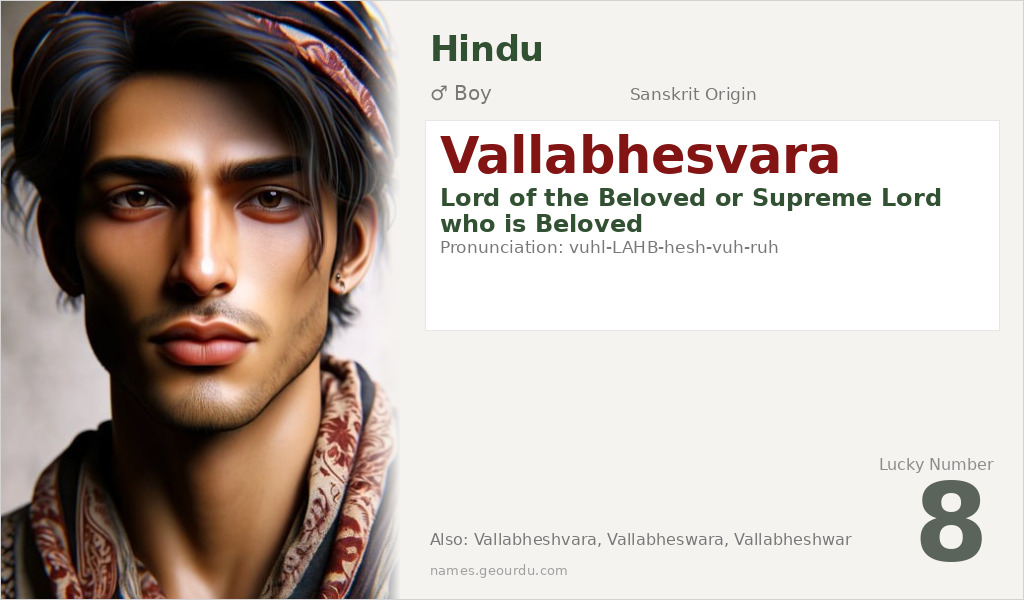
Vallabhesvara is a profound and spiritually rich name of Sanskrit origin, predominantly used in Hindu communities. Combining ‘Vallabha’ (beloved) and ‘Ishvara’ (lord), it embodies the essence of divine love and sovereignty. This name is often chosen for boys to invoke blessings of protection and reverence, reflecting a deep connection to Hindu deities like Shiva or Vishnu. Explore the etymology, cultural significance, and personality traits associated with Vallabhesvara in this comprehensive guide.
Meaning of Vallabhesvara
Vallabhesvara is a compound name derived from Sanskrit, an ancient Indo-Aryan language with roots in Vedic traditions. The first part, ‘Vallabha’, originates from the Sanskrit root ‘vall’, which conveys meanings of covering, protecting, or being dear, thus translating to ‘beloved’ or ‘favorite’. The second part, ‘Ishvara’, comes from ‘ish’, meaning to rule or possess, denoting ‘lord’, ‘master’, or ‘supreme being’. Together, Vallabhesvara literally means ‘Lord of the Beloved’ or ‘Supreme Lord who is Beloved’, often used in religious contexts to refer to gods who are cherished by devotees. This name highlights the interplay between devotion and divinity, common in Hindu theonymy, where names celebrate the attributes of deities. Its usage in texts and temples underscores its enduring spiritual resonance.
| 📛 Name | Vallabhesvara |
| 💎 Meaning | Lord of the Beloved or Supreme Lord who is Beloved |
| 👤 Gender | Boy |
| 🕌 Religion | Hindu |
| 🌍 Origin | Sanskrit |
| 🗣 Pronunciation | vuhl-LAHB-hesh-vuh-ruh |
| ✍️ Urdu | ولبھیشور |
| ✍️ Arabic | فالابهيشفارا |
| 🔢 Numerology | 8 |
| ✨ Spellings | Vallabheshvara, Vallabheswara, Vallabheshwar |
Origin & Cultural Significance
Originating from Sanskrit, Vallabhesvara has deep roots in Hindu culture and mythology, dating back to ancient India. Sanskrit, as a classical language, has influenced many South Asian languages and is central to Hindu scriptures like the Vedas and Puranas. The name is particularly associated with Shaivism and Vaishnavism, where it may refer to forms of Shiva or Vishnu as beloved lords. Historically, it appears in inscriptions and temple names, such as the Vallabhesvara Temple in Andhra Pradesh, indicating its architectural and religious significance. While primarily used in India, its spread through diaspora has introduced it to global Hindu communities, maintaining its traditional essence without significant adaptation in other languages.
Personality Traits
Those named Vallabhesvara are often seen as embodying qualities of leadership, devotion, and protectiveness, inspired by the name’s meaning. They may exhibit a strong spiritual bent, with a calm and authoritative demeanor that draws respect from others. Their nurturing side aligns with the ‘beloved’ aspect, making them caring and loyal in relationships. Overall, the name suggests a personality balanced between strength and affection, ideal for roles that require guidance and compassion.
Similar Names
If you like Vallabhesvara, consider: Vallabha, Ishvara, Vallabhdas, Vallabhacharya, Vallabhi
Famous People Named Vallabhesvara
- Vallabhesvara — A historical figure mentioned in some Hindu texts as a devotee or sage, though specific biographical details are scarce in mainstream records.
- Vallabhesvara Temple — An ancient temple in Andhra Pradesh, India, dedicated to Lord Shiva, showcasing the name's religious significance in architecture.
Frequently Asked Questions About Vallabhesvara
What does Vallabhesvara mean?
Vallabhesvara means 'Lord of the Beloved' or 'Supreme Lord who is Beloved', derived from Sanskrit 'Vallabha' (beloved) and 'Ishvara' (lord).
Is Vallabhesvara a boy or girl name?
Vallabhesvara is traditionally a boy name in Hindu culture, reflecting masculine divine attributes, though names can vary by region.
What is the origin of Vallabhesvara?
Vallabhesvara originates from Sanskrit, an ancient Indian language, and is deeply rooted in Hindu religious traditions, often associated with deities like Shiva or Vishnu.





