Table of Contents
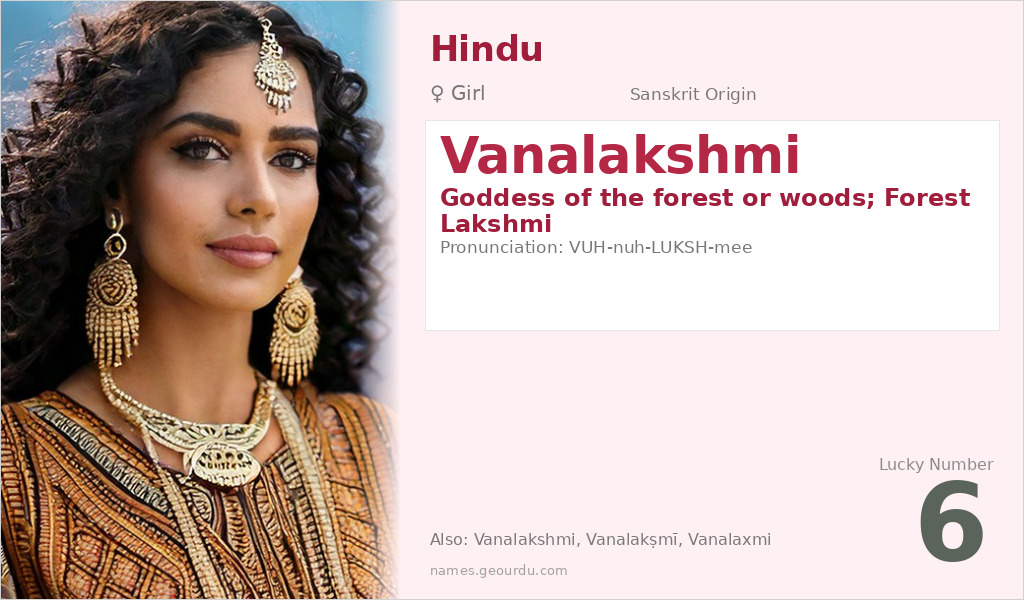
Vanalakshmi is a beautiful Sanskrit name that beautifully merges nature worship with divine femininity in Hindu tradition. Meaning ‘Goddess of the Forest’ or ‘Forest Lakshmi,’ this name carries deep spiritual significance connecting the goddess of prosperity with the natural world. As a compound name, it represents one of the many manifestations of Goddess Lakshmi, specifically associated with forests, woods, and natural abundance. This name has been cherished in Hindu communities for generations, particularly among those with reverence for nature and traditional values.
Meaning of Vanalakshmi
Vanalakshmi derives from classical Sanskrit, combining two distinct elements with profound meanings. The first component ‘Vana’ (वन) originates from Proto-Indo-European roots and appears across Sanskrit literature referring to forests, woods, groves, or any natural wooded area. The second component ‘Lakshmi’ (लक्ष्मी) is the name of the principal Hindu goddess of wealth, fortune, prosperity, and beauty, who is the consort of Lord Vishnu. When combined, Vanalakshmi literally means ‘Forest Lakshmi’ or ‘Lakshmi of the Woods,’ representing the goddess’s manifestation in natural environments. This name reflects the Hindu philosophical concept that divinity permeates all aspects of creation, including forests and natural landscapes. In various Hindu texts and regional traditions, different forms of Lakshmi are recognized, with Vanalakshmi specifically associated with the prosperity and abundance found in forest ecosystems.
| 📛 Name | Vanalakshmi |
| 💎 Meaning | Goddess of the forest or woods; Forest Lakshmi |
| 👤 Gender | Girl |
| 🕌 Religion | Hindu |
| 🌍 Origin | Sanskrit |
| 🗣 Pronunciation | VUH-nuh-LUKSH-mee |
| ✍️ Urdu | ونالکشمی |
| ✍️ Arabic | فانالاكشمي |
| 🔢 Numerology | 6 |
| ✨ Spellings | Vanalakshmi, Vanalakṣmī, Vanalaxmi |
Origin & Cultural Significance
Vanalakshmi originates from Sanskrit, the classical language of ancient India that has influenced numerous South Asian languages. The name emerges from Hindu religious and cultural traditions where nature deities and forest spirits have been venerated since Vedic times. In Hindu mythology, forests hold sacred significance as places of meditation, spiritual retreat, and divine manifestation. The concept of Vanalakshmi likely developed from regional folk traditions that localized the worship of Lakshmi to specific natural environments. This name is particularly prevalent in regions of India with strong forest traditions, such as parts of South India, Maharashtra, and Odisha. While not among the most common Lakshmi variations, Vanalakshmi maintains cultural relevance in communities that emphasize environmental spirituality and traditional nature worship within Hinduism.
Personality Traits
Those named Vanalakshmi are often associated with qualities of serenity, natural wisdom, and grounded prosperity. They may exhibit a deep connection to nature and an appreciation for simple, authentic living. The name suggests someone who finds wealth not just in material possessions but in natural beauty and spiritual abundance. In social contexts, they might be perceived as nurturing, stable individuals who bring a sense of calm and natural grace to their relationships and environments.
Similar Names
If you like Vanalakshmi, consider: Vanadevi, Vanamala, Aranyakshi, Vrindalakshmi, Bhulakshmi
Famous People Named Vanalakshmi
- Vanalakshmi — Indian classical dancer specializing in Bharatanatyam, known for performances depicting nature themes
- Vanalakshmi — Character in regional Indian folklore representing forest goddess traditions
Frequently Asked Questions About Vanalakshmi
What does Vanalakshmi mean?
Vanalakshmi means 'Goddess of the Forest' or 'Forest Lakshmi' in Sanskrit. It combines 'Vana' (forest) with 'Lakshmi' (goddess of prosperity).
Is Vanalakshmi a boy or girl name?
Vanalakshmi is exclusively a feminine name in Hindu tradition, given to girls. The name refers to a goddess manifestation, making it inherently feminine.
What is the origin of Vanalakshmi?
Vanalakshmi originates from Sanskrit, the classical language of ancient India, and belongs to Hindu religious and cultural traditions. It represents a specific form of Goddess Lakshmi associated with forests.