
Table of Contents
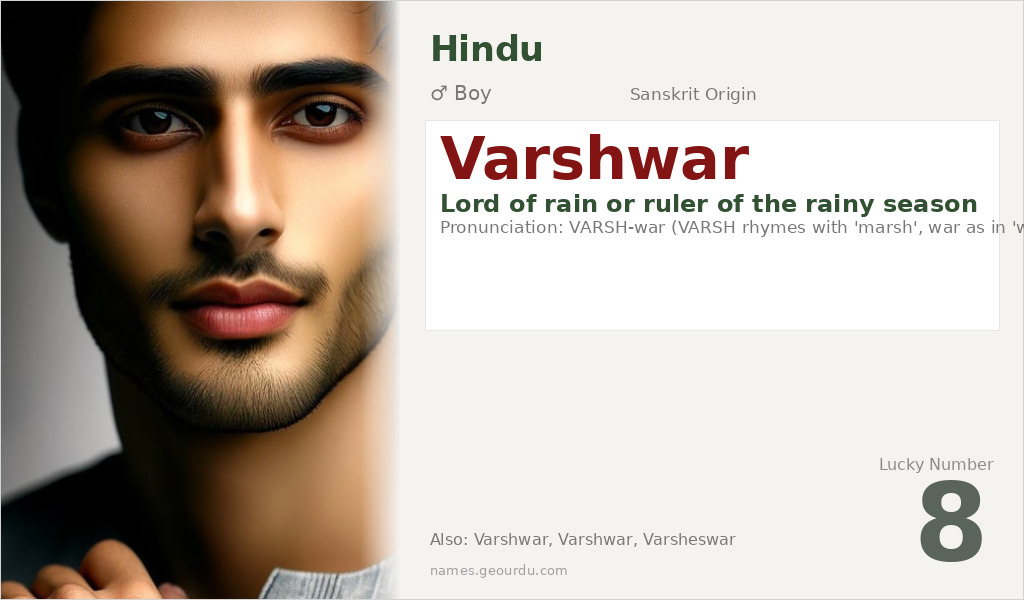
Varshwar is a distinctive Sanskrit name that carries the poetic meaning of ‘lord of rain’ or ‘ruler of the rainy season’. This ancient name combines two powerful elements from Hindu tradition: ‘Varsha’ meaning rain and ‘Ishwar’ meaning lord. Popular among Hindu families, Varshwar symbolizes life-giving power, fertility, and divine control over natural forces. The name evokes imagery of monsoon seasons, agricultural abundance, and spiritual renewal.
Meaning of Varshwar
Varshwar derives from classical Sanskrit, where ‘Varsha’ (वर्षा) specifically refers to rain, rainfall, or the rainy season, originating from the verbal root √vṛṣ meaning ‘to rain’, ‘to shower’, or ‘to pour forth’. The second component ‘Ishwar’ (ईश्वर) means ‘lord’, ‘ruler’, ‘master’, or ‘god’, from the root √īś meaning ‘to own’, ‘to rule’, or ‘to be capable’. Together, they form a compound name meaning ‘lord of rain’, indicating someone who controls or presides over rainfall. In Vedic and Puranic literature, rain deities like Indra (king of gods and bringer of rains) and Parjanya (specifically the rain god) are sometimes described with similar epithets. The name reflects the agricultural importance of monsoon seasons in South Asian culture and the reverence for natural forces in Hindu cosmology.
| 📛 Name | Varshwar |
| 💎 Meaning | Lord of rain or ruler of the rainy season |
| 👤 Gender | Boy |
| 🕌 Religion | Hindu |
| 🌍 Origin | Sanskrit |
| 🗣 Pronunciation | VARSH-war (VARSH rhymes with 'marsh', war as in 'warfare') |
| ✍️ Urdu | ورشور |
| ✍️ Arabic | فارشوار |
| 🔢 Numerology | 8 |
| ✨ Spellings | Varshwar, Varshwar, Varsheswar, Varshishwar |
Origin & Cultural Significance
Varshwar originates from Sanskrit, the classical language of ancient India and the primary liturgical language of Hinduism. As a compound Sanskrit name, it follows traditional naming patterns where two meaningful elements combine to create a new name with specific significance. The name reflects the deep connection between Hindu culture and natural phenomena, particularly the vital importance of monsoon rains for agriculture in the Indian subcontinent. While not among the most common names today, it appears in historical texts and continues to be used by families seeking names with natural and divine connotations. The name’s components are also found separately in other Hindu names, such as Varsha (rain) for girls and Ishwar (lord) for boys.
Personality Traits
Those named Varshwar are often associated with qualities of nourishment, renewal, and benevolent authority. Like rain that transforms dry landscapes, they may possess the ability to bring positive change and growth to challenging situations. Their personality might blend calm patience with moments of intense energy and productivity. In social contexts, they often serve as stabilizing forces who provide emotional and practical support to others during difficult times.
Similar Names
If you like Varshwar, consider: Varun, Indra, Megh, Vrishti, Parjanya, Ishwar, Varsha, Varshini, Varshan, Varshit
Famous People Named Varshwar
- No widely known contemporary public figures with this exact name found in verified records
- Historical/mythological references to rain deities in Hindu texts who might be addressed with similar epithets
Frequently Asked Questions About Varshwar
What does Varshwar mean?
Varshwar means 'lord of rain' or 'ruler of the rainy season' in Sanskrit, combining 'Varsha' (rain) and 'Ishwar' (lord).
Is Varshwar a boy or girl name?
Varshwar is exclusively a boy's name in Hindu naming tradition, following the grammatical gender patterns of Sanskrit where compound names ending in 'Ishwar' are masculine.
What is the origin of Varshwar?
Varshwar originates from Sanskrit, the classical language of ancient India, and is used primarily in Hindu communities with cultural roots in the Indian subcontinent.





