Table of Contents
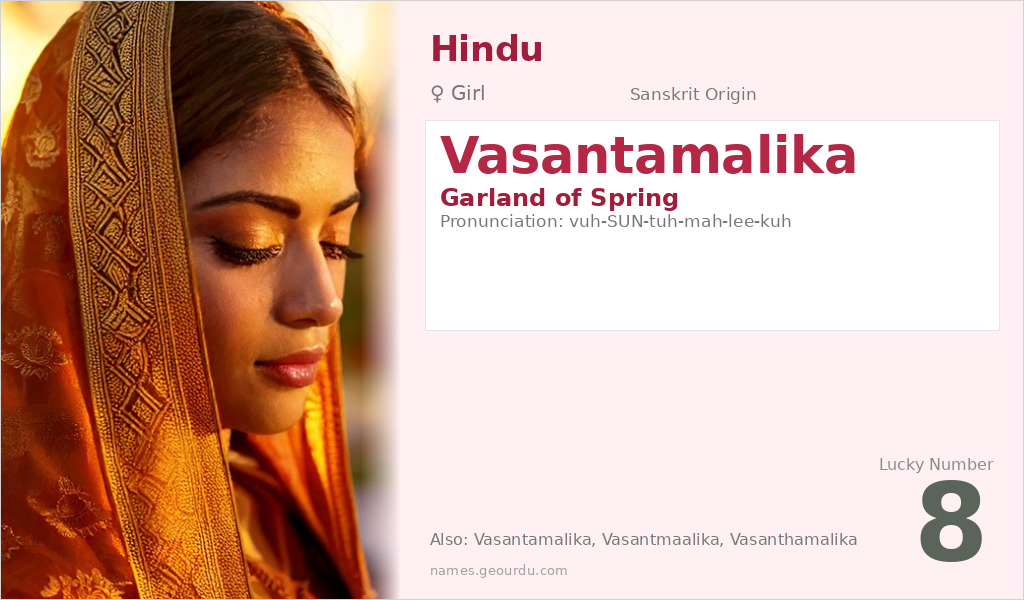
Vasantamalika is a beautiful Sanskrit name that evokes the freshness and beauty of springtime. Meaning ‘Garland of Spring’, this name carries poetic imagery of floral abundance and seasonal renewal. Primarily used in Hindu communities, it represents nature’s cyclical beauty and has deep roots in Indian literary traditions. While uncommon as a personal name today, it remains a meaningful choice for those seeking a name with classical Sanskrit elegance.
Meaning of Vasantamalika
Vasantamalika derives from two Sanskrit words: ‘Vasanta’ (वसन्त) meaning ‘spring season’ and ‘Malika’ (मालिका) meaning ‘garland’ or ‘wreath’. In Sanskrit poetry and literature, Vasanta specifically refers to the spring season celebrated for its blooming flowers, pleasant weather, and associations with love and renewal. Malika denotes a string of flowers or ornamental arrangement, often used in religious ceremonies and celebrations. The compound thus creates the poetic meaning ‘garland of spring’, suggesting something adorned with the essence of spring’s beauty. This name appears in classical texts describing spring festivals where floral garlands were central to celebrations.
| 📛 Name | Vasantamalika |
| 💎 Meaning | Garland of Spring |
| 👤 Gender | Girl |
| 🕌 Religion | Hindu |
| 🌍 Origin | Sanskrit |
| 🗣 Pronunciation | vuh-SUN-tuh-mah-lee-kuh |
| ✍️ Urdu | وسنت مالکا |
| ✍️ Arabic | فاسانتاماليكا |
| 🔢 Numerology | 8 |
| ✨ Spellings | Vasantamalika, Vasantmaalika, Vasanthamalika, Vasanthmaalika |
Origin & Cultural Significance
Vasantamalika originates from classical Sanskrit, the ancient liturgical language of Hinduism. The name reflects India’s rich tradition of nature-inspired names and seasonal poetry, where spring (Vasanta) holds special significance as a time of renewal and celebration. In Hindu culture, spring festivals like Vasant Panchami celebrate the season’s arrival with yellow flowers and decorations, making floral imagery culturally resonant. While more commonly found as a descriptive term in literature than as a personal name, it follows the Sanskrit pattern of compound names combining natural elements with beautiful concepts. The name’s usage is primarily within Hindu communities familiar with Sanskrit traditions.
Personality Traits
Those named Vasantamalika are often associated with qualities of freshness, creativity, and natural beauty. Like the spring season their name represents, they may bring renewal and positive energy to their environments. Typically artistic and appreciative of aesthetics, they might excel in creative pursuits and have a nurturing disposition. The garland symbolism suggests someone who connects people and ideas beautifully, creating harmony in relationships.
Similar Names
If you like Vasantamalika, consider: Vasanti, Malika, Vasundhara, Pushpamala, Vasantika
Famous People Named Vasantamalika
- No widely known contemporary public figures bear this name, but it appears in classical Indian literature and poetry as a descriptive term for spring garlands
Frequently Asked Questions About Vasantamalika
What does Vasantamalika mean?
Vasantamalika means 'Garland of Spring' in Sanskrit, combining 'Vasanta' (spring) and 'Malika' (garland).
Is Vasantamalika a boy or girl name?
Vasantamalika is traditionally a feminine name in Sanskrit and Hindu naming conventions, though names can sometimes be adapted across genders.
What is the origin of Vasantamalika?
Vasantamalika originates from Sanskrit, the classical language of ancient India, and is rooted in Hindu cultural and literary traditions.