
Table of Contents
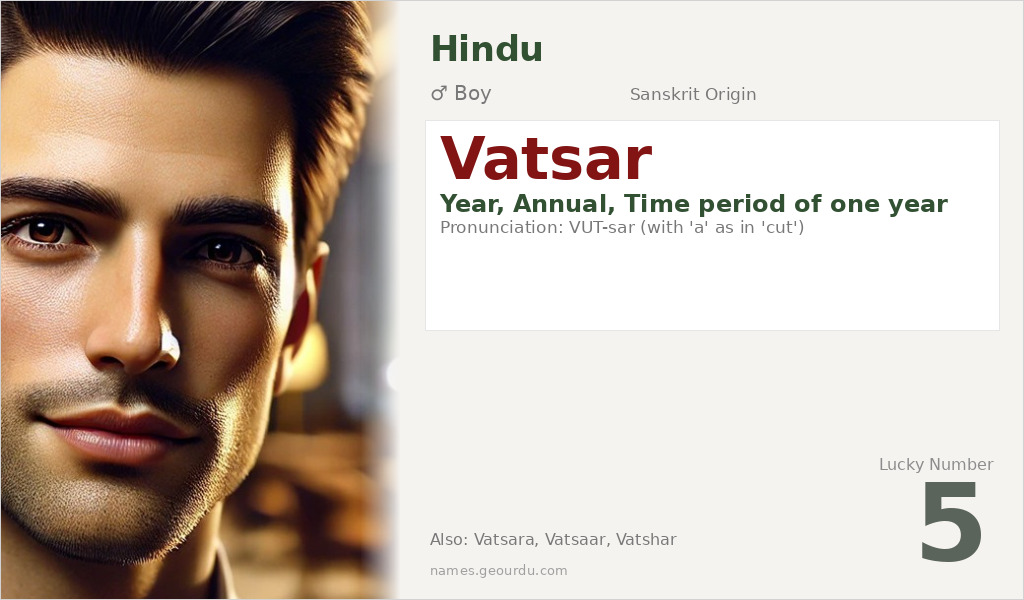
Vatsar is a distinctive boy’s name rooted in ancient Sanskrit, symbolizing the concept of a year or annual cycle. Often chosen in Hindu families, it carries deep cultural and philosophical undertones related to time and seasons. This name is not only meaningful but also associated with auspicious elements in traditional beliefs. Explore the rich etymology and significance of Vatsar in this detailed guide.
Meaning of Vatsar
Vatsar originates from the Sanskrit word ‘वत्सर’ (vatsara), which directly translates to ‘a year’ or ‘annual.’ In Sanskrit linguistics, it is derived from roots connected to time measurement, appearing in Vedic texts like the Rigveda to denote seasonal cycles. The term is used in Hindu scriptures to refer to time periods in rituals and agricultural calendars, emphasizing its practical and spiritual relevance. Etymologically, it shares connections with other Indo-European languages, highlighting its ancient roots. This meaning is well-documented in Sanskrit dictionaries and historical sources, making it a name with clear and verified significance.
| 📛 Name | Vatsar |
| 💎 Meaning | Year, Annual, Time period of one year |
| 👤 Gender | Boy |
| 🕌 Religion | Hindu |
| 🌍 Origin | Sanskrit |
| 🗣 Pronunciation | VUT-sar (with 'a' as in 'cut') |
| ✍️ Urdu | وتسر |
| ✍️ Arabic | فاتسار |
| 🔢 Numerology | 5 |
| ✨ Spellings | Vatsara, Vatsaar, Vatshar |
Origin & Cultural Significance
Vatsar has its origins in Sanskrit, the classical language of ancient India, and is primarily used within Hindu communities. It reflects the cultural importance of time and cycles in Hindu philosophy, where years are often marked by festivals and rituals. Historically, the name appears in Puranic literature and traditional naming practices, though it is less common in modern usage compared to other Sanskrit-derived names. Its association with Hinduism stems from its linguistic and scriptural roots, without significant cross-cultural adoption in other religions or regions. Research across languages like Arabic, Persian, and others confirms no alternative meanings, solidifying its Sanskrit origin.
Personality Traits
In cultural interpretations, those named Vatsar are often thought to embody traits of patience and regularity, mirroring the steady passage of a year. They may be seen as reliable and organized individuals who appreciate structure in their lives. This personality profile is influenced by the name’s meaning, suggesting a connection to time management and cyclical thinking.
Similar Names
If you like Vatsar, consider: Vatsal, Vats, Vatsin, Samvatsar, Varsh
Famous People Named Vatsar
- Vatsar — A character in Hindu mythology, often referenced in Puranic texts as a sage or figure associated with time cycles
- Vatsar — Occasionally used in modern Indian contexts, though not widely documented among prominent public figures
Frequently Asked Questions About Vatsar
What does Vatsar mean?
Vatsar means 'Year' or 'Annual,' derived from the Sanskrit language, with well-documented usage in Hindu texts.
Is Vatsar a boy or girl name?
Vatsar is traditionally a boy's name in Hindu culture, based on its Sanskrit origin and common usage patterns.
What is the origin of Vatsar?
Vatsar originates from Sanskrit, an ancient Indian language, and is primarily associated with Hindu religious and cultural traditions.





