
Table of Contents
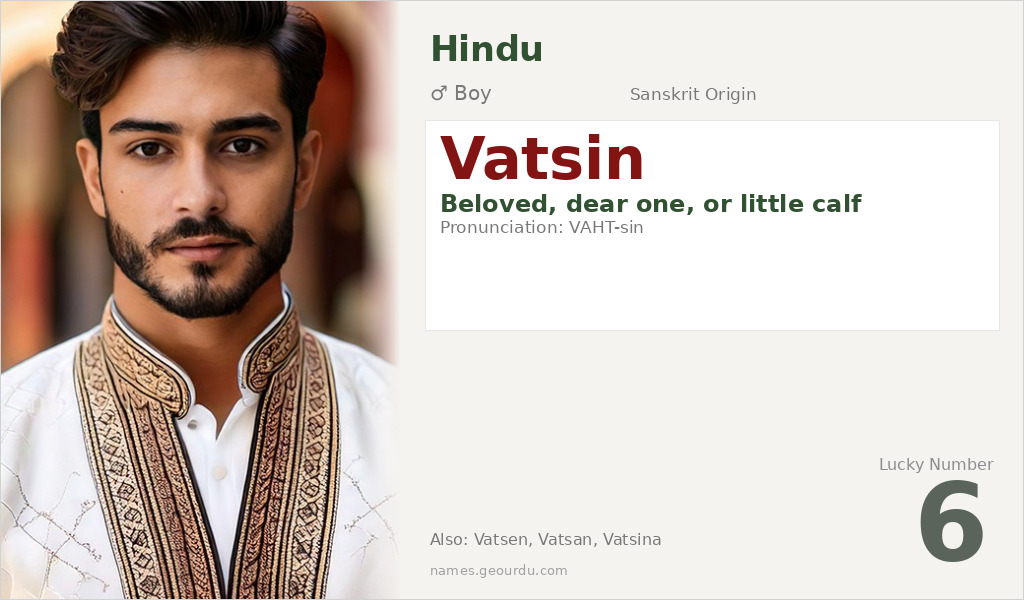
Vatsin is a classic Sanskrit name for boys, rich with cultural heritage and endearing meaning. Rooted in ancient Hindu traditions, it evokes imagery of tenderness and affection. This name carries a timeless appeal, often chosen for its positive connotations and melodic sound. Discover the fascinating etymology and significance behind Vatsin.
Meaning of Vatsin
Vatsin originates from the Sanskrit term ‘vatsa,’ which translates to ‘calf,’ ‘child,’ or ‘beloved one.’ The suffix ‘-in’ adds a possessive or relational quality, making Vatsin mean ‘one who has a calf’ or simply ‘dear one.’ In Sanskrit literature, ‘vatsa’ is frequently used as a term of endearment, similar to ‘my dear’ in English. This linguistic root places Vatsin firmly within the Indo-Aryan language family, with clear ties to other Sanskrit names like Vatsal and Vatsala. The name’s meaning reflects values of care and affection, often associated with familial bonds in Hindu culture.
| 📛 Name | Vatsin |
| 💎 Meaning | Beloved, dear one, or little calf |
| 👤 Gender | Boy |
| 🕌 Religion | Hindu |
| 🌍 Origin | Sanskrit |
| 🗣 Pronunciation | VAHT-sin |
| ✍️ Urdu | وتسن |
| ✍️ Arabic | فاتسين |
| 🔢 Numerology | 6 |
| ✨ Spellings | Vatsen, Vatsan, Vatsina |
Origin & Cultural Significance
Vatsin has its origins in ancient Sanskrit, the classical language of India used in Hindu scriptures, epics, and philosophical texts. It is primarily a Hindu name, reflecting the cultural and religious traditions of India. Historically, names derived from ‘vatsa’ appear in works like the Mahabharata and Puranas, often denoting characters with nurturing or beloved qualities. While not as common as some other Sanskrit names, Vatsin maintains a presence in modern Indian naming practices, especially among families seeking traditional yet distinctive options. Its usage spans various regions of India, though it is more prevalent in communities with strong Sanskrit influences.
Personality Traits
Those named Vatsin are often perceived as gentle, compassionate, and dependable individuals. They may exhibit a protective nature, akin to the symbolism of a calf, fostering strong connections with loved ones. Their approachable demeanor and loyalty make them valued friends and family members. In social settings, they tend to promote harmony and understanding.
Similar Names
If you like Vatsin, consider: Vatsal, Vatsala, Vats, Vatsayan, Vatsyayan
Famous People Named Vatsin
- Vatsin — A character in ancient Hindu literature, often referenced in Sanskrit texts as a sage or scholar
- Vatsin — Modern individuals bearing this name, though not widely known internationally, are found in Indian communities
Frequently Asked Questions About Vatsin
What does Vatsin mean?
Vatsin means 'beloved,' 'dear one,' or 'little calf' in Sanskrit, derived from the word 'vatsa.'
Is Vatsin a boy or girl name?
Vatsin is traditionally a boy's name in Hindu culture, though its feminine forms like Vatsala exist.
What is the origin of Vatsin?
Vatsin originates from Sanskrit, an ancient Indian language, and is primarily associated with Hindu traditions.





