
Table of Contents
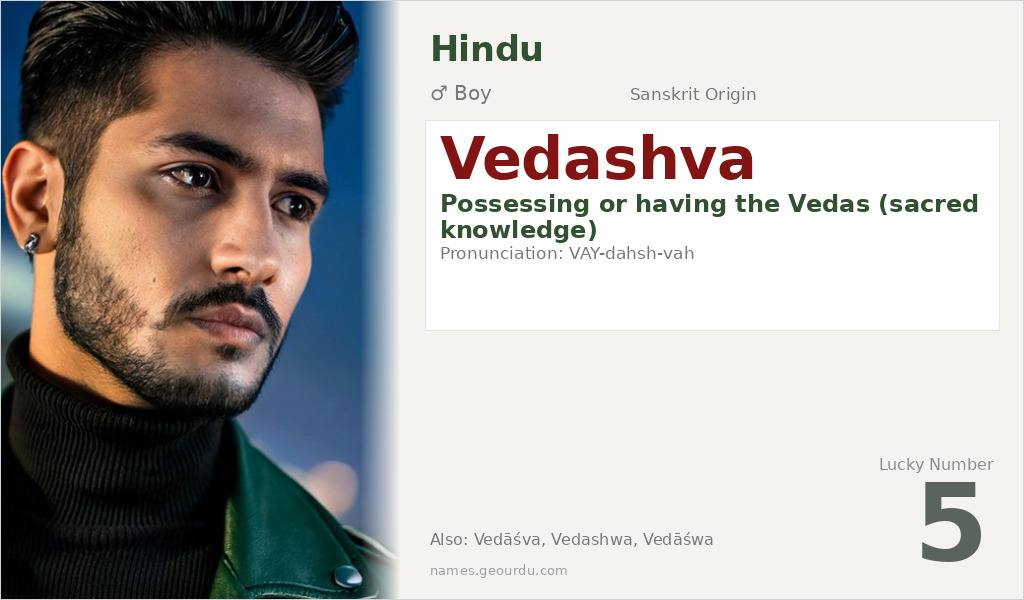
Vedashva is a profound Sanskrit name with deep roots in Hindu tradition and Vedic literature. Meaning ‘one who possesses the Vedas’ or ‘having sacred knowledge’, this name carries centuries of cultural significance. Primarily used for boys, Vedashva represents the highest ideal of wisdom and spiritual attainment in Hindu philosophy. Discover the rich etymology, historical references, and modern relevance of this classical Indian name.
Meaning of Vedashva
Vedashva derives from two Sanskrit components: ‘Veda’ (वेद) referring to the sacred scriptures of Hinduism—the Rigveda, Yajurveda, Samaveda, and Atharvaveda—which contain hymns, rituals, and philosophical teachings. The second element ‘ashva’ (अश्व) literally means ‘horse’ but in compound formations functions as a suffix indicating possession or association, similar to how ‘-vant’ or ‘-mat’ suffixes work. Thus, Vedashva literally translates to ‘possessor of the Vedas’ or ‘endowed with Vedic knowledge’. This construction follows common Sanskrit naming patterns where desirable qualities are combined with possession indicators. The name appears in ancient texts like the Mahabharata, where King Vedashva is mentioned as a wise ruler, reinforcing the name’s association with wisdom and authority.
| 📛 Name | Vedashva |
| 💎 Meaning | Possessing or having the Vedas (sacred knowledge) |
| 👤 Gender | Boy |
| 🕌 Religion | Hindu |
| 🌍 Origin | Sanskrit |
| 🗣 Pronunciation | VAY-dahsh-vah |
| ✍️ Urdu | ویداشو |
| ✍️ Arabic | فيداشفا |
| 🔢 Numerology | 5 |
| ✨ Spellings | Vedāśva, Vedashwa, Vedāśwa |
Origin & Cultural Significance
Vedashva originates from classical Sanskrit, the liturgical language of Hinduism, with its earliest references found in the Mahabharata (circa 400 BCE-400 CE) and various Puranas. As a compound name, it reflects the sophisticated naming traditions of ancient India where names conveyed specific virtues or divine connections. The name is exclusively Hindu in religious association, stemming from the central importance of the Vedas in Hindu theology and practice. While primarily used in India, the name appears in Hindu communities worldwide, maintaining its classical Sanskrit form without significant regional variations. Unlike some Sanskrit names that have been adapted into other Indian languages, Vedashva remains relatively unchanged across linguistic contexts.
Personality Traits
Those named Vedashva are often associated with intellectual depth, spiritual awareness, and traditional values. The name suggests someone who values knowledge, particularly of sacred texts, and may exhibit leadership qualities grounded in wisdom rather than authority. In social contexts, Vedashvas are typically seen as thoughtful, reliable individuals who approach life with philosophical perspective. The name’s connection to Vedic tradition implies respect for heritage while potentially embracing modern interpretations of ancient wisdom.
Similar Names
If you like Vedashva, consider: Vedang, Vedant, Ved Prakash, Ashvamedha, Vedavrata
Famous People Named Vedashva
- Vedashva (Mythological) — A king mentioned in the Mahabharata and Puranas, known for his wisdom and devotion
- Vedashva Sharma — Contemporary Indian scholar specializing in Vedic studies
Frequently Asked Questions About Vedashva
What does Vedashva mean?
Vedashva means 'possessing the Vedas' or 'having sacred knowledge' in Sanskrit, combining 'Veda' (sacred scriptures) with 'ashva' (indicating possession).
Is Vedashva a boy or girl name?
Vedashva is exclusively a boy's name in Hindu naming tradition, with all historical and contemporary usage supporting masculine gender assignment.
What is the origin of Vedashva?
Vedashva originates from Sanskrit, the classical language of Hinduism, with documented usage in ancient Hindu texts like the Mahabharata dating back over two millennia.





