Table of Contents
Vindhyavasini is a beautiful and powerful Sanskrit name steeped in Hindu mythology and geography. Meaning ‘one who resides in the Vindhya mountains,’ this name is primarily given to girls and carries deep spiritual significance. As an epithet of the goddess Durga/Parvati, Vindhyavasini represents protection, strength, and divine presence. Discover the rich etymology, cultural context, and personality traits associated with this ancient name.
Meaning of Vindhyavasini
Vindhyavasini is a compound Sanskrit name derived from ‘Vindhya,’ referring to the Vindhya mountain range in central India, and ‘vasini,’ meaning ‘dweller’ or ‘resident’ in its feminine form. The full name translates precisely to ‘she who dwells in the Vindhyas.’ In Hindu religious texts, this is not merely a descriptive term but a specific title for the goddess Durga/Parvati in her manifestation associated with the Vindhya region. The name appears in revered scriptures like the Devi Bhagavata Purana, where Vindhyavasini is depicted as a warrior goddess who vanquishes demons and safeguards her devotees. This etymological construction is common in Sanskrit, where geographic or attribute-based compounds are used to denote divine forms.
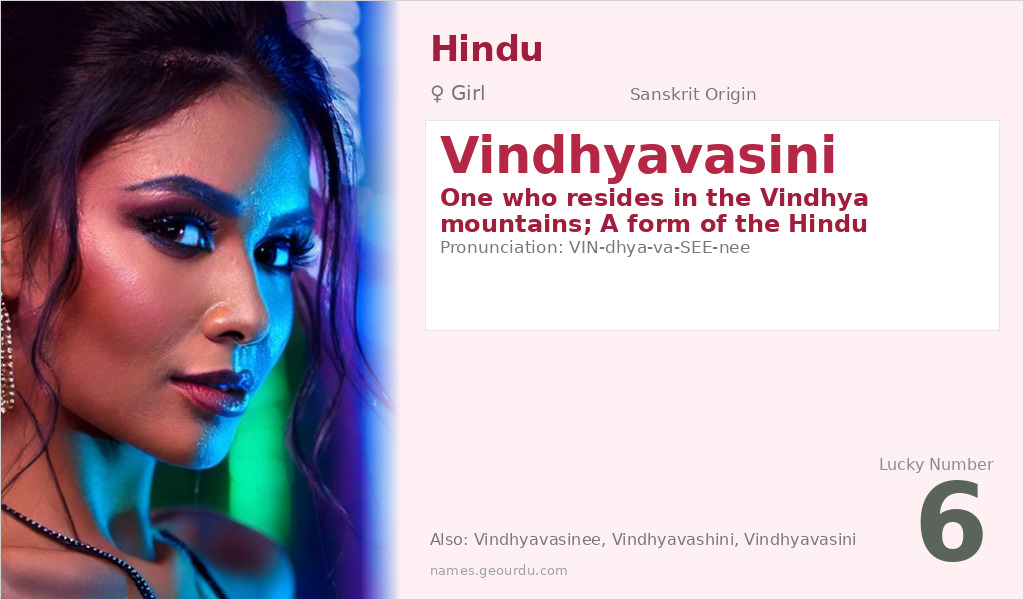
| 📛 Name | Vindhyavasini |
| 💎 Meaning | One who resides in the Vindhya mountains; A form of the Hindu goddess Durga/Parvati |
| 👤 Gender | Girl |
| 🕌 Religion | Hindu |
| 🌍 Origin | Sanskrit |
| 🗣 Pronunciation | VIN-dhya-va-SEE-nee |
| ✍️ Urdu | وندھیاواسینی |
| ✍️ Arabic | فينديا فاسيني |
| 🔢 Numerology | 6 |
| ✨ Spellings | Vindhyavasinee, Vindhyavashini, Vindhyavasini |
Origin & Cultural Significance
The origin of Vindhyavasini is firmly rooted in ancient Sanskrit language and Hindu tradition, specifically within the Shakta sect that worships the divine feminine. The name emerges from the Vindhya region’s local goddess cults, which were later assimilated into mainstream Hinduism as forms of Durga/Parvati. Historically, the Vindhyavasini temple in Vindhyachal, Uttar Pradesh, has been a major pilgrimage site since at least the medieval period, mentioned in texts like the Markandeya Purana. Culturally, the name reflects the practice of associating deities with specific landscapes, emphasizing the sacredness of the Vindhya mountains. It remains popular in India, particularly in regions like Uttar Pradesh, Madhya Pradesh, and Bihar, where the goddess is venerated.
Personality Traits
Those named Vindhyavasini are often thought to embody the qualities of the goddess they are named after: strength, protection, and resilience. They may be seen as natural caregivers with a fierce loyalty to their loved ones, mirroring the guardian aspect of Durga. Their connection to the mountains in the name’s meaning can symbolize stability, endurance, and a deep-rooted sense of identity. In social settings, they might inspire confidence and respect, balancing gentle nurturing with unwavering determination.
Similar Names
If you like Vindhyavasini, consider: Vindhya, Vasundhara, Parvati, Durga, Shailaja
Famous People Named Vindhyavasini
- Vindhyavasini Devi — A revered Hindu goddess worshipped particularly in the Vindhya region of India, with major temples in Vindhyachal, Uttar Pradesh
- Vindhyavasini — A character in Hindu mythology featured in texts like the Devi Mahatmyam, representing the protective aspect of the divine feminine
Frequently Asked Questions About Vindhyavasini
What does Vindhyavasini mean?
Vindhyavasini means 'one who resides in the Vindhya mountains' in Sanskrit. It is an epithet of the Hindu goddess Durga/Parvati, specifically referring to her manifestation in the Vindhya region of India.
Is Vindhyavasini a boy or girl name?
Vindhyavasini is exclusively a girl's name in Hindu tradition, as it is a feminine form in Sanskrit ('vasini' is feminine for 'dweller') and is associated with the goddess Durga/Parvati.
What is the origin of Vindhyavasini?
Vindhyavasini originates from Sanskrit language and Hindu mythology. It comes from ancient India, where it was used to describe the goddess Durga/Parvati dwelling in the Vindhya mountain range, with roots in regional goddess worship.