
Table of Contents
Vivekin is a profound Sanskrit name that carries deep philosophical significance in Hindu tradition. Meaning ‘the discerning one’ or ‘one who possesses wisdom,’ this name reflects the highest ideals of spiritual discrimination valued in Indian philosophy. With roots in classical Sanskrit literature and Vedantic thought, Vivekin represents more than just a name—it embodies a spiritual quality sought by seekers of truth. This guide explores the rich etymology, cultural context, and modern relevance of this meaningful name.
Meaning of Vivekin
Vivekin derives from the Sanskrit root ‘viveka’ (विवेक), which fundamentally means discrimination, discernment, or the ability to distinguish between reality and illusion. In Hindu philosophy, particularly in Advaita Vedanta as expounded by Adi Shankara, viveka is the first of the four qualifications (sadhana-chatushtaya) required for spiritual seekers. The suffix ‘-in’ transforms the abstract noun into a personal designation, meaning ‘possessor of’ or ‘characterized by.’ Thus, Vivekin literally translates to ‘one endowed with viveka’—someone who can discriminate between the eternal Self (Atman) and the transient world (Maya). This concept appears in numerous Sanskrit texts including the Upanishads, Bhagavad Gita, and works of classical poets and philosophers.
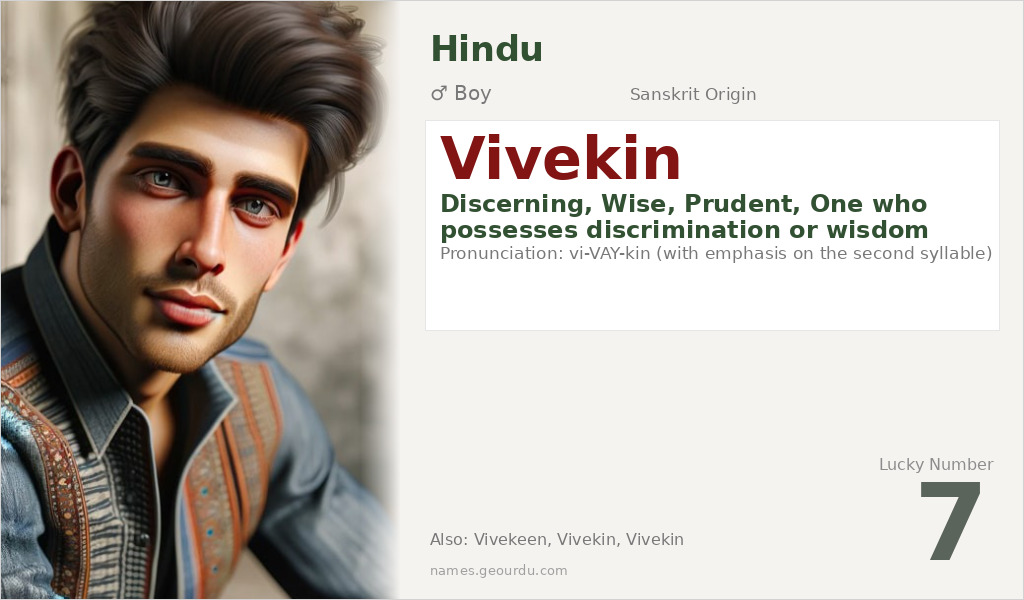
| 📛 Name | Vivekin |
| 💎 Meaning | Discerning, Wise, Prudent, One who possesses discrimination or wisdom |
| 👤 Gender | Boy |
| 🕌 Religion | Hindu |
| 🌍 Origin | Sanskrit |
| 🗣 Pronunciation | vi-VAY-kin (with emphasis on the second syllable) |
| ✍️ Urdu | ویوکن |
| ✍️ Arabic | فيفيكين |
| 🔢 Numerology | 7 |
| ✨ Spellings | Vivekeen, Vivekin, Vivekin, Vivekin |
Origin & Cultural Significance
Vivekin originates from classical Sanskrit, the liturgical language of Hinduism, Buddhism, and Jainism. As a personal name, it appears in historical and literary contexts, though it’s less common than its root form Vivek or the famous monastic name Vivekananda. The name reflects the central importance of discrimination (viveka) in Indian spiritual traditions, where it’s considered essential for liberation (moksha). While primarily used in Hindu communities, the philosophical concept transcends religious boundaries and appears in various Indian spiritual traditions. The name gained renewed attention in modern times through figures like Swami Vivekananda, though his name combines ‘viveka’ with ‘ananda’ (bliss).
Personality Traits
Those named Vivekin are often characterized by their analytical minds and thoughtful approach to life. They tend to be perceptive individuals who look beyond surface appearances to understand deeper truths. Their natural discrimination helps them make wise decisions in personal and professional matters. While sometimes appearing reserved or contemplative, they possess inner clarity that guides them through complex situations.
Similar Names
If you like Vivekin, consider: Vivek, Vivekananda, Vidvan, Buddhiman, Prajna
Famous People Named Vivekin
- Swami Vivekananda (1863-1902) – Born Narendranath Datta, took the monastic name Vivekananda meaning 'the bliss of discerning wisdom,' was a key figure in introducing Indian philosophies of Vedanta and Yoga to the Western world
- Vivekin – A character in classical Sanskrit literature and philosophical texts, often representing the ideal of discernment and wisdom
Frequently Asked Questions About Vivekin
What does Vivekin mean?
Vivekin means 'the discerning one,' 'wise,' or 'one who possesses discrimination' in Sanskrit. It comes from the root word 'viveka,' which refers to the spiritual ability to distinguish between the eternal and temporary, reality and illusion.
Is Vivekin a boy or girl name?
Vivekin is traditionally a masculine name in Hindu naming conventions. The '-in' suffix in Sanskrit typically indicates masculine gender when forming agent nouns or possessor designations.
What is the origin of Vivekin?
Vivekin originates from classical Sanskrit, the ancient liturgical language of India. It has deep roots in Hindu philosophy, particularly Vedanta, where 'viveka' (discrimination) is considered essential for spiritual progress and liberation.





