
Table of Contents
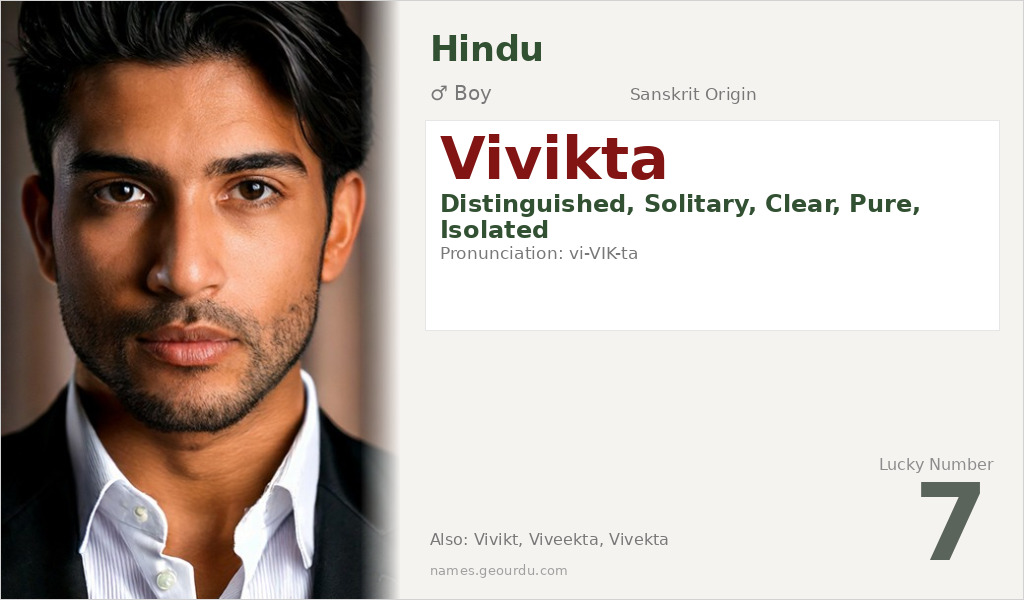
Vivikta is a distinctive Sanskrit name with profound philosophical undertones, primarily used for boys in Hindu communities. Derived from ancient Indian linguistic roots, this name carries meanings of distinction, purity, and clarity that resonate through centuries of spiritual tradition. Unlike many modern names, Vivikta maintains a classical elegance while offering meaningful depth for contemporary naming choices. Its connection to discernment and spiritual separation makes it particularly significant in philosophical contexts.
Meaning of Vivikta
Vivikta originates from the Sanskrit word ‘vivikta’ (विविक्त), which is the past participle of the verb ‘vi-√vic’ meaning ‘to separate, distinguish, or discern.’ In classical Sanskrit literature, this term appears in texts like the Mahabharata and various philosophical works, where it describes something that is distinguished, set apart, clear, pure, or isolated. The name carries connotations of spiritual discrimination and clarity, particularly in Advaita Vedanta philosophy where ‘vivikta’ refers to that which is distinguished from illusion or impurity. Linguistically, it combines the prefix ‘vi-‘ (meaning ‘apart’ or ‘asunder’) with the root ‘vic’ (to sift or separate), creating a term that emphasizes distinction and purity through separation.
| 📛 Name | Vivikta |
| 💎 Meaning | Distinguished, Solitary, Clear, Pure, Isolated |
| 👤 Gender | Boy |
| 🕌 Religion | Hindu |
| 🌍 Origin | Sanskrit |
| 🗣 Pronunciation | vi-VIK-ta |
| ✍️ Urdu | ویویکتا |
| ✍️ Arabic | فيفيكتا |
| 🔢 Numerology | 7 |
| ✨ Spellings | Vivikt, Viveekta, Vivekta, Viviktha |
Origin & Cultural Significance
Vivikta has its origins in classical Sanskrit, the ancient liturgical language of Hinduism that developed in the Indian subcontinent around 1500 BCE. As a descriptive term in Sanskrit literature, it appears in epic texts like the Mahabharata and philosophical works including the Upanishads and commentaries by scholars like Shankara. While not as common as some Sanskrit names, Vivikta represents the rich tradition of Sanskrit-derived names that carry philosophical weight. The name is primarily used within Hindu communities, particularly among those who value traditional Sanskrit names with spiritual significance. Its usage reflects the enduring influence of Sanskrit on Indian naming traditions despite the language’s evolution over millennia.
Personality Traits
Those named Vivikta often exhibit characteristics aligned with their name’s meaning—clarity of thought, discrimination in choices, and a tendency toward introspection. They may approach life with a philosophical mindset, valuing purity and distinction in their relationships and endeavors. While sometimes perceived as solitary, this typically reflects a preference for meaningful connections rather than social isolation. Their analytical nature makes them well-suited to pursuits requiring discernment and careful consideration.
Similar Names
If you like Vivikta, consider: Vivek, Viveka, Vichitra, Vishuddha, Vikalpa
Famous People Named Vivikta
- No widely known contemporary public figures with this name found in records
- Historical references appear in Sanskrit literature and philosophical texts as descriptive terms rather than personal names
Frequently Asked Questions About Vivikta
What does Vivikta mean?
Vivikta means 'Distinguished, Solitary, Clear, Pure, or Isolated' in Sanskrit. It comes from the root 'vi-√vic' meaning to separate or discern, carrying philosophical connotations of spiritual discrimination.
Is Vivikta a boy or girl name?
Vivikta is primarily a boy's name in Hindu naming traditions. While Sanskrit names can sometimes be unisex, Vivikta is traditionally masculine and most commonly given to boys.
What is the origin of Vivikta?
Vivikta originates from classical Sanskrit, the ancient language of Hindu scriptures. It appears in texts like the Mahabharata and philosophical works as a term meaning 'distinguished' or 'separated,' particularly in spiritual contexts.





