
Table of Contents
Wolfe is a powerful boy name with deep roots in Germanic tradition, evoking the strength and independence of the wolf. Originally a surname describing someone with wolf-like qualities, it has evolved into a distinctive given name with cross-cultural appeal. Unlike many names tied to specific religions, Wolfe carries secular symbolism that resonates across different backgrounds. This name offers a bold choice for parents seeking something traditional yet distinctive.
Meaning of Wolfe
Wolfe directly means ‘wolf’, originating from the Middle English ‘wulf’ and ultimately from the Proto-Germanic ‘*wulfaz’. This places it within the extensive Germanic naming tradition where animal names were common, particularly among warrior cultures who admired the wolf’s attributes. The name shares roots with Old Norse ‘úlfr’, Old High German ‘wolf’, and Gothic ‘wulfs’, all meaning wolf. As a surname, Wolfe typically indicated either a person with wolf-like characteristics (ferocity, cunning) or someone living near a place associated with wolves. The transition to a given name reflects the modern trend of using strong, nature-inspired surnames as first names.
| 📛 Name | Wolfe |
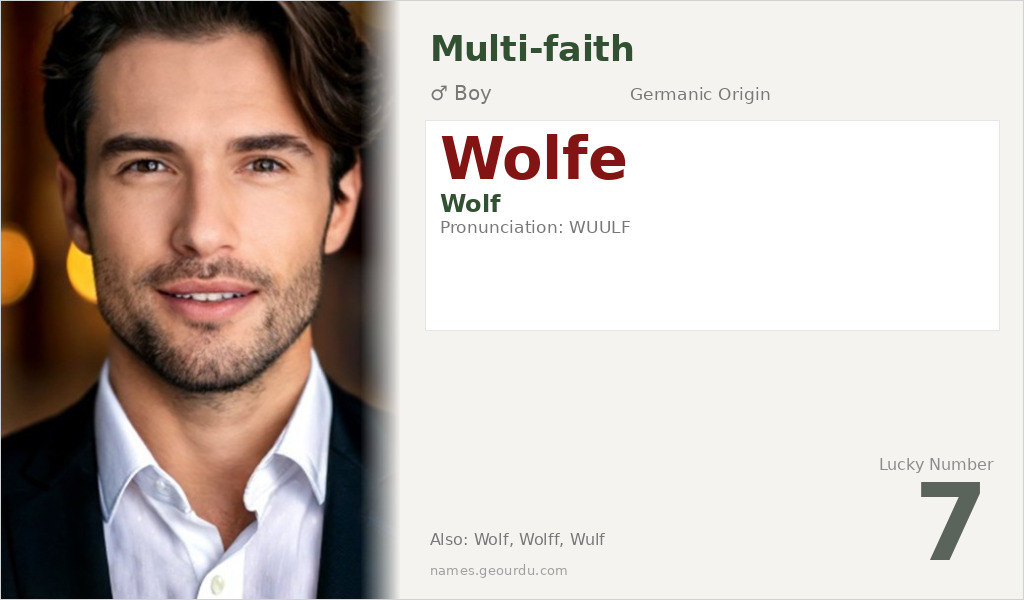
| 💎 Meaning | Wolf |
| 👤 Gender | Boy |
| 🕌 Religion | Multi-faith |
| 🌍 Origin | Germanic |
| 🗣 Pronunciation | WUULF |
| ✍️ Urdu | ولف |
| ✍️ Arabic | وولف |
| 🔢 Numerology | 7 |
| ✨ Spellings | Wolf, Wolff, Wulf, Woolf |
Origin & Cultural Significance
Wolfe originates from Germanic languages, specifically entering English through Anglo-Saxon and Norman influences. It was common among Germanic tribes where the wolf was revered in mythology—Odin had wolves Geri and Freki, and warriors often took wolf-related names. The name spread throughout Europe in various forms: German ‘Wolf’, Scandinavian ‘Ulf’, and English ‘Wolfe’. As a given name, it gained popularity in English-speaking countries during the 20th century, particularly as part of the surname-as-first-name trend. While sometimes used by Christians, the name has no inherent religious meaning and is truly multi-faith, appearing across cultures without specific doctrinal associations.
Personality Traits
Those named Wolfe often embody characteristics associated with their namesake: strength, loyalty, and independence. They tend to be natural protectors of their family and friends, showing fierce dedication when needed. While sometimes perceived as solitary or self-reliant, they typically form deep, lasting bonds with their inner circle, balancing independence with strong relational commitments.
Similar Names
If you like Wolfe, consider: Wolfgang, Wolfram, Ulrich, Ralph, Conan
Famous People Named Wolfe
- Thomas Wolfe — American novelist known for 'Look Homeward, Angel'
- Wolfe Tone — Irish revolutionary and founding member of the United Irishmen
Frequently Asked Questions About Wolfe
What does Wolfe mean?
Wolfe means 'wolf', originating from Germanic languages through Middle English 'wulf'. It symbolizes strength, independence, and protective qualities.
Is Wolfe a boy or girl name?
Wolfe is primarily a boy name, though like many surnames-turned-given-names, it could theoretically be used for any gender. Historically and currently, it remains overwhelmingly masculine.
What is the origin of Wolfe?
Wolfe originates from Germanic languages, specifically from Proto-Germanic '*wulfaz'. It entered English as both a surname and given name, with roots in Anglo-Saxon and Norse naming traditions where animal names were common.





