Table of Contents
Yasmin is a beautifully fragrant name that has captivated parents across cultures for centuries. Derived from the Persian word for the jasmine flower, this name carries with it connotations of grace, purity, and natural beauty. While particularly popular in Muslim communities, Yasmin has transcended religious boundaries to become a beloved choice worldwide. Its sweet sound and elegant meaning make it a timeless option for baby girls.
Meaning of Yasmin
The name Yasmin originates from the Persian word ‘yasamin’ (یاسمن), which directly translates to ‘jasmine flower’. This floral name entered Arabic as ‘yāsamīn’ (يَاسَمِين) with identical meaning. Jasmine flowers hold significant cultural importance across the Middle East and South Asia, symbolizing love, beauty, and spiritual purity in various traditions. The name’s etymology is well-documented in Persian and Arabic linguistic sources, with the floral connection remaining consistent across languages. In some regions, the name has evolved into variations like Yasmeen or Yasmina, but all maintain the core meaning of the fragrant white flower.
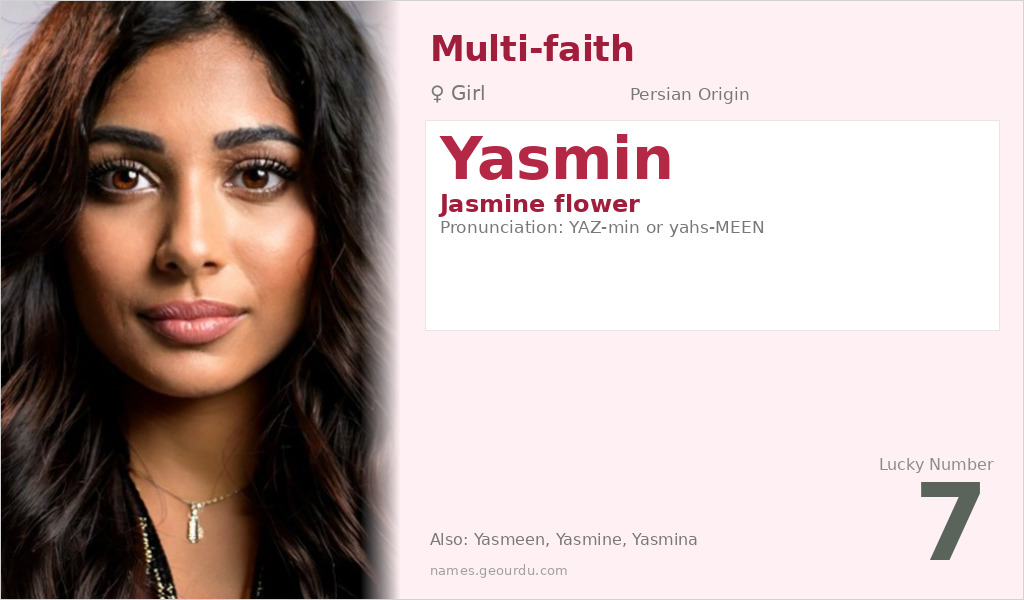
| 📛 Name | Yasmin |
| 💎 Meaning | Jasmine flower |
| 👤 Gender | Girl |
| 🕌 Religion | Multi-faith |
| 🌍 Origin | Persian |
| 🗣 Pronunciation | YAZ-min or yahs-MEEN |
| ✍️ Urdu | یاسمین |
| ✍️ Arabic | ياسمين |
| 🔢 Numerology | 7 |
| ✨ Spellings | Yasmeen, Yasmine, Yasmina, Jasmin, Jasmine, Yasamin, Yasmeena |
Origin & Cultural Significance
Yasmin has its roots in ancient Persia, where jasmine flowers were cultivated and celebrated in poetry and art. The name spread through the Islamic world via Persian cultural influence, becoming popular in Arabic-speaking regions during the medieval period. From there, it traveled to South Asia with Muslim conquests and trade, where it was adopted into Urdu, Bengali, and other regional languages. Today, Yasmin is used by people of various faiths including Muslims, Christians, Hindus, and others, particularly in multicultural societies. Its cross-cultural appeal stems from both its beautiful sound and the universal appreciation for jasmine’s delicate beauty and fragrance.
Personality Traits
Those named Yasmin are often associated with the qualities of the jasmine flower itself: delicate yet resilient, fragrant yet subtle. They may possess a natural grace and elegance that draws people to them, combined with a quiet strength that helps them navigate life’s challenges. Many Yasmins are described as intuitive and spiritually aware, with an appreciation for beauty in all its forms—whether in nature, art, or human relationships.
Similar Names
If you like Yasmin, consider: Jasmine, Yasmina, Yasmeen, Samina, Yara, Layla, Zahra, Amina, Farah, Noor
Famous People Named Yasmin
- Yasmin Le Bon — British model of Iranian descent
- Yasmin Ahmad — Malaysian film director and writer
- Yasmin Alibhai-Brown — British journalist and author of Ugandan Asian heritage
- Yasmin Warsame — Somali-Canadian model
Frequently Asked Questions About Yasmin
What does Yasmin mean?
Yasmin means 'jasmine flower' and originates from the Persian word 'yasamin'. The name refers specifically to the fragrant white flower that is culturally significant across many regions.
Is Yasmin a boy or girl name?
Yasmin is almost exclusively a girl's name across all cultures where it is used, though very rare masculine variants exist in some regions.
What is the origin of Yasmin?
Yasmin originates from Persian language and culture, specifically from the word 'yasamin' meaning jasmine. It spread to Arabic and other languages through cultural exchange.