
Table of Contents
Zahhak is a name steeped in ancient Persian mythology, famously appearing in Ferdowsi’s epic Shahnameh as a tyrannical king with serpents on his shoulders. Unlike common baby names, Zahhak carries a rich narrative of evil and redemption, making it a unique choice with deep cultural roots. This name is primarily masculine and originates from Persian literature, though it is used in various regional cultures. Explore the true meaning, history, and modern relevance of Zahhak in this comprehensive analysis.
Meaning of Zahhak
Zahhak derives from Persian, where it means ‘dragon’ or ‘serpent,’ directly referencing the mythological figure Zahhak-e Marzban from the Shahnameh. In this epic, Zahhak is a despotic ruler symbolizing evil, with snakes growing from his shoulders that fed on human brains. The name is sometimes linked to the Arabic word ‘aẓ-ẓaḥḥāk,’ meaning ‘the one who laughs,’ but this is considered a folk etymology rather than the true origin. Linguistically, the Persian ‘zahhāk’ relates to ancient Iranian roots for dragon-like creatures. The name’s meaning is well-documented in Persian literary and historical sources, emphasizing its mythological rather than literal positive traits.
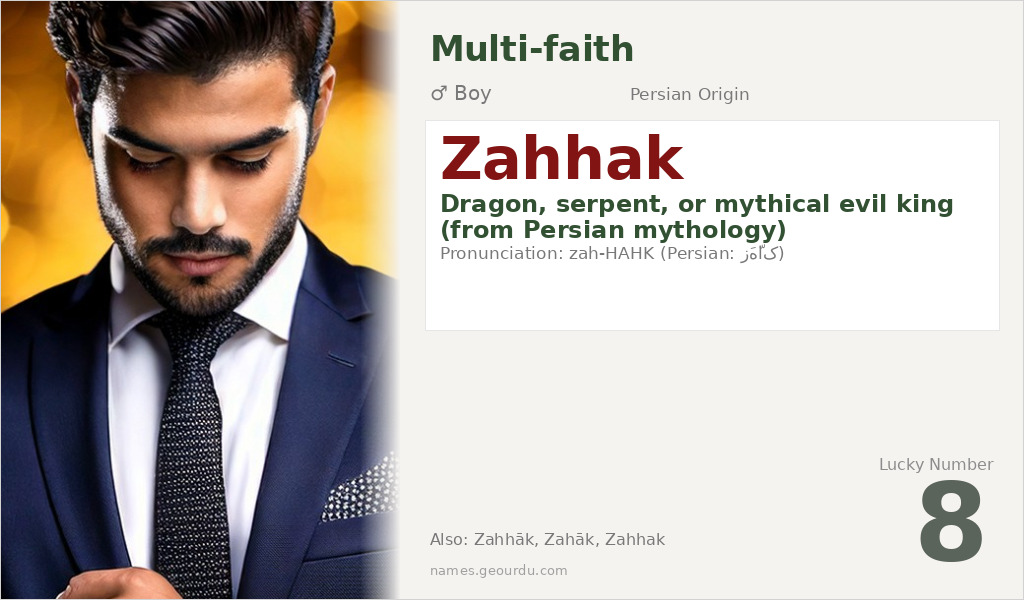
| 📛 Name | Zahhak |
| 💎 Meaning | Dragon, serpent, or mythical evil king (from Persian mythology) |
| 👤 Gender | Boy |
| 🕌 Religion | Multi-faith |
| 🌍 Origin | Persian |
| 🗣 Pronunciation | zah-HAHK (Persian: زَهّاک) |
| ✍️ Urdu | زہاک |
| ✍️ Arabic | الضحّاك |
| 🔢 Numerology | 8 |
| ✨ Spellings | Zahhāk, Zahāk, Zahhak, Zahak, Zahhak-e Marzban |
Origin & Cultural Significance
Zahhak originates from Persian mythology, specifically from the Shahnameh (Book of Kings) written by Ferdowsi in the 10th century. This epic poem is a cornerstone of Persian culture, and Zahhak serves as a central antagonist, representing tyranny and corruption before being overthrown by the hero Fereydun. The name is used in Persian-speaking regions, as well as in Kurdish, Balochi, and other Iranian-influenced cultures, though it is rare due to its negative connotations. Historically, Zahhak reflects pre-Islamic Zoroastrian themes of good versus evil, and its usage today is more literary or symbolic than common as a personal name.
Personality Traits
In mythology, Zahhak embodies traits of ambition, cruelty, and power, often associated with a downfall due to evil deeds. As a name, it might be chosen to symbolize strength or a formidable presence, but it generally carries a weight of historical negativity. Personality-wise, individuals named Zahhak could be seen as assertive or dominant, reflecting the name’s epic origins. However, modern usage is minimal, and it is more a cultural reference than a typical personal name.
Similar Names
If you like Zahhak, consider: Fereydun, Jamshid, Kaveh, Rostam, Sohrab
Famous People Named Zahhak
- Zahhak (mythological figure) — Evil king in Persian epic Shahnameh, defeated by Fereydun
- Zahhak (historical/regional usage) — Occasionally used in Persian, Kurdish, and Balochi contexts, though rare due to negative connotations
Frequently Asked Questions About Zahhak
What does Zahhak mean?
Zahhak means 'dragon' or 'serpent' in Persian, referring to the evil king in the Shahnameh epic.
Is Zahhak a boy or girl name?
Zahhak is traditionally a boy's name, rooted in Persian mythology where the character is male.
What is the origin of Zahhak?
Zahhak originates from Persian mythology, specifically from Ferdowsi's Shahnameh, and is used in Persian and related cultures.





