
Table of Contents
Zartosht is a name steeped in ancient religious history, evoking the legacy of one of the world’s oldest prophetic figures. As the Persian form of Zoroaster, it carries profound spiritual and cultural weight across Iran, Afghanistan, and beyond. While primarily associated with Zoroastrianism, this name has also found usage in Muslim communities, reflecting the rich tapestry of Persianate heritage. Discover the meaning, origin, and significance of this timeless name.
Meaning of Zartosht
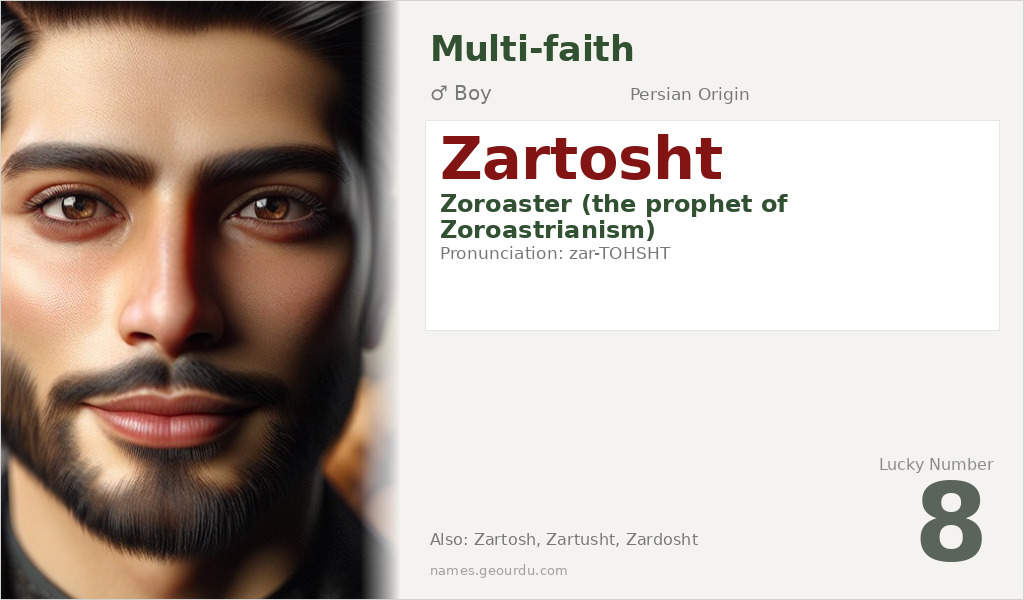
Zartosht directly translates to Zoroaster, the prophet and founder of Zoroastrianism, a religion that originated in ancient Persia. The name derives from the Avestan ‘Zarathushtra’, with ‘Zarath’ often interpreted as ‘golden’ or ‘old’ and ‘ushtra’ meaning ‘camel’, though scholars debate the precise etymology. In Persian, Dari, Pashto, and Kurdish, Zartosht is the standard term for the prophet, used in religious texts and historical contexts. This name is not just a label but a reference to a central figure in Iranian spirituality, emphasizing wisdom, divine revelation, and ethical dualism.
| 📛 Name | Zartosht |
| 💎 Meaning | Zoroaster (the prophet of Zoroastrianism) |
| 👤 Gender | Boy |
| 🕌 Religion | Multi-faith |
| 🌍 Origin | Persian |
| 🗣 Pronunciation | zar-TOHSHT |
| ✍️ Urdu | زرتشت |
| ✍️ Arabic | زرادشت |
| 🔢 Numerology | 8 |
| ✨ Spellings | Zartosh, Zartusht, Zardosht, Zarathushtra |
Origin & Cultural Significance
Zartosht originates from Persian, where it has been used for centuries to refer to Prophet Zoroaster, who lived around 1500-1000 BCE in ancient Iran. The name spread through Persian influence to neighboring languages like Pashto, Kurdish, and Urdu, often in religious or literary contexts. While Zoroastrianism declined after the Arab conquest of Persia, the name persisted, sometimes adopted by Muslims in regions like Iran, Afghanistan, and Pakistan as a cultural or historical reference. Today, it is rare but retains significance among Zoroastrians and in academic or cultural discussions about Persian heritage.
Personality Traits
Named after a revered prophet, Zartosht suggests a personality marked by introspection, moral clarity, and a quest for truth. Bearers of this name might be seen as philosophical or spiritually inclined, with a natural gravitas. They often inspire respect through their thoughtful demeanor and adherence to principles, echoing Zoroaster’s teachings on righteousness and cosmic balance.
Similar Names
If you like Zartosht, consider: Zoroaster, Zarathustra, Zardost, Zartaj, Zarvan
Famous People Named Zartosht
- Zartosht Bahram e Pazhdo — 9th-century Persian poet and Zoroastrian scholar
- Zartosht No-Diso — a Zoroastrian commemoration day for the death of Prophet Zoroaster
Frequently Asked Questions About Zartosht
What does Zartosht mean?
Zartosht means Zoroaster, the prophet of Zoroastrianism. It is the Persian form of the name, derived from Avestan 'Zarathushtra', with debated etymology possibly meaning 'golden camel' or 'old camel'.
Is Zartosht a boy or girl name?
Zartosht is exclusively a boy name, as it refers to the male prophet Zoroaster. There is no feminine usage in historical or cultural records.
What is the origin of Zartosht?
Zartosht originates from Persian, specifically as the name for Prophet Zoroaster. It has roots in Avestan, the ancient language of Zoroastrian scriptures, and is used in Persianate cultures across Iran, Afghanistan, and South Asia.





