
Table of Contents
Zephan is a distinctive boy’s name with deep biblical roots, offering a timeless appeal for parents seeking a name rich in spiritual meaning. Derived from Hebrew, it carries the profound significance of being ‘hidden or treasured by God,’ connecting it to the prophet Zephaniah. This name blends tradition with a modern sound, making it a meaningful choice across various cultures and faiths. Explore the origins, meaning, and personality traits associated with Zephan in this detailed guide.
Meaning of Zephan
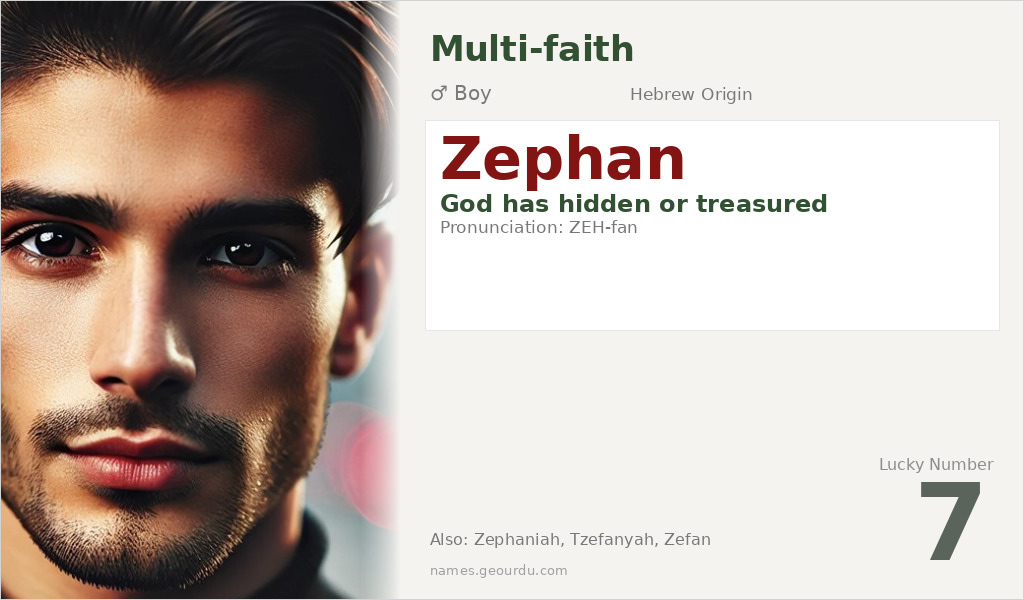
Zephan originates from the Hebrew name Tzefanyah (צְפַנְיָה), which translates to ‘Yahweh has hidden’ or ‘God has treasured.’ The name is composed of two elements: ‘tzafan’ (צָפַן), a verb meaning ‘to hide, treasure, or store up,’ and ‘Yah,’ a contraction of Yahweh, the Hebrew name for God. This etymology is firmly established in biblical scholarship and Hebrew linguistics, with the name appearing in the Old Testament as Zephaniah, a prophet who authored one of the twelve minor prophetic books. The meaning conveys a sense of divine protection and value, suggesting that the bearer is cherished or safeguarded by a higher power. In modern usage, Zephan is often used as a shortened form of Zephaniah, retaining its core spiritual significance.
| 📛 Name | Zephan |
| 💎 Meaning | God has hidden or treasured |
| 👤 Gender | Boy |
| 🕌 Religion | Multi-faith |
| 🌍 Origin | Hebrew |
| 🗣 Pronunciation | ZEH-fan |
| ✍️ Urdu | زفان |
| ✍️ Arabic | زيفان |
| 🔢 Numerology | 7 |
| ✨ Spellings | Zephaniah, Tzefanyah, Zefan, Zephaniah |
Origin & Cultural Significance
Zephan has its origins in ancient Hebrew culture, specifically from the biblical figure Zephaniah, who prophesied during the reign of King Josiah in the 7th century BCE. The name is rooted in the Hebrew language and religious texts, making it significant in Judaism, Christianity, and other Abrahamic faiths. Over time, it has been adopted into various languages and cultures, often as a variant of Zephaniah, with usage spreading through biblical translations and diaspora communities. While it is not tied to a single religion, it holds particular resonance in Christian contexts due to its presence in the Old Testament. Today, Zephan is used globally, reflecting its enduring appeal and cross-cultural adaptability.
Personality Traits
People named Zephan are often associated with traits of introspection, faith, and resilience, inspired by the name’s meaning of being hidden or treasured by God. They may exhibit a calm and thoughtful demeanor, with a strong inner life and a tendency to seek deeper truths. This name suggests a person who values spiritual connections and may approach life with a sense of purpose and protection, embodying the idea of being safeguarded or cherished in their endeavors.
Similar Names
If you like Zephan, consider: Zephaniah, Zachariah, Jeremiah, Josiah, Hezekiah
Famous People Named Zephan
- Zephaniah — Biblical prophet and author of the Book of Zephaniah in the Old Testament
- Zephan — Modern individuals with this name, though not widely known historically
Frequently Asked Questions About Zephan
What does Zephan mean?
Zephan means 'God has hidden' or 'God has treasured,' derived from the Hebrew name Tzefanyah, with roots in the verb 'tzafan' (to hide) and 'Yah' (God).
Is Zephan a boy or girl name?
Zephan is traditionally a boy's name, originating from the male biblical prophet Zephaniah, and is used almost exclusively for boys in historical and modern contexts.
What is the origin of Zephan?
Zephan originates from Hebrew, specifically from the biblical name Zephaniah, and has been used in Jewish, Christian, and multi-faith traditions for centuries.





