Table of Contents
Babra is a distinctive feminine name with deep roots in Pashtun culture and Central Asian history. While often associated with meanings like ‘foreign woman’ or ‘stranger,’ this name carries rich cultural significance beyond its literal translation. In this comprehensive guide, we explore Babra’s linguistic origins, cultural context, and why it remains a meaningful choice for parents seeking a name with historical depth and cross-cultural appeal.
Meaning of Babra
The name Babra originates from the Pashto language, where it literally means ‘foreign woman’ or ‘stranger.’ This meaning derives from the historical context of tribal societies in Afghanistan and Pakistan, where women from outside the tribe were given this designation. Linguistically, Babra is connected to the Pashto word ‘بابر’ (Bābur), meaning ‘tiger’ or ‘panther,’ which was a title used for Mughal emperor Zahir-ud-din Muhammad Babur. Over time, the feminine form Babra evolved to describe women perceived as exotic or from distant lands. In some regional dialects, the name also carries connotations of bravery and distinction, reflecting the noble associations of its root word.
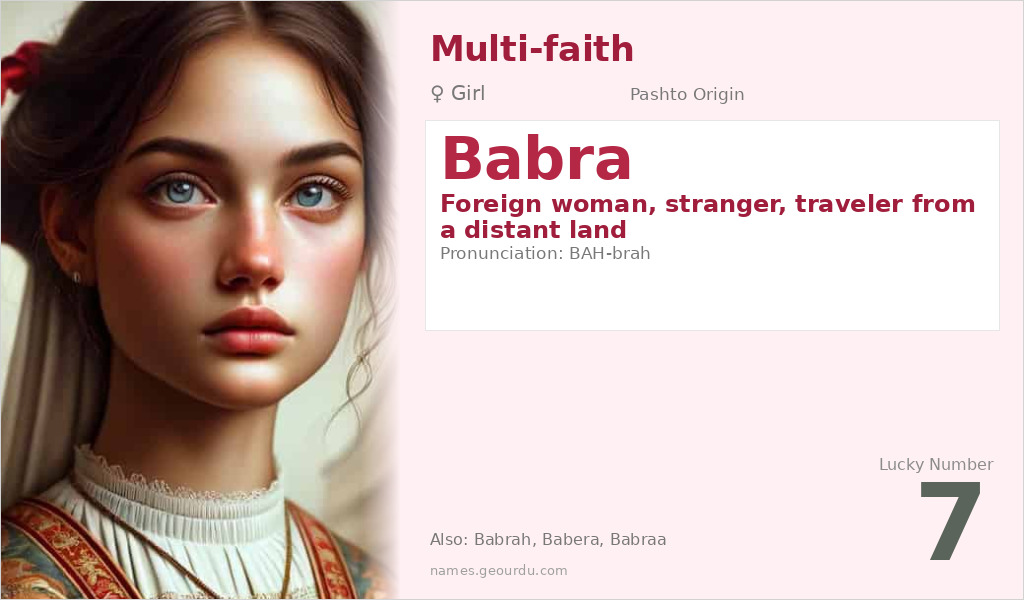
| 📛 Name | Babra |
| 💎 Meaning | Foreign woman, stranger, traveler from a distant land |
| 👤 Gender | Girl |
| 🕌 Religion | Multi-faith |
| 🌍 Origin | Pashto |
| 🗣 Pronunciation | BAH-brah |
| ✍️ Urdu | بابرہ |
| ✍️ Arabic | بابرة |
| 🔢 Numerology | 7 |
| ✨ Spellings | Babrah, Babera, Babraa |
Origin & Cultural Significance
Babra has its primary origins in Pashtun culture, particularly among tribes in Afghanistan and northwestern Pakistan. The name gained prominence through historical and folkloric references to foreign women who married into tribal families, often symbolizing alliances between different groups. While the name appears in Muslim-majority regions, it is not exclusively Islamic and has been used across religious communities in South Asia and Central Asia. The name’s connection to Emperor Babur gives it historical resonance in Mughal-influenced areas, though as a feminine form it developed its own distinct cultural trajectory among Pashtun, Baloch, and related communities.
Personality Traits
Those named Babra are often associated with qualities of adaptability, curiosity, and cultural bridging. The name’s meaning suggests someone comfortable in unfamiliar environments, potentially making them natural explorers or mediators between different groups. In cultural contexts, Babra might be seen as bringing fresh perspectives or exotic charm to their communities, reflecting the historical role of foreign women in tribal societies.
Similar Names
If you like Babra, consider: Babur, Babrak, Babita, Barbara, Bahar
Famous People Named Babra
- Babra Sharif — Pakistani actress known for her work in Punjabi and Urdu cinema during the 1970s-80s
- Babra — Historical figure mentioned in Pashtun folklore as a noble foreign woman who married into a tribal chief's family
Frequently Asked Questions About Babra
What does Babra mean?
Babra means 'foreign woman' or 'stranger' in Pashto, with roots in Central Asian tribal societies where it described women from outside the tribe or region.
Is Babra a boy or girl name?
Babra is exclusively a feminine name, derived as a feminine form of the masculine name Babur in Pashto and related languages.
What is the origin of Babra?
Babra originates from Pashto language and Pashtun culture, with historical connections to the Mughal emperor Babur and tribal traditions in Afghanistan and Pakistan.