
Table of Contents
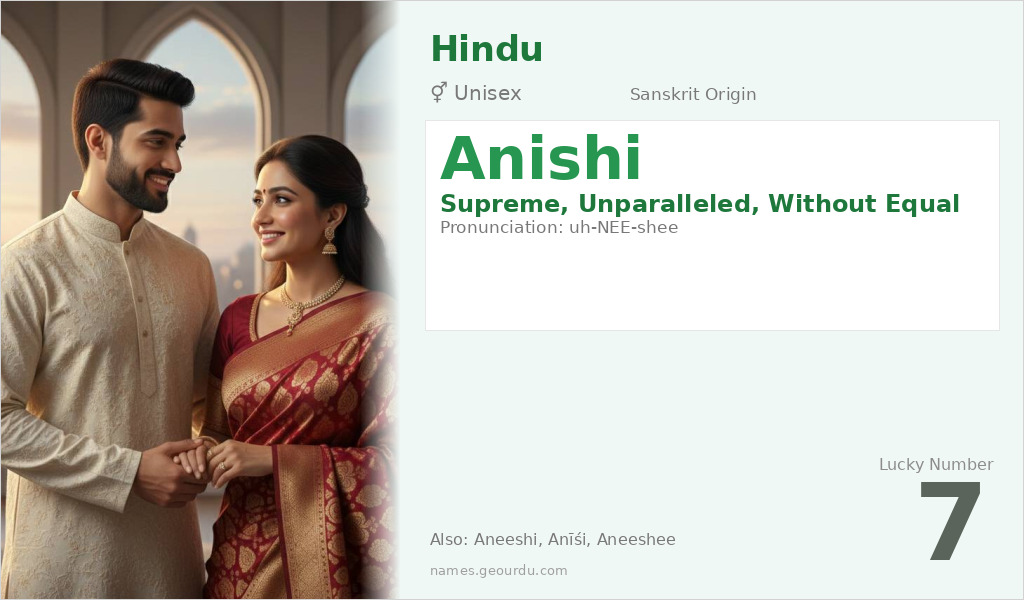
Anishi is a distinctive name with deep roots in Sanskrit language and Hindu culture. Meaning ‘Supreme’ or ‘Without Equal’, it carries connotations of independence and excellence. This unisex name has been used for centuries in Indian traditions, though it remains relatively uncommon globally. Its philosophical undertones make it a meaningful choice for parents seeking a name with intellectual and spiritual depth.
Meaning of Anishi
The name Anishi originates from the Sanskrit word ‘anīśa’ (अनीश), which is composed of two elements: the negative prefix ‘a-‘ and ‘īśa’ meaning ‘lord’, ‘ruler’, or ‘supreme being’. Thus, Anishi literally translates to ‘without a lord’ or ‘supreme’, suggesting someone who is unparalleled or possesses ultimate authority. In Hindu philosophical contexts, this can imply spiritual independence or transcendence. The name appears in classical Sanskrit texts and maintains this core meaning across various Indian languages and dialects. Unlike some speculative translations, Anishi does not mean ‘bright’ or ‘luminous’—those meanings belong to different Sanskrit roots entirely.
| 📛 Name | Anishi |
| 💎 Meaning | Supreme, Unparalleled, Without Equal |
| 👤 Gender | Unisex |
| 🕌 Religion | Hindu |
| 🌍 Origin | Sanskrit |
| 🗣 Pronunciation | uh-NEE-shee |
| ✍️ Urdu | انیشی |
| ✍️ Arabic | أنيشي |
| 🔢 Numerology | 7 |
| ✨ Spellings | Aneeshi, Anīśi, Aneeshee |
Origin & Cultural Significance
Anishi has its origins in classical Sanskrit, the ancient liturgical language of Hinduism. As a Sanskrit name, it is primarily associated with Hindu culture and religious traditions, though it may be used by people of various backgrounds in modern India. The name reflects Sanskrit’s rich philosophical vocabulary, where compound words like ‘anīśa’ convey nuanced concepts about existence and authority. While not among the most common Sanskrit names today, Anishi appears in historical texts and continues to be used in contemporary India, particularly among families valuing traditional, meaningful names. Its usage spans multiple Indian regions, though it remains more prevalent in Sanskrit-educated communities.
Personality Traits
People named Anishi are often described as independent and self-assured, reflecting their name’s meaning of ‘supreme’ or ‘without equal’. They may exhibit natural leadership qualities and a preference for autonomy in both personal and professional spheres. Their analytical nature often makes them thoughtful decision-makers who value depth over superficiality. While individual personalities vary, the name’s philosophical roots can inspire a lifelong pursuit of excellence and authenticity.
Similar Names
If you like Anishi, consider: Anish, Anisha, Aniket, Anirudh, Ishaan
Famous People Named Anishi
- Anishi Patel — Indian-American entrepreneur and tech executive
- Anishi Kumar — Classical Indian vocalist specializing in Hindustani music
Frequently Asked Questions About Anishi
What does Anishi mean?
Anishi means 'Supreme', 'Unparalleled', or 'Without Equal' in Sanskrit, derived from the word 'anīśa' (अनीश).
Is Anishi a boy or girl name?
Anishi is a unisex name in Sanskrit tradition, though it has been used for both boys and girls in Hindu culture. Modern usage varies by region and family preference.
What is the origin of Anishi?
Anishi originates from Sanskrit, the classical language of ancient India, and is primarily associated with Hindu culture and naming traditions.