Table of Contents
Maleeswari is a beautiful and meaningful Sanskrit name for girls that carries deep cultural and spiritual significance in Hindu tradition. Unlike common names, Maleeswari specifically connects to the world of flowers, adornment, and divine femininity. This name has been cherished for centuries in Indian communities, particularly among those who value classical Sanskrit heritage and nature-inspired symbolism. Discover the rich etymology and cultural context behind this elegant name.
Meaning of Maleeswari
The name Maleeswari originates from classical Sanskrit, combining ‘Mālā’ (माला), meaning ‘garland, wreath, or string of flowers’, with ‘Īśvarī’ (ईश्वरी), meaning ‘goddess, queen, or female ruler’. This creates the precise meaning ‘Goddess of Garlands’ or ‘Queen of Floral Wreaths’. In Hindu tradition, garlands (mālā) hold sacred significance in worship, ceremonies, and as offerings to deities. The name appears in Sanskrit literature and regional naming practices, particularly in South India and among communities preserving classical Hindu traditions. Unlike generic royal titles, Maleeswari specifically evokes imagery of floral beauty, ritual adornment, and the divine feminine associated with nature’s abundance.
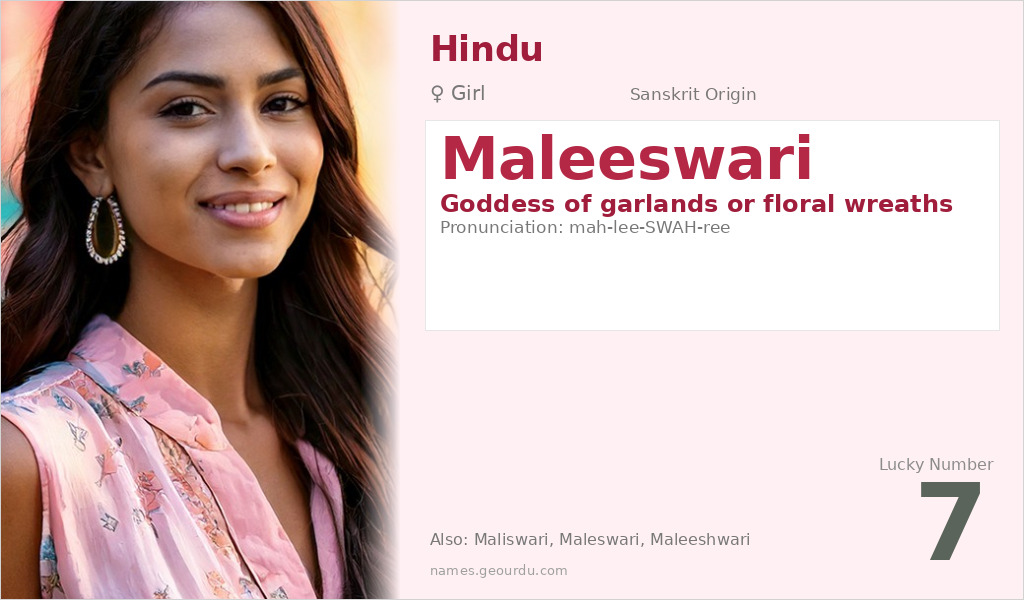
| 📛 Name | Maleeswari |
| 💎 Meaning | Goddess of garlands or floral wreaths |
| 👤 Gender | Girl |
| 🕌 Religion | Hindu |
| 🌍 Origin | Sanskrit |
| 🗣 Pronunciation | mah-lee-SWAH-ree |
| ✍️ Urdu | مالیشوری |
| ✍️ Arabic | ماليشواري |
| 🔢 Numerology | 7 |
| ✨ Spellings | Maliswari, Maleswari, Maleeshwari, Māleśvarī |
Origin & Cultural Significance
Maleeswari has its roots in ancient Sanskrit language and Hindu culture, where compound names with ‘Īśvarī’ (goddess) are common for girls. The name reflects the importance of floral symbolism in Hindu rituals, where garlands are used in worship, weddings, and festivals. Historically, such names were popular among priestly families, temple communities, and those with connections to classical arts and literature. While primarily found in Hindu communities across India, particularly in Tamil Nadu, Karnataka, and Kerala, the name has also been adopted by diaspora communities worldwide. The name maintains its traditional Sanskrit form without significant variation across regions, preserving its original linguistic structure.
Personality Traits
In cultural interpretation, names ending with ‘Īśvarī’ (goddess) are often associated with qualities of leadership, grace, and spiritual depth. For Maleeswari specifically, the floral element suggests someone who appreciates beauty, tradition, and natural harmony. Such individuals might be drawn to artistic pursuits, religious practices, or community roles that involve ceremony and adornment. The name carries expectations of dignity, creativity, and a connection to cultural heritage.
Similar Names
If you like Maleeswari, consider: Malini, Malavika, Ishwari, Rajeshwari, Kamaleswari
Famous People Named Maleeswari
- Maleeswari K. — Indian classical dancer specializing in Bharatanatyam
- Maleeswari Devi — Temple priestess and scholar from Tamil Nadu documented in 19th century records
Frequently Asked Questions About Maleeswari
What does Maleeswari mean?
Maleeswari means 'Goddess of Garlands' or 'Queen of Floral Wreaths' in Sanskrit, combining 'Mālā' (garland) and 'Īśvarī' (goddess).
Is Maleeswari a boy or girl name?
Maleeswari is exclusively a girl's name in Hindu tradition, as the suffix 'Īśvarī' denotes feminine divinity.
What is the origin of Maleeswari?
Maleeswari originates from classical Sanskrit language and Hindu culture, specifically from South Indian naming traditions with deep roots in Sanskrit literature and temple practices.