Table of Contents
Rudri is a powerful Sanskrit name for girls with deep roots in ancient Hindu tradition. Derived from the Vedic deity Rudra, this name carries connotations of divine energy, strength, and natural forces. Unlike common misinterpretations, Rudri doesn’t mean ‘worship’ but represents the feminine aspect of one of Hinduism’s most ancient deities. Discover the rich etymology and cultural significance of this distinctive name.
Meaning of Rudri
Rudri originates from the Sanskrit word ‘Rudra’ (रुद्र), which comes from the verbal root ‘rud’ meaning ‘to cry, roar, or howl.’ In Vedic literature, Rudra was a formidable deity associated with storms, wind, thunder, and hunting — often described as ‘the roarer’ or ‘the terrible one.’ The feminine form ‘Rudri’ appears in texts like the Rigveda and later Puranic scriptures, where it refers to the feminine aspect or consort of Rudra, who eventually became identified with Lord Shiva. This name thus carries meanings related to power, fierceness, and divine manifestation rather than ritual worship. The incorrect association with ‘puja’ likely stems from confusion with similar-sounding words or misinterpretations of religious contexts.
| 📛 Name | Rudri |
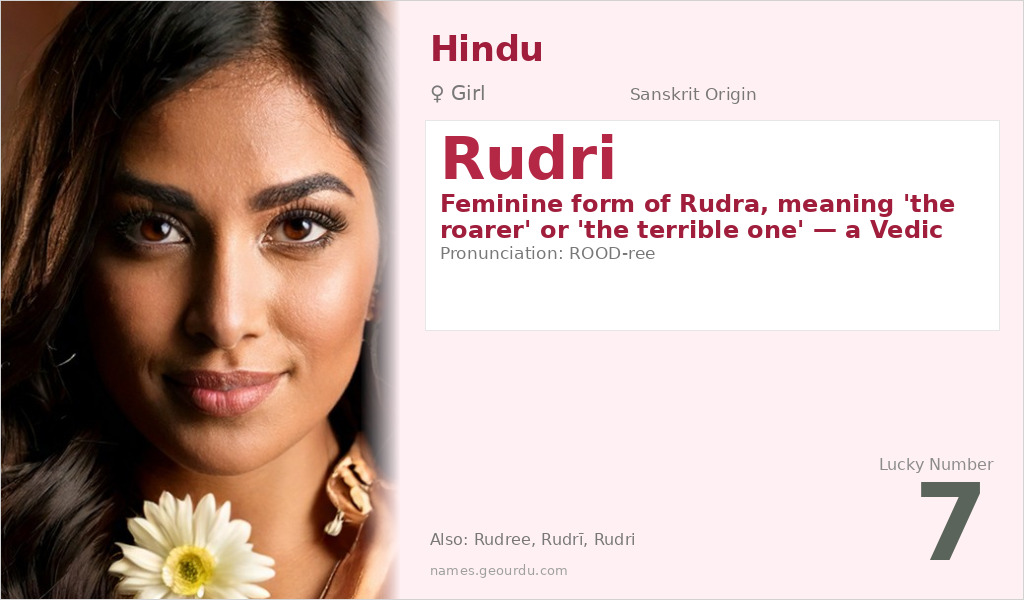
| 💎 Meaning | Feminine form of Rudra, meaning 'the roarer' or 'the terrible one' — a Vedic deity associated with storms, wind, and hunting, later identified with Shiva |
| 👤 Gender | Girl |
| 🕌 Religion | Hindu |
| 🌍 Origin | Sanskrit |
| 🗣 Pronunciation | ROOD-ree |
| ✍️ Urdu | ردری |
| ✍️ Arabic | رودري |
| 🔢 Numerology | 7 |
| ✨ Spellings | Rudree, Rudrī, Rudri |
Origin & Cultural Significance
Rudri has its origins in ancient Sanskrit texts dating back to the Vedic period (1500-500 BCE). As the feminine counterpart to Rudra — one of the oldest deities in the Hindu pantheon — the name appears in early hymns and later developed within Shaivism traditions. Culturally, Rudri represents the feminine divine energy (Shakti) associated with Rudra/Shiva, embodying both creative and destructive aspects of nature. While not as common as some Hindu names, it maintains significance in certain regions and among families with strong connections to Vedic heritage. The name’s preservation in classical texts ensures its continued relevance in Hindu naming traditions.
Personality Traits
Those named Rudri often embody the name’s etymological roots — displaying strength, resilience, and a powerful presence. They tend to be natural leaders with strong convictions and spiritual depth, reflecting the name’s connection to divine forces. While potentially intense in their pursuits, they typically balance this with compassion and loyalty in personal relationships. The name’s Vedic heritage often instills a respect for tradition alongside innovative thinking.
Similar Names
If you like Rudri, consider: Rudra, Rudrani, Rudraksha, Rudradev, Rudrapriya
Famous People Named Rudri
- Rudri Bhatt — Indian classical vocalist specializing in Dhrupad and Khayal genres
- Rudri Patel — Contemporary writer and poet featured in literary journals
Frequently Asked Questions About Rudri
What does Rudri mean?
Rudri means 'feminine form of Rudra' — derived from Sanskrit 'rud' (to roar/cry). It refers to the feminine aspect of the Vedic storm god Rudra, later associated with Shiva, not 'puja' or worship as sometimes mistakenly claimed.
Is Rudri a boy or girl name?
Rudri is exclusively a feminine name in Hindu tradition — it's the feminine form of the masculine name Rudra. All historical and contemporary usage confirms it as a girl's name.
What is the origin of Rudri?
Rudri originates from Sanskrit, appearing in ancient Vedic texts as the feminine counterpart to the deity Rudra. It has specific roots in Hindu religious tradition and Sanskrit linguistics, not from regional tribal languages as sometimes speculated.