
Table of Contents
Basavesh is a profound and culturally rich name deeply rooted in Hindu tradition, particularly within the Lingayat or Virashaiva community of South India. It combines devotion to Lord Shiva with reverence for the philosopher Basava, offering a name that embodies spiritual wisdom and social reform. This name is not just a label but a tribute to a legacy that has shaped religious thought for centuries. Discover the meaning, origin, and significance of Basavesh in this comprehensive guide.
Meaning of Basavesh
Basavesh derives from the Sanskrit and Kannada languages, formed by combining ‘Basava’ and the suffix ‘-esh’. ‘Basava’ refers to Lord Shiva in the context of the Lingayat tradition, and historically, Basavanna was a 12th-century saint and reformer who founded this Shiva-focused philosophy. The suffix ‘-esh’ comes from Sanskrit ‘īśa’ meaning ‘lord’, ‘god’, or ‘ruler’, commonly used in names like Mahesh (great lord) and Ramesh (lord Rama). Thus, Basavesh literally translates to ‘Lord Basava’, signifying Shiva as worshipped by Basava’s followers, or metaphorically, a devotee of Basava. This name highlights a dual reverence: for the deity Shiva and the human teacher Basava, blending divine and philosophical elements. It is a testament to the Lingayat movement’s emphasis on personal devotion and social equality.
| 📛 Name | Basavesh |
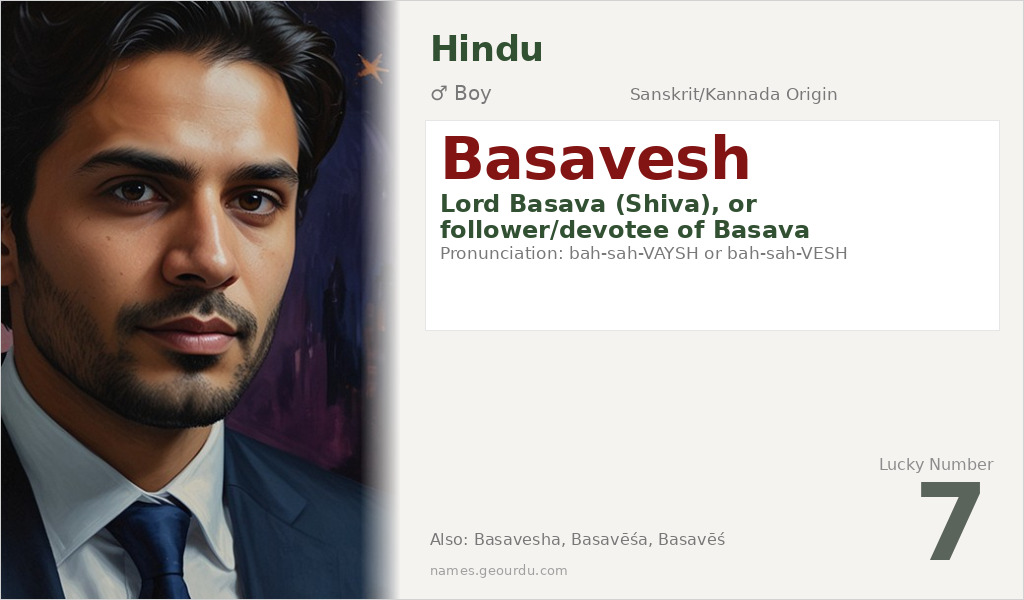
| 💎 Meaning | Lord Basava (Shiva), or follower/devotee of Basava |
| 👤 Gender | Boy |
| 🕌 Religion | Hindu |
| 🌍 Origin | Sanskrit/Kannada |
| 🗣 Pronunciation | bah-sah-VAYSH or bah-sah-VESH |
| ✍️ Urdu | بسویش |
| ✍️ Arabic | باسافيش |
| 🔢 Numerology | 7 |
| ✨ Spellings | Basavesha, Basavēśa, Basavēś, Basaveshwar |
Origin & Cultural Significance
Originating in the Kannada-speaking regions of Karnataka, India, Basavesh is deeply tied to the Lingayat (Virashaiva) tradition, which emerged in the 12th century under Basavanna’s leadership. This movement rejected caste hierarchies and emphasized direct worship of Shiva through the linga, influencing South Indian Hinduism significantly. The name Basavesh gained popularity as a way to honor both Shiva and Basavanna, spreading through communities that value this reformist heritage. It is primarily used among Hindus, especially in Karnataka and neighboring states, reflecting a cultural identity rooted in Shaivism and social justice. Over time, it has remained a traditional choice, symbolizing spiritual depth and historical continuity.
Personality Traits
Those named Basavesh are often perceived as introspective, principled, and inspired by a sense of purpose, mirroring the philosophical and reformist traits of Basavanna. They may possess a natural inclination toward spirituality, leadership, and advocacy for fairness, driven by the name’s association with religious and social transformation. This name suggests a personality that values wisdom, tradition, and progressive thinking, making bearers likely to be respected in their communities.
Similar Names
If you like Basavesh, consider: Basava, Basavaraj, Basavanna, Shiva, Eshwar, Mahesh, Ramesh, Suresh, Ganesh, Bhavesh
Famous People Named Basavesh
- Basaveshwara (Basavanna) — 12th-century Indian philosopher, poet, and social reformer who founded the Lingayat tradition in Karnataka
- Basavesh S. — Contemporary individuals in India, often in Karnataka, bearing this traditional name
Frequently Asked Questions About Basavesh
What does Basavesh mean?
Basavesh means 'Lord Basava' or 'devotee of Basava', from Sanskrit/Kannada, referring to Shiva worship and the philosopher Basava in the Lingayat tradition.
Is Basavesh a boy or girl name?
Basavesh is traditionally a boy's name in Hindu culture, particularly in South Indian communities where it honors male figures like Shiva and Basavanna.
What is the origin of Basavesh?
Basavesh originates from Sanskrit and Kannada, linked to the Lingayat tradition in Karnataka, India, and is associated with the 12th-century reformer Basavanna and Shiva philosophy.





