
Table of Contents
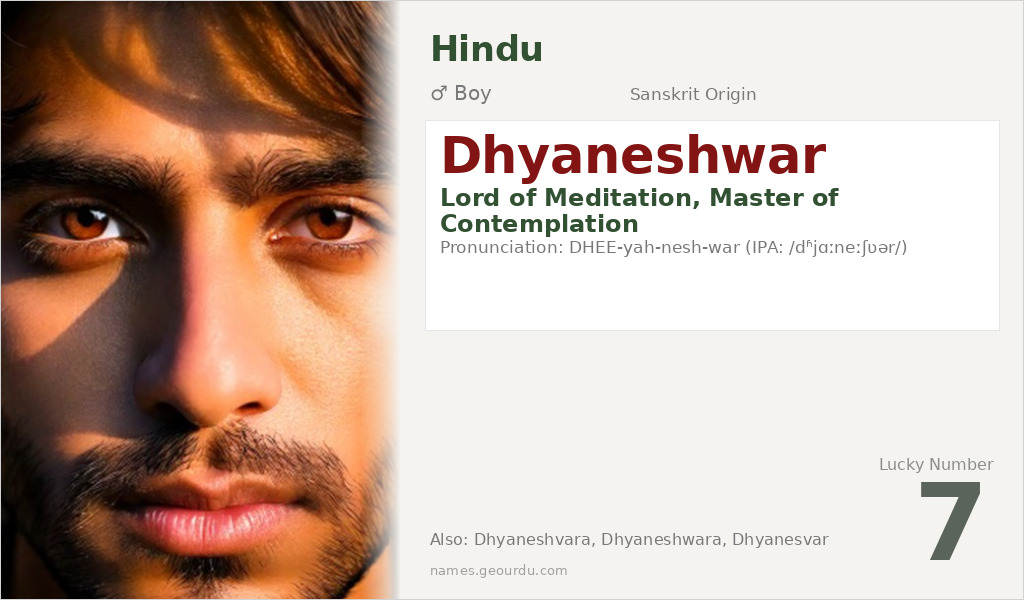
Dhyaneshwar is a profound Sanskrit name that carries deep spiritual resonance in Hindu culture. Meaning ‘Lord of Meditation’ or ‘Master of Contemplation’, this name embodies the highest ideals of spiritual discipline and self-realization. Historically associated with saints and philosophers, Dhyaneshwar represents a connection to India’s rich tradition of yoga and meditation. Parents choosing this name often seek to instill values of introspection, wisdom, and spiritual awareness in their child.
Meaning of Dhyaneshwar
Dhyaneshwar derives from classical Sanskrit, combining ‘dhyāna’ (ध्यान), meaning meditation or profound contemplation, with ‘īśvara’ (ईश्वर), meaning lord, master, or ruler. In Sanskrit compound formation, this creates a tatpurusha samāsa where ‘īśvara’ is the primary element modified by ‘dhyāna’. The term ‘dhyāna’ itself comes from the Sanskrit root ‘dhyai’ (to think, meditate, contemplate), which is central to yogic and Buddhist practices. ‘Īśvara’ appears throughout Hindu philosophy referring to a supreme controller or deity. Thus, Dhyaneshwar literally translates to ‘one who is master over meditation’ or ‘the lord of contemplative states’. This name reflects the high value placed on meditative mastery within Dharmic traditions.
| 📛 Name | Dhyaneshwar |
| 💎 Meaning | Lord of Meditation, Master of Contemplation |
| 👤 Gender | Boy |
| 🕌 Religion | Hindu |
| 🌍 Origin | Sanskrit |
| 🗣 Pronunciation | DHEE-yah-nesh-war (IPA: /dʱjɑːneːʃʋər/) |
| ✍️ Urdu | دھیانیشور |
| ✍️ Arabic | دهيانيسوار |
| 🔢 Numerology | 7 |
| ✨ Spellings | Dhyaneshvara, Dhyaneshwara, Dhyanesvar, Dnyaneshwar |
Origin & Cultural Significance
Dhyaneshwar originates from Sanskrit, the ancient liturgical language of Hinduism, Buddhism, and Jainism. The name has particular significance in Maharashtrian and broader Indian cultural contexts due to the 13th-century saint Sant Dnyaneshwar (also spelled Dhyaneshwar), who composed the ‘Dnyaneshwari’—a seminal Marathi commentary on the Bhagavad Gita. This saint, part of the Nath tradition, helped democratize spiritual knowledge by writing in vernacular Marathi rather than Sanskrit. The name continues to be used primarily in Hindu communities across India, especially in Maharashtra, though its spiritual connotations give it pan-Indian appeal. It represents the synthesis of devotional (bhakti) and meditative (dhyāna) traditions within Hinduism.
Personality Traits
Those named Dhyaneshwar are often associated with contemplative, wise, and spiritually attuned personalities. They may exhibit patience, deep thinking, and a natural inclination toward philosophical inquiry. The name suggests someone who seeks inner truth and understanding rather than superficial pursuits. In social contexts, they might be perceived as calm, centered individuals who provide thoughtful perspective.
Similar Names
If you like Dhyaneshwar, consider: Dhyan, Dhyanesh, Ishwar, Dhyanendra, Medhansh
Famous People Named Dhyaneshwar
- Sant Dnyaneshwar (1275–1296) — 13th-century Marathi saint, poet, philosopher and yogi of the Nath tradition, author of 'Dnyaneshwari' (a commentary on the Bhagavad Gita)
- Dhyaneshwar Mulay — Indian diplomat and former Secretary (Consular, Passport & Visa) in the Ministry of External Affairs
Frequently Asked Questions About Dhyaneshwar
What does Dhyaneshwar mean?
Dhyaneshwar means 'Lord of Meditation' or 'Master of Contemplation'. It comes from Sanskrit: 'dhyāna' (meditation) + 'īśvara' (lord).
Is Dhyaneshwar a boy or girl name?
Dhyaneshwar is exclusively a masculine name in Hindu naming traditions. The '-īśvara' suffix is grammatically masculine in Sanskrit.
What is the origin of Dhyaneshwar?
Dhyaneshwar originates from Sanskrit, the classical language of ancient India. It has special significance in Hindu culture, particularly associated with the 13th-century Marathi saint Sant Dnyaneshwar.





