
Table of Contents
Faninath is an intriguing Hindu boy’s name that combines ancient Sanskrit elements with potential regional influences. While not widely documented in classical texts, this name carries the distinctive ‘-nath’ suffix that connects it to a tradition of divine protection. Its unique sound and possible natural connotations make it a distinctive choice for parents seeking a name with spiritual depth.
Meaning of Faninath
The name Faninath appears to be a compound name where ‘-nath’ clearly derives from Sanskrit, meaning ‘lord’, ‘master’, or ‘protector’. This suffix appears in numerous Hindu names like Jagannath (lord of the universe) and Gopinath (lord of the cowherds). The prefix ‘Fani’ presents more mystery, as Sanskrit doesn’t natively use the ‘F’ sound. It might represent a regional adaptation where ‘V’ sounds become ‘F’, possibly from ‘Vani’ meaning speech or voice. Alternatively, it could derive from tribal languages where ‘Fani’ relates to forest or earth elements. Without documented sources, the complete meaning remains speculative but likely follows the pattern of ‘-nath’ names indicating lordship over something.
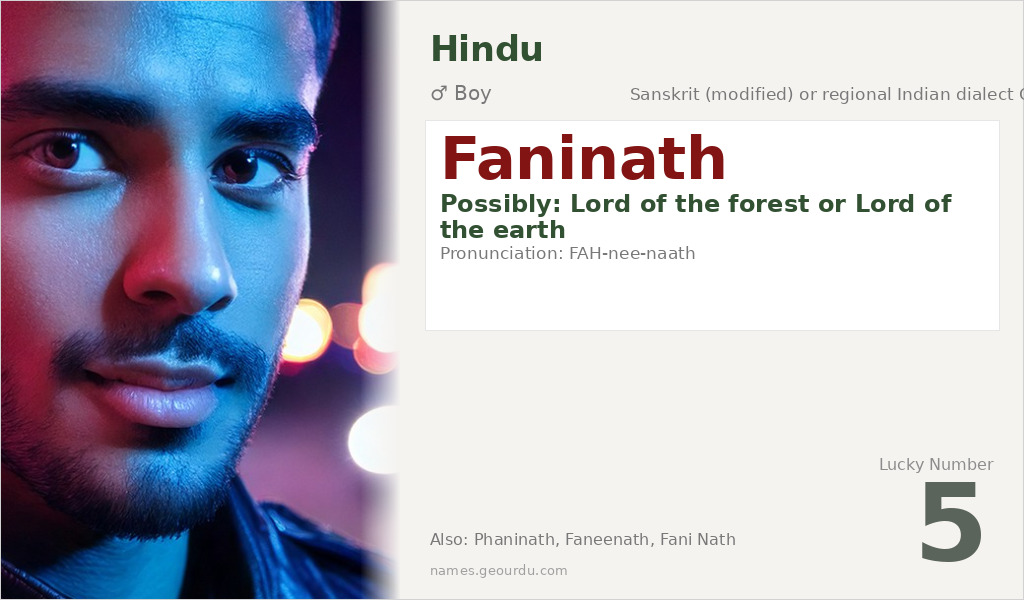
| 📛 Name | Faninath |
| 💎 Meaning | Possibly: Lord of the forest or Lord of the earth |
| 👤 Gender | Boy |
| 🕌 Religion | Hindu |
| 🌍 Origin | Sanskrit (modified) or regional Indian dialect |
| 🗣 Pronunciation | FAH-nee-naath |
| ✍️ Urdu | فنیناتھ |
| ✍️ Arabic | فانيناث |
| 🔢 Numerology | 5 |
| ✨ Spellings | Phaninath, Faneenath, Fani Nath |
Origin & Cultural Significance
Faninath appears to originate from Hindu naming traditions, specifically the practice of creating compound names with the ‘-nath’ suffix. This naming pattern has been prevalent in India for centuries, particularly in Vaishnavism and other Hindu traditions where names denote devotion to divine protection. The unusual ‘F’ beginning suggests possible regional or dialectal influence, perhaps from areas where Sanskrit ‘V’ sounds evolved into ‘F’. While not found in classical Sanskrit texts, similar constructed names exist in modern Hindu practice, often created to express specific spiritual concepts or family traditions.
Personality Traits
Those named Faninath are often associated with qualities of protection and natural leadership, reflecting the ‘-nath’ element meaning ‘lord’ or ‘protector’. They may exhibit a strong connection to nature or earthly matters, depending on the interpretation of the ‘Fani’ prefix. Typically, they’re seen as reliable individuals who take their protective role seriously while maintaining adaptability and curiosity about the world around them.
Similar Names
If you like Faninath, consider: Gopinath, Shrinath, Dinanath, Bhuvanath, Vishwanath
Famous People Named Faninath
- No notable historical or contemporary figures with this name have been documented in reliable sources
Frequently Asked Questions About Faninath
What does Faninath mean?
The name likely means 'Lord of the forest' or 'Lord of the earth', though this is speculative. The '-nath' suffix definitely means 'lord' in Sanskrit, but the 'Fani' prefix lacks verified meaning in documented sources.
Is Faninath a boy or girl name?
Faninath is exclusively a boy's name in Hindu naming tradition, as indicated by the masculine '-nath' suffix and its usage patterns.
What is the origin of Faninath?
The name originates from Hindu/Sanskrit naming traditions with possible regional Indian influences. The '-nath' component is definitively Sanskrit, while the 'Fani' prefix may come from dialectal variations or tribal languages.





