Table of Contents
Gajanand is a beautiful Sanskrit name with deep roots in Hindu tradition and mythology. Meaning ‘Joy of elephants’ or ‘Delight of elephants’, this name carries the wisdom and strength associated with elephants in Indian culture. Often connected to Lord Ganesha, the elephant-headed deity who removes obstacles, Gajanand represents both divine connection and earthly virtues. This name has been cherished for generations in Hindu families seeking a name that combines spiritual significance with positive qualities.
Meaning of Gajanand
Gajanand is a compound Sanskrit name with two distinct components that together create a meaningful whole. The first part, ‘Gaja’ (गज), directly translates to ‘elephant’ and appears in numerous Sanskrit texts, including the Rigveda. The second element, ‘Anand’ (आनंद), means ‘joy, delight, or bliss’ and is a fundamental concept in Hindu philosophy representing spiritual happiness. When combined, Gajanand literally means ‘joy of elephants’ or ‘delight of elephants’. In Hindu tradition, elephants symbolize wisdom, strength, royalty, and good fortune, making this name particularly auspicious. The name is often interpreted as referring to Lord Ganesha, who embodies these elephantine qualities while bringing happiness and removing obstacles from devotees’ lives.
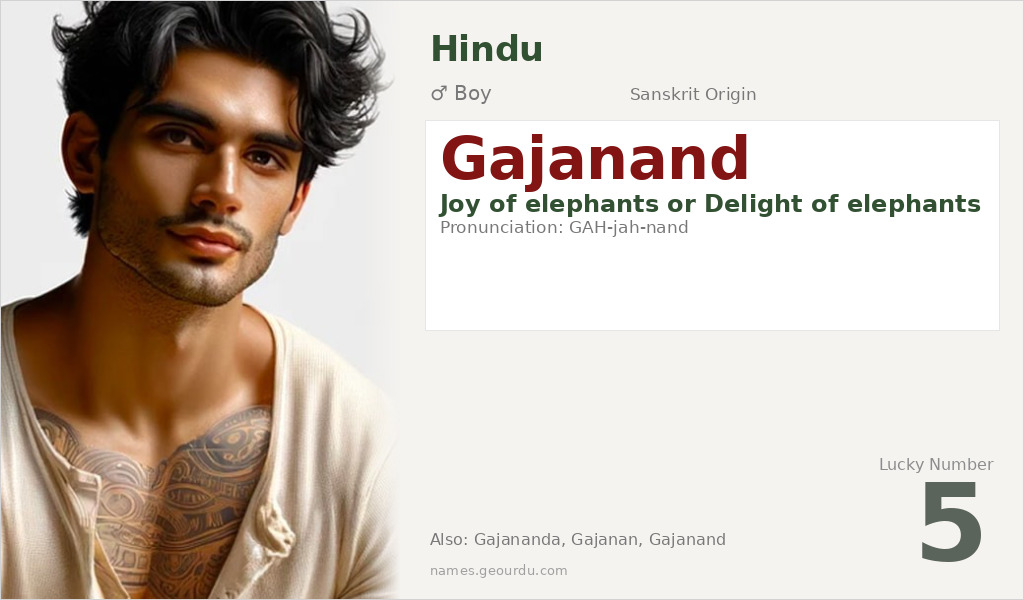
| 📛 Name | Gajanand |
| 💎 Meaning | Joy of elephants or Delight of elephants |
| 👤 Gender | Boy |
| 🕌 Religion | Hindu |
| 🌍 Origin | Sanskrit |
| 🗣 Pronunciation | GAH-jah-nand |
| ✍️ Urdu | گجنند |
| ✍️ Arabic | غاجاناند |
| 🔢 Numerology | 5 |
| ✨ Spellings | Gajananda, Gajanan, Gajanand |
Origin & Cultural Significance
Gajanand originates from classical Sanskrit, the ancient liturgical language of Hinduism that has influenced numerous Indian languages. The name appears in Hindu religious texts and literature, where elephants hold significant symbolic value as carriers of deities, symbols of royal power, and embodiments of wisdom. In Hindu mythology, Lord Ganesha—the elephant-headed god—is one of the most worshipped deities, and names containing ‘Gaja’ elements often reference his attributes. The name has been used historically in various regions of India, particularly among Hindu communities who value traditional Sanskrit names with spiritual connotations. While primarily a Hindu name, its Sanskrit roots mean it could theoretically appear in other Dharmic traditions, though it remains predominantly associated with Hinduism.
Personality Traits
Those named Gajanand are often perceived as having qualities reminiscent of elephants—steady, intelligent, and strong. They tend to be reliable individuals who approach life with patience and wisdom, carefully considering situations before acting. Their presence often brings comfort and stability to others, much like the protective nature associated with elephants in Indian culture. These individuals typically value tradition while possessing the strength to overcome obstacles in their path.
Similar Names
If you like Gajanand, consider: Ganesh, Gajendra, Anand, Gajanan, Gajadhar
Famous People Named Gajanand
- Gajanand Sharma — Indian classical vocalist and musicologist
- Gajanand Thakur — Indian politician from Bihar
Frequently Asked Questions About Gajanand
What does Gajanand mean?
Gajanand means 'Joy of elephants' or 'Delight of elephants' in Sanskrit. It is a compound name combining 'Gaja' (elephant) and 'Anand' (joy, bliss).
Is Gajanand a boy or girl name?
Gajanand is exclusively a boy's name in Hindu naming tradition. It follows the masculine grammatical structure of Sanskrit and has historically been given only to male children.
What is the origin of Gajanand?
Gajanand originates from classical Sanskrit, the ancient language of Hindu scriptures. It is deeply rooted in Hindu culture and mythology, particularly associated with elephant symbolism and Lord Ganesha.